

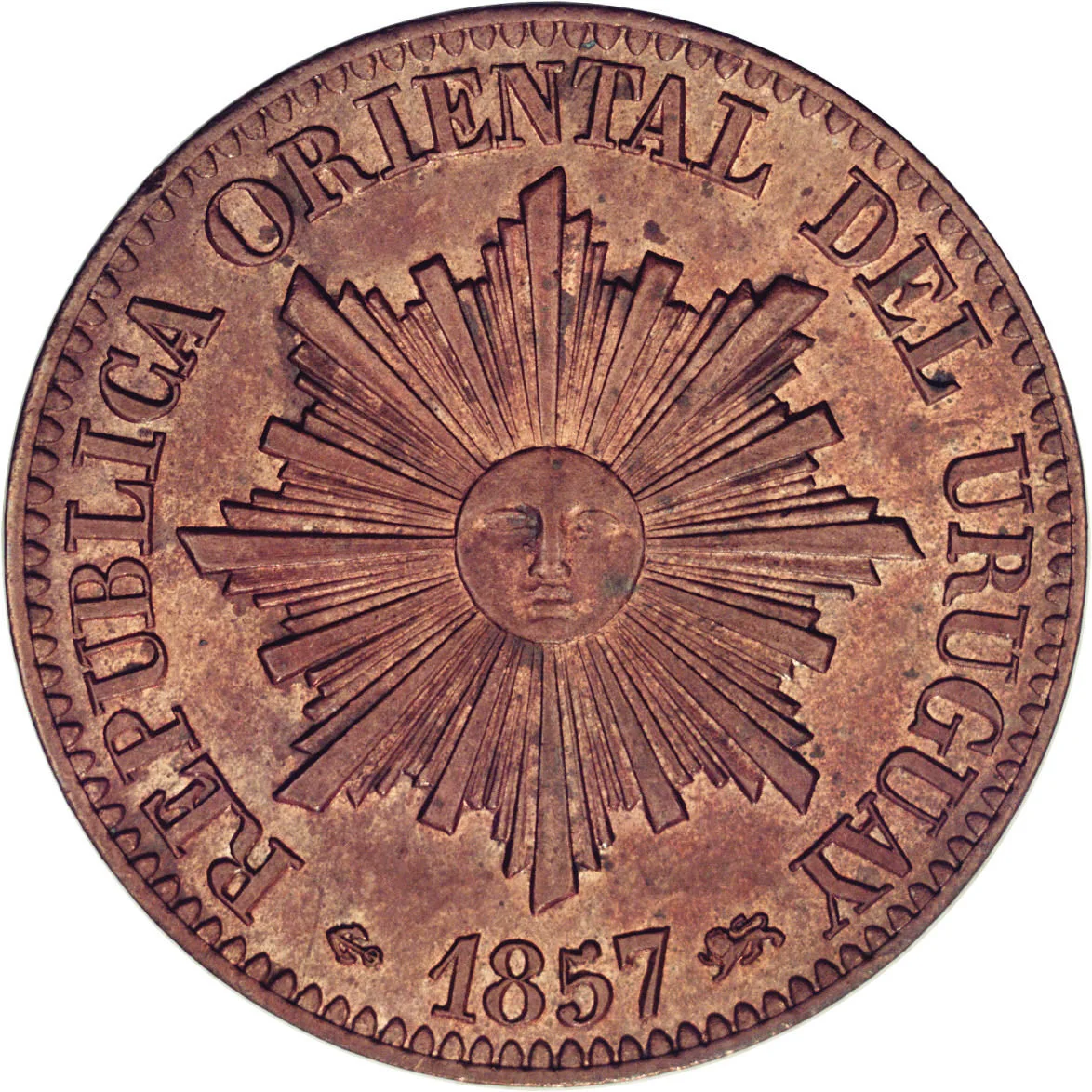
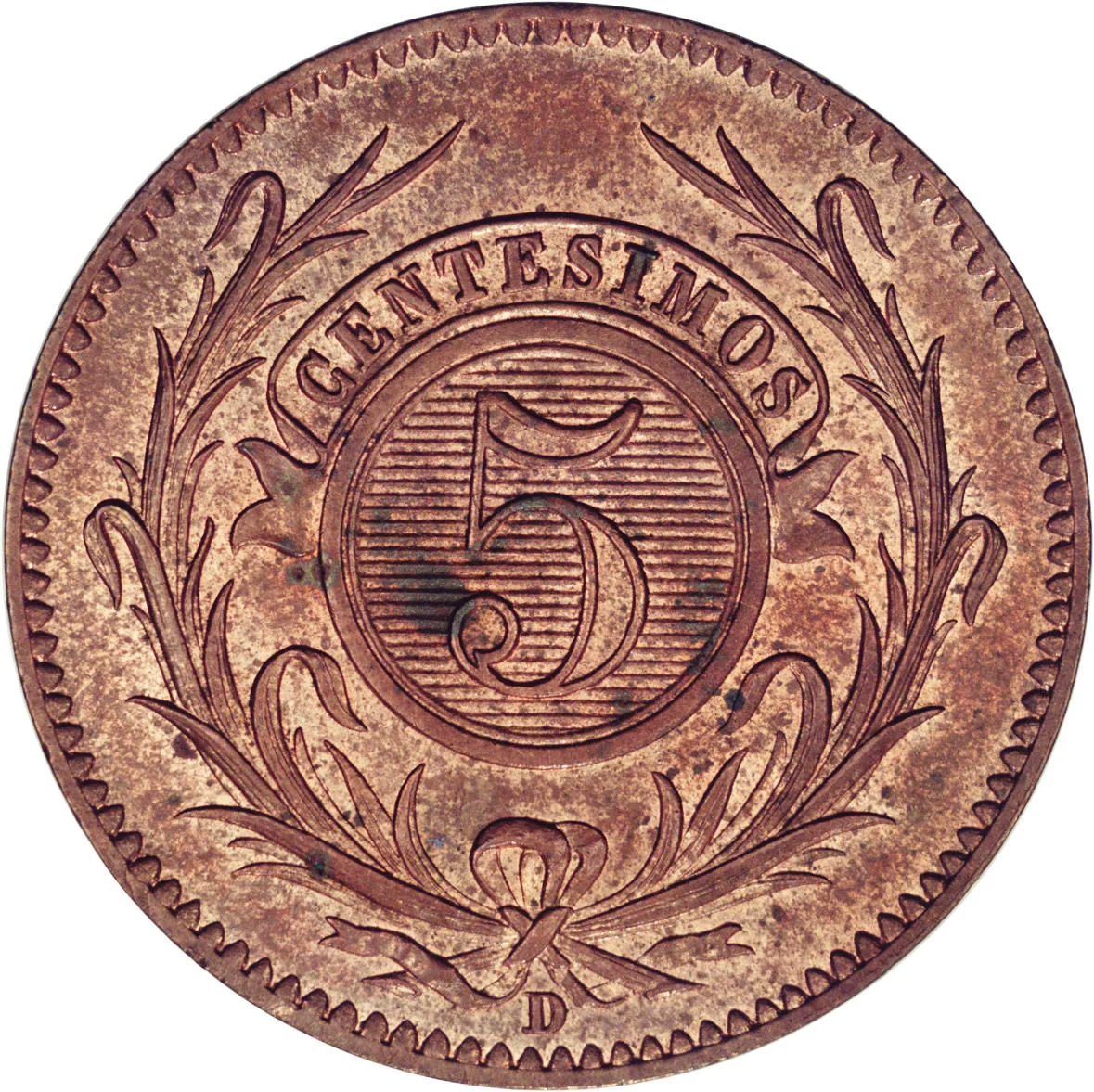
5 centésimos – Uruguay
Add to wishlist
Uruguay
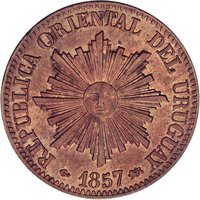
Obverse
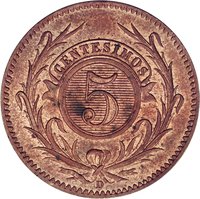
Reverse
Edge
Plain
Mints
| Name | Mark |
|---|---|
| Lyon | D |
Mintings
| Year | Mint Mark | Mintage | Quality | Collection |
|---|---|---|---|---|
| 1857 | D | 576,000 |
Historical background
In 1857, Uruguay’s currency situation was characterized by profound instability and complexity, a direct legacy of the Guerra Grande (1839-1851). The prolonged civil war had devastated the economy and fragmented monetary authority, leading to a chaotic circulation of multiple, depreciated currencies. The government, deeply in debt and with limited control over the countryside, issued vast quantities of paper money (billetes fiscales) that were not backed by specie, leading to rampant inflation and a severe loss of public confidence. Concurrently, foreign coins, particularly from France, Spain, and Brazil, circulated widely, creating a de facto system where real value was tied to metallic currency while government paper traded at a steep and fluctuating discount.
This monetary disorder severely hampered economic recovery and daily commerce. The coexistence of multiple currencies—foreign gold and silver coins, various issues of government paper, and even notes from private merchants—created a confusing and inefficient exchange environment. The value of the paper peso was highly volatile, often determined more by political and military developments than economic fundamentals. This environment discouraged investment, complicated government fiscal planning, and placed a heavy burden on the populace, as wages and prices were subject to erratic shifts in purchasing power.
Recognizing the crisis, the government of President Gabriel Antonio Pereira initiated efforts toward monetary reform in the mid-1850s. The pivotal step came with the Law of Monetary Unification in 1857, which aimed to retire the old, discredited paper issues and replace them with a new, unified national currency. While full stabilization would take years, this law marked the crucial beginning of a centralized and standardized monetary system, seeking to establish a single unit of account and restore fiscal credibility—a foundational prerequisite for Uruguay’s subsequent period of national consolidation and economic growth.
This monetary disorder severely hampered economic recovery and daily commerce. The coexistence of multiple currencies—foreign gold and silver coins, various issues of government paper, and even notes from private merchants—created a confusing and inefficient exchange environment. The value of the paper peso was highly volatile, often determined more by political and military developments than economic fundamentals. This environment discouraged investment, complicated government fiscal planning, and placed a heavy burden on the populace, as wages and prices were subject to erratic shifts in purchasing power.
Recognizing the crisis, the government of President Gabriel Antonio Pereira initiated efforts toward monetary reform in the mid-1850s. The pivotal step came with the Law of Monetary Unification in 1857, which aimed to retire the old, discredited paper issues and replace them with a new, unified national currency. While full stabilization would take years, this law marked the crucial beginning of a centralized and standardized monetary system, seeking to establish a single unit of account and restore fiscal credibility—a foundational prerequisite for Uruguay’s subsequent period of national consolidation and economic growth.
🌟 Uncommon