

10 centimes – Comoro Islands
Add to wishlist
Context
Year: 1891
Islamic (Hijri) Year:: 1308
Issuer: Comoro Islands
Currency:
(1889—1945)
Demonetized: Yes
Total mintage: 50,200
Material
References
KM: #
Numista: #19053
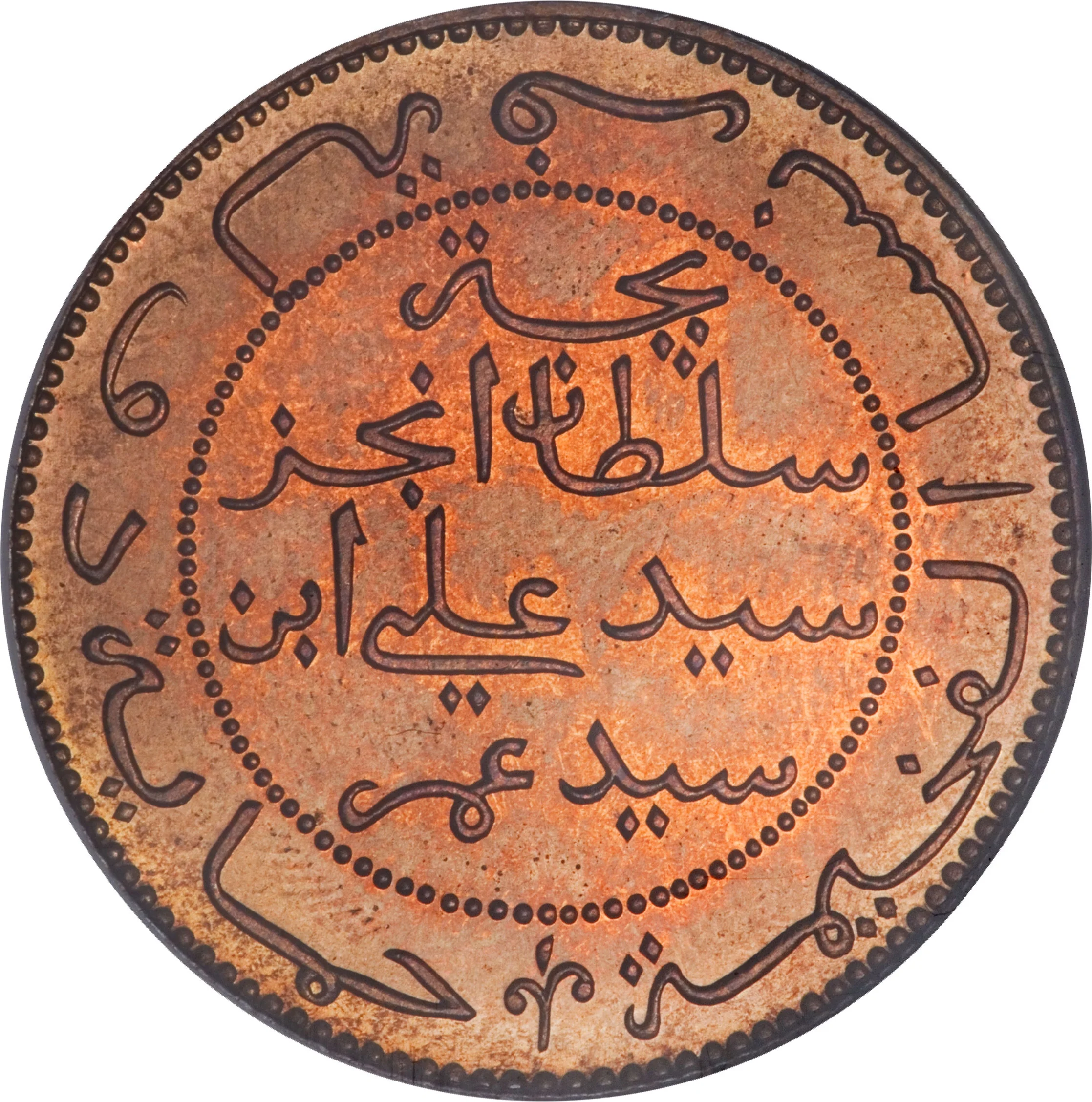
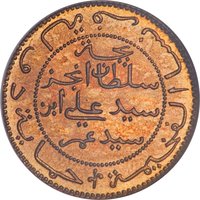
Obverse
Inscription:
يجة
سلطان انجز
سيد علي ابن
سيد عمر
حماية دولة فرنسا الفخيمة
سلطان انجز
سيد علي ابن
سيد عمر
حماية دولة فرنسا الفخيمة
Translation:
Struck
by order of the Sultan,
Sayyid Ali son
of Sayyid Umar.
Under the protection of the glorious French state.
by order of the Sultan,
Sayyid Ali son
of Sayyid Umar.
Under the protection of the glorious French state.
Script: Arabic
Language: Arabic
Engraver: Henri-Auguste Patey
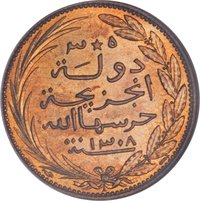
Reverse
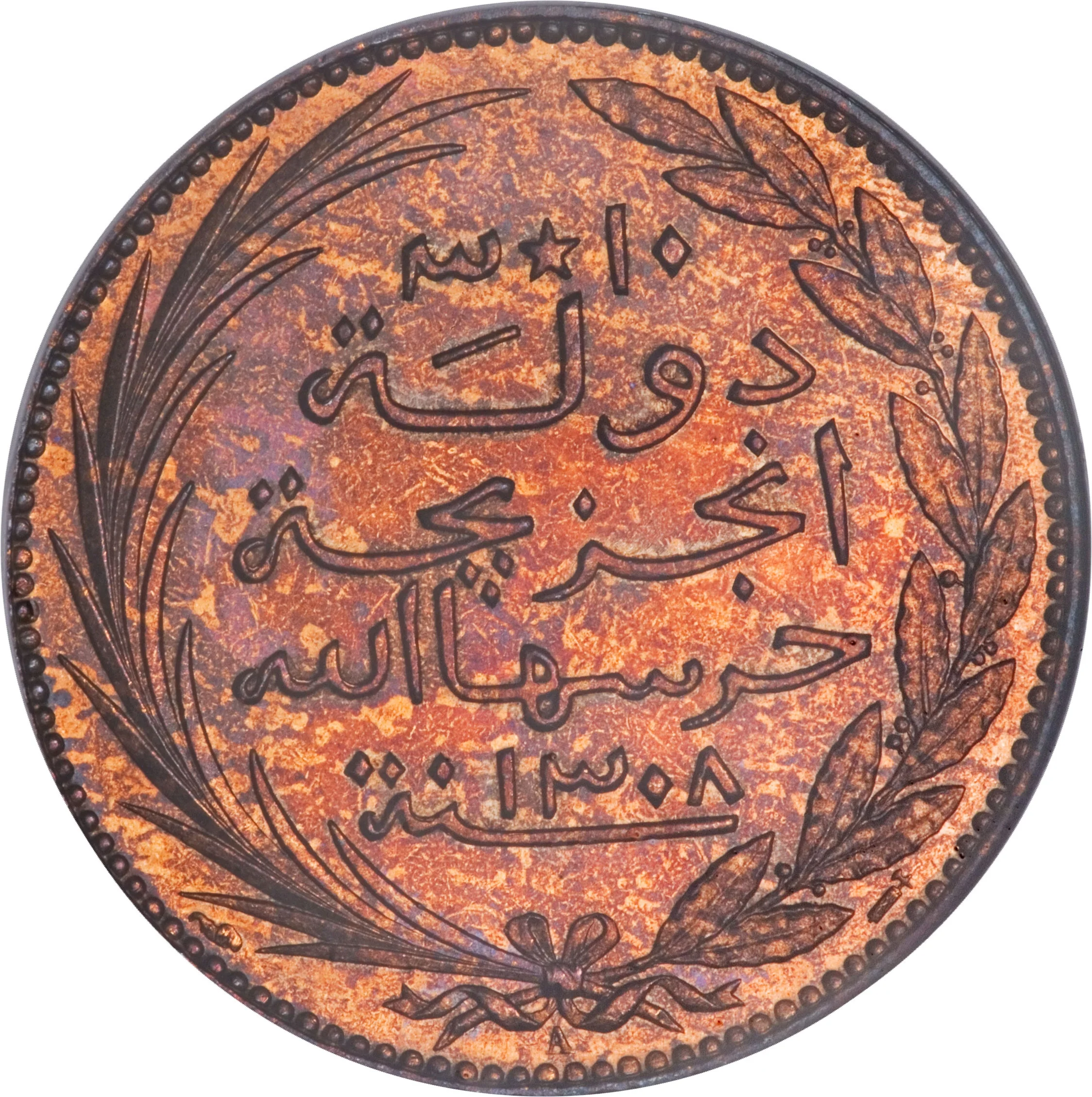
Inscription:
١٠ س
دولة
نجزيجة
حرسها اللة
١٣٠٨
سنة
دولة
نجزيجة
حرسها اللة
١٣٠٨
سنة
Translation:
10 Sen
State of
Najd
May God protect it
1308
Year
State of
Najd
May God protect it
1308
Year
Language: Arabic
Engraver: Henri-Auguste Patey
Edge
Plain
Mints
| Name | Mark |
|---|---|
| Monnaie de Paris | (A) |
Mintings
| Year | Mint Mark | Mintage | Quality | Collection |
|---|---|---|---|---|
| 1891 | — | 50,200 |
Historical background
In 1891, the Comoro Islands were in a complex and transitional monetary period, caught between indigenous, regional, and colonial systems. The archipelago, comprising islands like Grande Comore, Anjouan, and Mohéli, was not yet a unified French colony (formal annexation would occur in 1912). Instead, France had established protectorates over the individual sultanates, beginning with Mayotte in 1841 and extending to the other islands in the 1880s. This political fragmentation was reflected in the currency in circulation, which was a heterogeneous mix. The French franc was gaining official traction through trade and administration, but it competed with a variety of other coins, including older Spanish silver pesos (piastres), Maria Theresa thalers, and British sovereigns and rupees, all of which were familiar in Indian Ocean trade.
The local economy still relied heavily on traditional forms of exchange, particularly for internal and smaller-scale transactions. The most notable of these was the use of tripang (dried sea cucumber) as a de facto commodity currency, especially on the island of Anjouan. This practice underscored the islands' economic orientation toward regional maritime trade networks with East Africa, the Arabian Peninsula, and Madagascar, where barter and valued commodities remained central. Simultaneously, the growing influence of French commercial interests and the establishment of colonial administrative outposts were systematically introducing and privileging the French franc for official payments, taxes, and larger commercial contracts.
Therefore, the currency situation in 1891 was one of overlapping and competing systems. The islands were moving incrementally toward integration into the French monetary zone, but this process was incomplete. The coexistence of modern European coinage, historic trade silver, and indigenous commodity money created a fluid and often inconvenient economic environment, characteristic of a region where traditional Indian Ocean economies were being gradually but inexorably drawn into the orbit of European colonial finance. This monetary duality would persist until the full establishment of the French colonial administration and the eventual imposition of a unified franc-based system.
The local economy still relied heavily on traditional forms of exchange, particularly for internal and smaller-scale transactions. The most notable of these was the use of tripang (dried sea cucumber) as a de facto commodity currency, especially on the island of Anjouan. This practice underscored the islands' economic orientation toward regional maritime trade networks with East Africa, the Arabian Peninsula, and Madagascar, where barter and valued commodities remained central. Simultaneously, the growing influence of French commercial interests and the establishment of colonial administrative outposts were systematically introducing and privileging the French franc for official payments, taxes, and larger commercial contracts.
Therefore, the currency situation in 1891 was one of overlapping and competing systems. The islands were moving incrementally toward integration into the French monetary zone, but this process was incomplete. The coexistence of modern European coinage, historic trade silver, and indigenous commodity money created a fluid and often inconvenient economic environment, characteristic of a region where traditional Indian Ocean economies were being gradually but inexorably drawn into the orbit of European colonial finance. This monetary duality would persist until the full establishment of the French colonial administration and the eventual imposition of a unified franc-based system.
⭐ Somewhat Rare