Logo Title
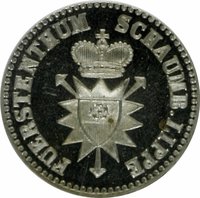
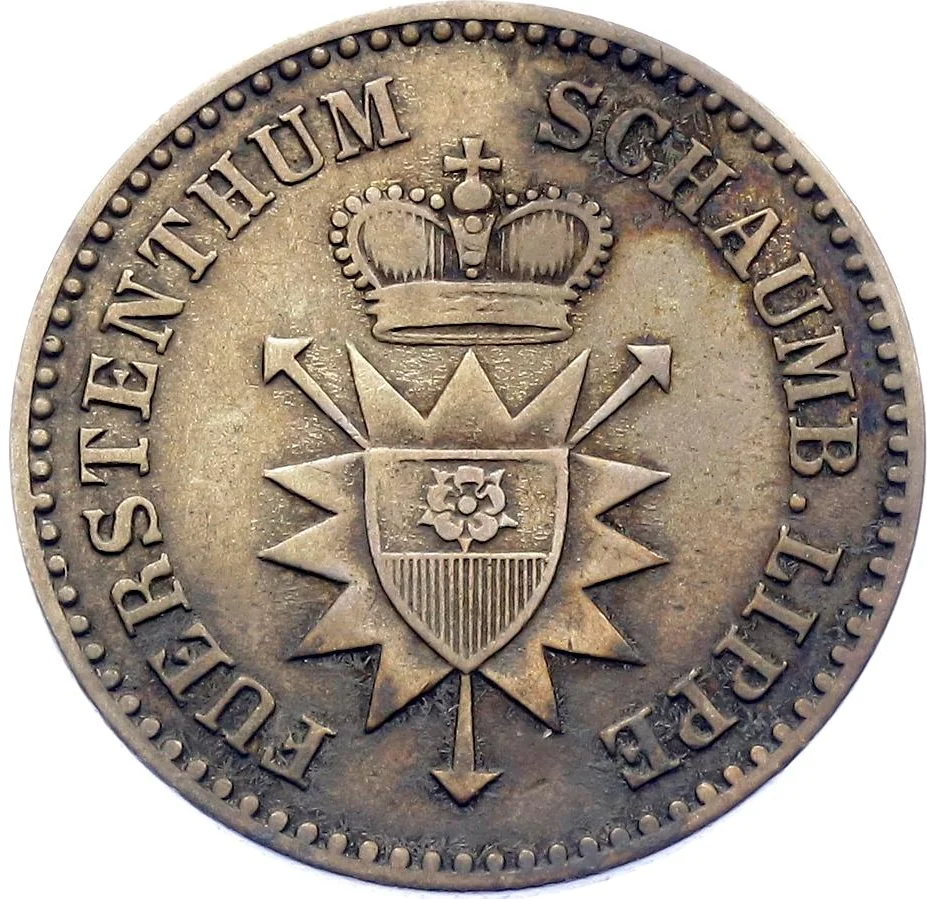
obverse
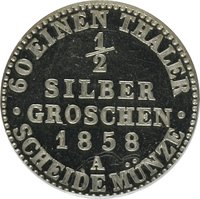
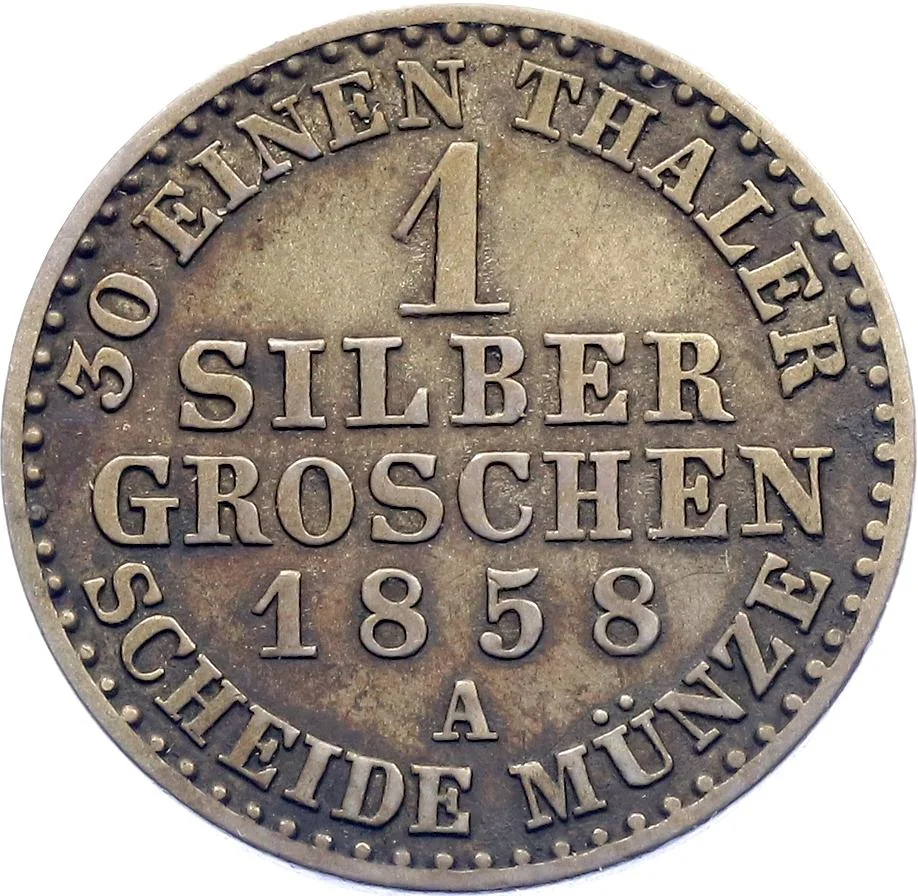
reverse
Katz Coins Notes & Supplies Corp.
Context
Year: 1858
Country: Germany Country flag
Currency:
(1857—1873)
Demonetized: Yes
Total mintage: 210,000
Material
Diameter: 18.2 mm
Weight: 2.19 g
Thickness: 1.1 mm
Shape: Round
Composition: Billon (22% Silver)
Technique: Milled
Alignment: Medal alignment
Obverse
OBVERSE ↑
flip
Reverse
REVERSE ↑
References
KM: #Click to copy to clipboard44
Numista: #19008

Obverse

Description:
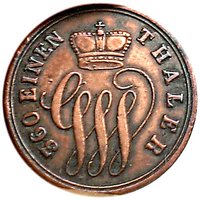
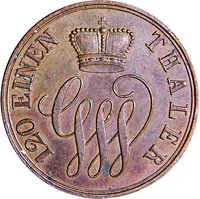
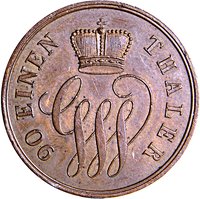
Crowned Schaumburg-Lippe coat of arms with surrounding legend.
Inscription:
FÜRSTENTHUM SCHAUMB.LIPPE
Translation:
Principality of Schaumburg-Lippe
Script: Latin
Language: German

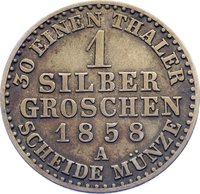
Reverse

Description:
Name and date encircled.
Inscription:
30 EINEN THALER

1

SILBER

GROSCHEN

1858

A

SCHEIDE MÜNZE
Translation:
THIRTY TO ONE THALER

1

SILVER

GROSCHEN

1858

A

TOKEN COIN
Script: Latin
Language: German

Edge

Plain

Mints

NameMark
BerlinA

Mintings

YearMint MarkMintageQualityCollection
1858A210,000

Historical background

In 1858, the Principality of Schaumburg-Lippe operated within the complex monetary landscape of the German Confederation, lacking a unified national currency. The principality itself did not mint its own coins but instead relied on a system where various foreign currencies circulated legally alongside each other. The primary standard was the Prussian Thaler, which served as the benchmark for larger transactions and state accounts, reflecting the political and economic influence of the neighboring Kingdom of Prussia.

However, daily commerce was dominated by smaller silver coins from other states, particularly the Hannoverian and Brunswick-Lüneburg currencies, which were tied to the Prussian standard at fixed exchange rates. This multi-currency system, while functional, created occasional practical inconveniences for trade and accounting. Furthermore, the principality was part of the Dresden Coinage Convention of 1838, an agreement among several northern German states that aimed to standardize silver coinage by defining a common Vereinsthaler, a step toward monetary integration that pre-dated the later German Empire.

Therefore, the 1858 currency situation was one of transition and regional alignment. While Schaumburg-Lippe maintained its political sovereignty, its monetary policy was effectively integrated into a Prussian-led northern German sphere. This arrangement provided stability but also highlighted the principality's gradual absorption into larger economic structures, a process that would culminate in the full adoption of the unified German Mark following the empire's formation in 1871.

Series: 1858 Principality of Schaumburg-Lippe circulation coins

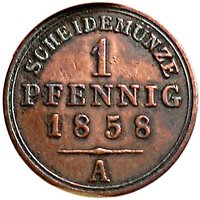
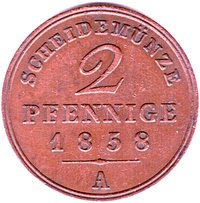
1 Pfennig obverse
1 Pfennig reverse
1 Pfennig
1858
2 Pfennigs obverse
2 Pfennigs reverse
2 Pfennigs
1858
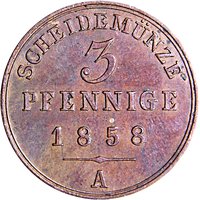
3 Pfennigs obverse
3 Pfennigs reverse
3 Pfennigs
1858
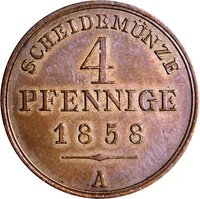
4 Pfennigs obverse
4 Pfennigs reverse
4 Pfennigs
1858
½ Silbergroschen obverse
½ Silbergroschen reverse
½ Silbergroschen
1858
1 Silbergroschen obverse
1 Silbergroschen reverse
1 Silbergroschen
1858
2½ Silbergroschen obverse
2½ Silbergroschen reverse
2½ Silbergroschen
1858
Rare