

1 Rigsbankskilling – Denmark
Denmark
Context
Material
References
KM: #Click to copy to clipboard756
Numista: #19001
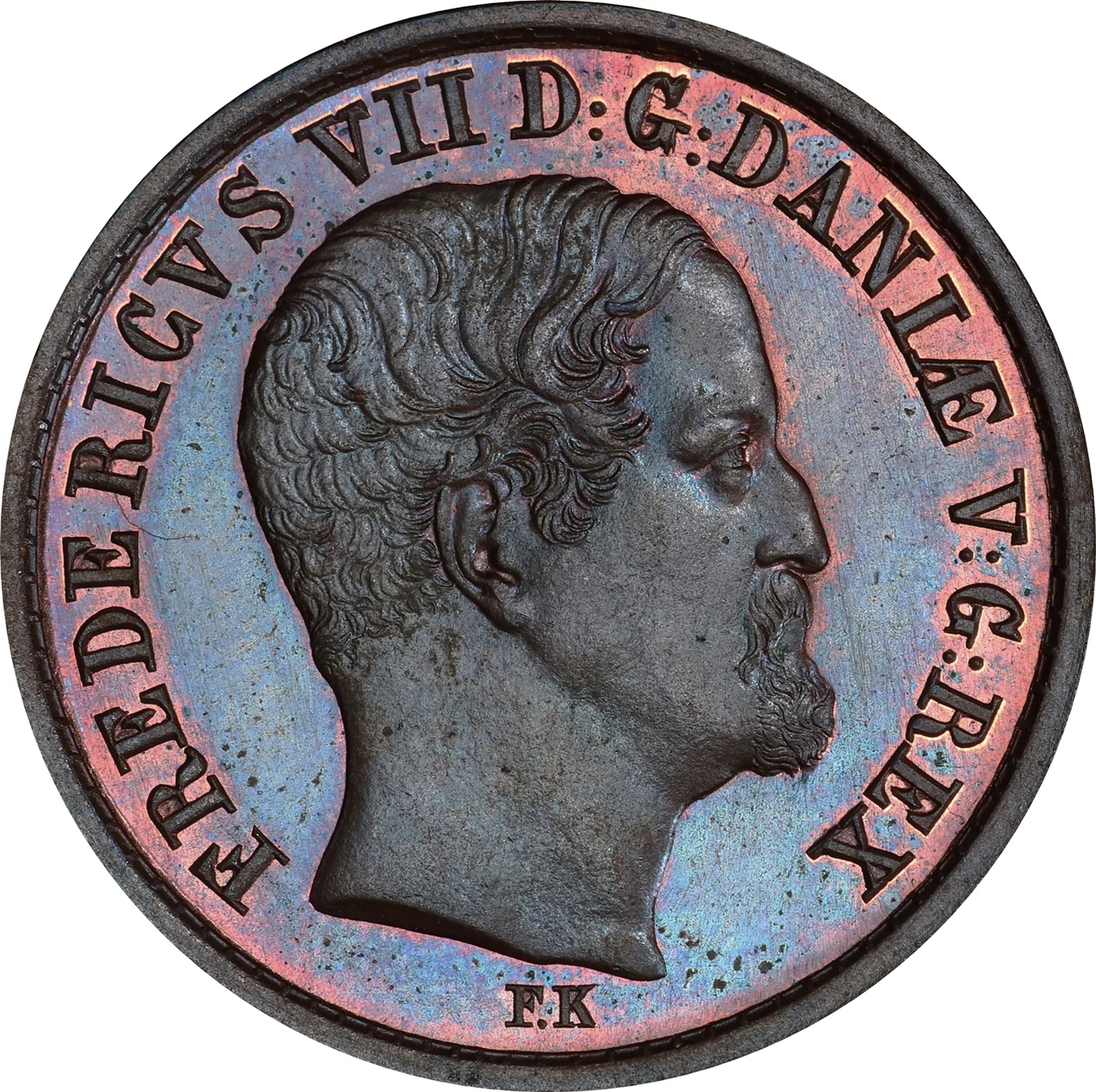
Obverse
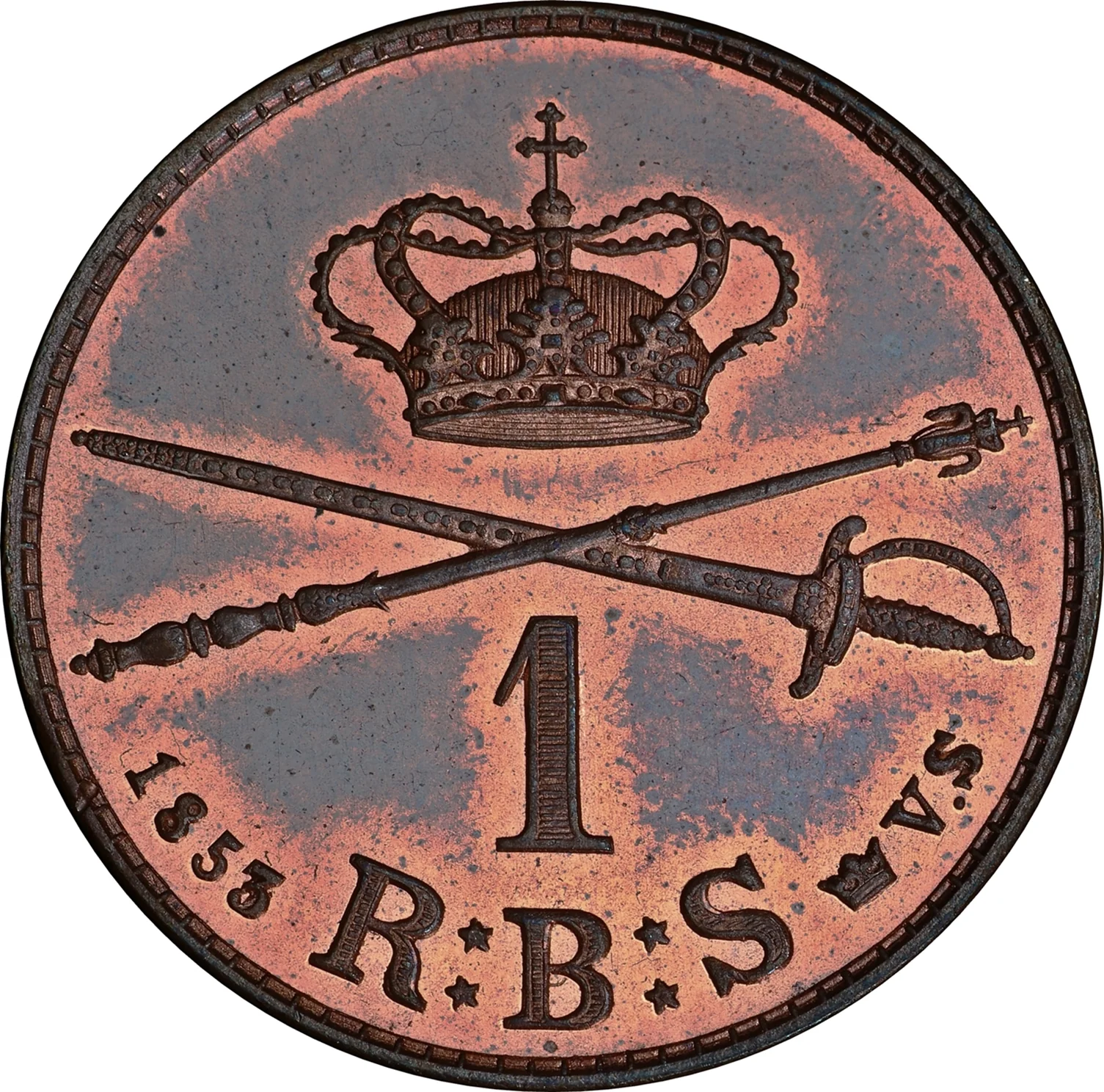
Reverse
Description:
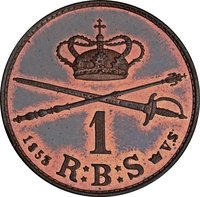
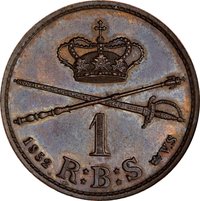
Crown above crossed sword and scepter; value and date left, mintmarks right.
Inscription:
1853 R:B:S ♔ V.S
Script: Latin
Edge
Plain
Mints
| Name | Mark |
|---|---|
| Royal Danish Mint | ♔ |
Mintings
| Year | Mint Mark | Mintage | Quality | Collection |
|---|---|---|---|---|
| 1853 | ♔ | — |
Historical background
In 1853, Denmark's currency system was in a state of transition, caught between the old and the emerging modern European monetary order. The country was part of the Scandinavian Monetary Union in spirit but not yet in law, as the formal union with Sweden and Norway would not be established until 1873. Domestically, the primary currency was the rigsdaler, a silver-based coin divided into 96 skilling. However, this system was cumbersome and fragmented, with various subsidiary coins and banknotes in circulation, some issued by the state and others by private banks, leading to occasional complexity in commerce.
This period was also defined by the global shift from silver to gold as the basis for monetary value. Like many nations, Denmark felt the instability caused by fluctuating values between the two metals. The Danish state had introduced a parallel gold rigsdaler in 1813, but the bimetallic system proved problematic. By the 1850s, the pressure to adopt a stable, uniform currency aligned with major trading partners was growing, driven by increased international trade and the desire for economic modernization following the absolute monarchy's end in 1849.
Therefore, the currency situation in 1853 was one of mounting pressure for reform rather than crisis. The existing rigsdaler system functioned but was seen as increasingly antiquated and out of step with the financial integration occurring in Europe. The debates and preparatory work happening in this decade would culminate two decades later with Denmark's decisive entry into the Scandinavian Monetary Union, adopting the krone and the gold standard in 1873, finally resolving the uncertainties of the mid-century period.
This period was also defined by the global shift from silver to gold as the basis for monetary value. Like many nations, Denmark felt the instability caused by fluctuating values between the two metals. The Danish state had introduced a parallel gold rigsdaler in 1813, but the bimetallic system proved problematic. By the 1850s, the pressure to adopt a stable, uniform currency aligned with major trading partners was growing, driven by increased international trade and the desire for economic modernization following the absolute monarchy's end in 1849.
Therefore, the currency situation in 1853 was one of mounting pressure for reform rather than crisis. The existing rigsdaler system functioned but was seen as increasingly antiquated and out of step with the financial integration occurring in Europe. The debates and preparatory work happening in this decade would culminate two decades later with Denmark's decisive entry into the Scandinavian Monetary Union, adopting the krone and the gold standard in 1873, finally resolving the uncertainties of the mid-century period.
🌱 Fairly Common