

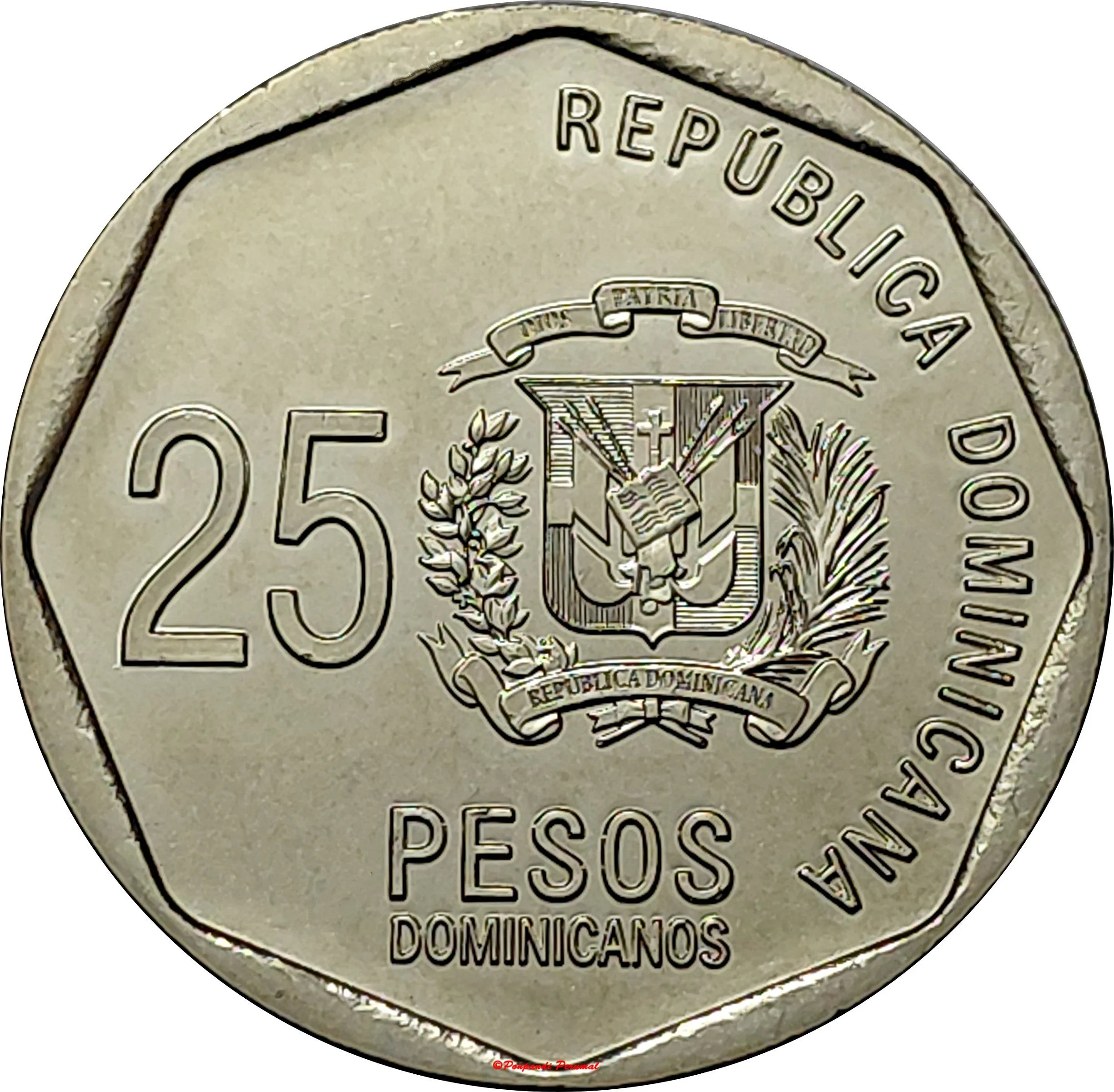
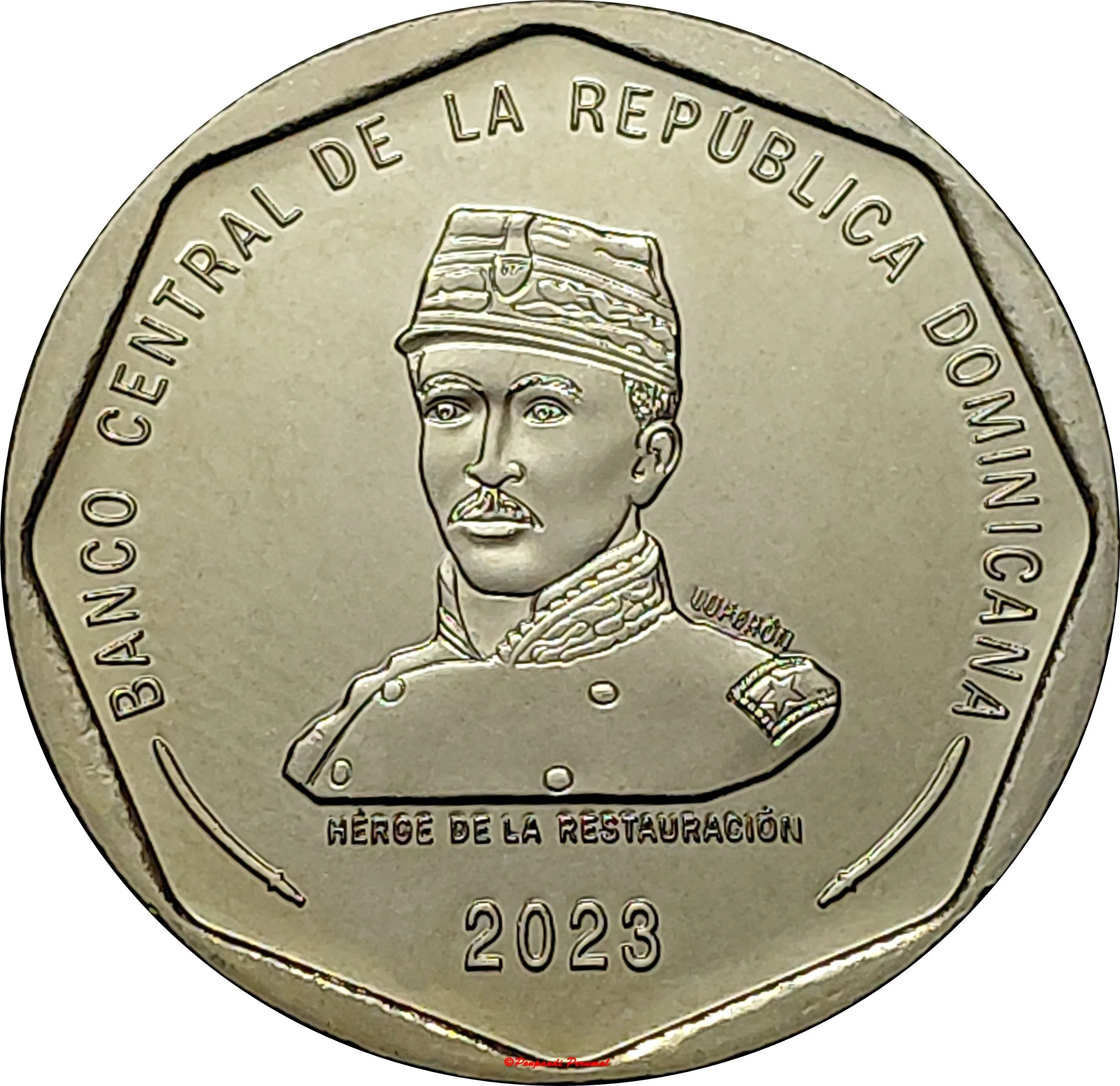
25 pesos – Dominican Republic
Add to wishlist
Dominican Republic
Context
Material
Diameter: 29 mm
Weight: 8.56 g
Thickness: 1.5 mm
Shape: Round
Composition: Copper-nickel
Technique: Milled
Alignment: Coin alignment
flip
References
KM: #
Numista: #189944
Value
Exchange value: 25 DOP
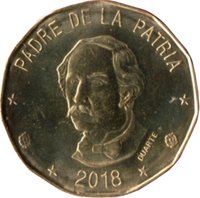
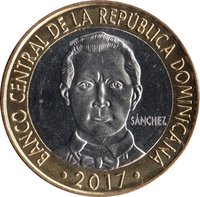
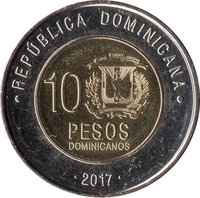
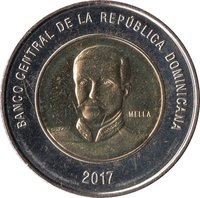
Obverse
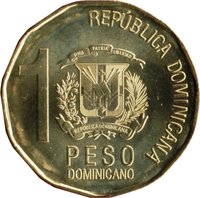
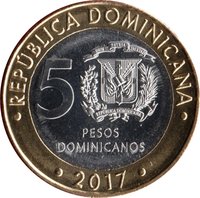
Reverse
Edge
Reeded.
Categories
| Symbols> Coat of Arms |
Mints
| Name | Mark |
|---|---|
| Kremnica | — |
| Mint of Poland | — |
Mintings
| Year | Mint Mark | Mintage | Quality | Collection |
|---|---|---|---|---|
| 2017 | — | — | ||
| 2020 | — | — | ||
| 2021 | — | — | ||
| 2022 | — | — | ||
| 2023 | — | — |
Historical background
In 2017, the Dominican Republic's currency, the peso (DOP), operated under a managed floating exchange rate regime, demonstrating notable stability against the US dollar throughout the year. The Central Bank of the Dominican Republic (BCRD) actively intervened in the foreign exchange market to smooth out excessive volatility, a policy that had been in place for years. This stability was underpinned by strong macroeconomic fundamentals, including sustained GDP growth (one of the highest in Latin America), robust foreign direct investment, and steady remittance inflows from the large diaspora, which collectively bolstered the country's foreign reserves.
The year saw the peso experience mild depreciation pressure, ending 2017 at approximately DOP 48.5 to USD 1, compared to DOP 46.7 at the end of 2016—a depreciation of about 3.9%. This gradual weakening was largely attributed to a strengthening US dollar globally and was considered manageable by economic authorities. Inflation, while a concern, remained within the Central Bank's target range, allowing monetary policy to support economic activity without triggering a currency crisis. The BCRD's credible management helped maintain investor confidence, preventing capital flight.
Overall, the 2017 currency situation reflected a period of controlled adjustment rather than crisis. The stability was a key achievement, providing a predictable environment for trade and investment in an economy heavily reliant on dollar-linked sectors like tourism and free trade zones. The managed float successfully absorbed external shocks, and the modest depreciation did not disrupt the broader economic growth trajectory, allowing the country to continue its recovery from the global financial crisis with relative monetary calm.
The year saw the peso experience mild depreciation pressure, ending 2017 at approximately DOP 48.5 to USD 1, compared to DOP 46.7 at the end of 2016—a depreciation of about 3.9%. This gradual weakening was largely attributed to a strengthening US dollar globally and was considered manageable by economic authorities. Inflation, while a concern, remained within the Central Bank's target range, allowing monetary policy to support economic activity without triggering a currency crisis. The BCRD's credible management helped maintain investor confidence, preventing capital flight.
Overall, the 2017 currency situation reflected a period of controlled adjustment rather than crisis. The stability was a key achievement, providing a predictable environment for trade and investment in an economy heavily reliant on dollar-linked sectors like tourism and free trade zones. The managed float successfully absorbed external shocks, and the modest depreciation did not disrupt the broader economic growth trajectory, allowing the country to continue its recovery from the global financial crisis with relative monetary calm.
🌱 Fairly Common