

20 cents – Sierra Leone
Add to wishlist
Sierra Leone
Context
Years: 1978–1984
Issuer: Sierra Leone
Ruler: Siaka Stevens
Currency:
(1964—2023)
Demonetization: 1 January 2024
Total mintage: 2,385,000
Material
References
KM: #
Numista: #10760
Value
Exchange value: 0.20 SLL
Obverse
Description:
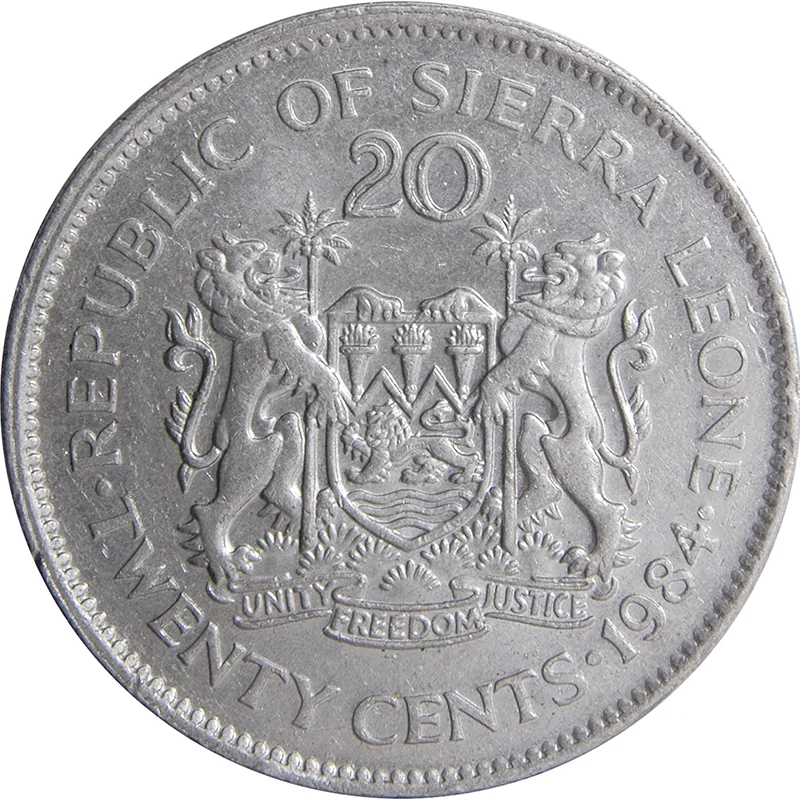
Value atop crest
Inscription:
REPUBLIC OF SIERRA LEONE
20
TWENTY CENTS · 1984
20
TWENTY CENTS · 1984
Script: Latin
Reverse
Description:
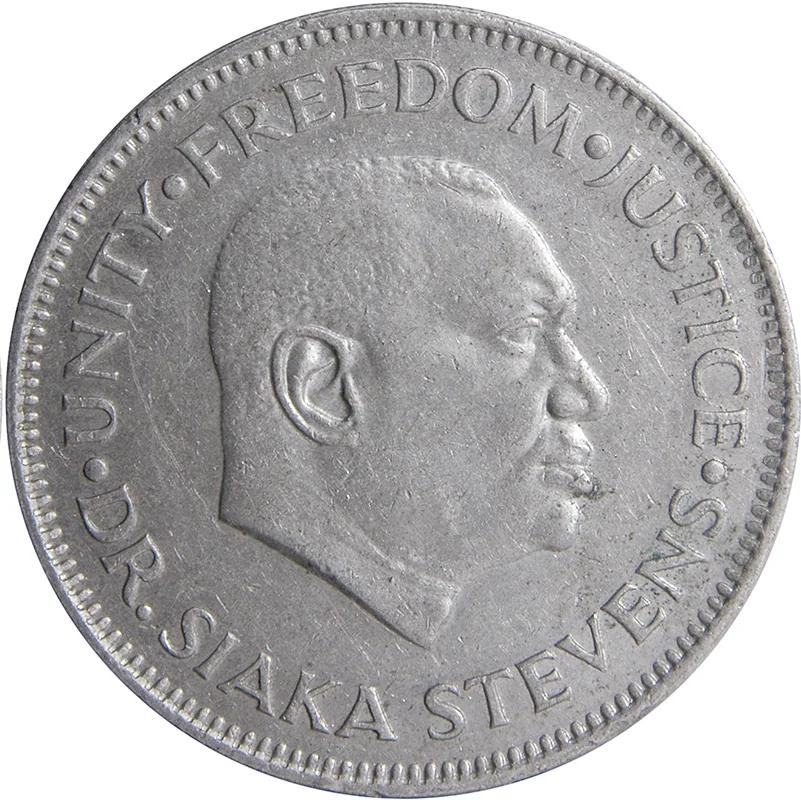
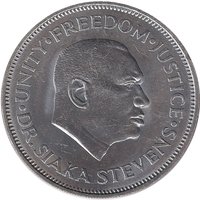
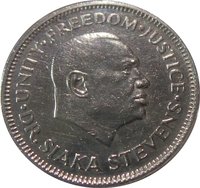
Dr. Siaka Stevens was the first president of Sierra Leone, serving from 1971 to 1985.
Inscription:
UNITY · FREEDOM · JUSTICE
Dr. SIAKA STEVENS
Dr. SIAKA STEVENS
Script: Latin
Edge
Reeded
Categories
| Animal> Feline |
| Person> Politician |
| Symbols> Coat of Arms |
Mints
| Name | Mark |
|---|---|
| Royal Mint | — |
Mintings
| Year | Mint Mark | Mintage | Quality | Collection |
|---|---|---|---|---|
| 1978 | — | 2,375,000 | ||
| 1980 | — | — | ||
| 1980 | — | 10,000 | Proof | |
| 1984 | — | — |
Historical background
In 1978, Sierra Leone's currency, the leone, was firmly embedded within a system of strict exchange controls and a fixed peg to the British pound sterling. This structure was a legacy of colonial monetary systems and was maintained by the Bank of Sierra Leone to provide stability and control over the national economy. The official exchange rate was set at 1 leone = £0.50 (or US$1.00, following the pound's own fluctuations), a rate that was increasingly divorced from the currency's real market value as economic pressures mounted.
The country's underlying economic reality in the late 1970s was one of significant strain, which directly impacted the currency's stability. Sierra Leone was heavily dependent on exports of diamonds and iron ore, but faced declining production, falling global prices, and widespread smuggling, particularly of diamonds. This eroded the nation's foreign exchange reserves, making it difficult to defend the fixed peg. Concurrently, government spending was high, fueled by ambitious development projects and a large public sector, leading to budget deficits that were often monetized—meaning more money was printed, fueling inflationary pressures that the official exchange rate could not mask.
Consequently, a thriving parallel (black) market for foreign exchange emerged, where the leone traded at a significant discount compared to the official rate. This disparity created severe distortions, discouraging official exports, encouraging capital flight, and creating shortages of imported essential goods. While the official narrative in 1978 maintained the facade of a stable currency, these underlying fissures—diminishing reserves, inflation, and a growing black-market premium—were clear indicators of the profound monetary challenges that would culminate in a major devaluation and economic restructuring in the following decade.
The country's underlying economic reality in the late 1970s was one of significant strain, which directly impacted the currency's stability. Sierra Leone was heavily dependent on exports of diamonds and iron ore, but faced declining production, falling global prices, and widespread smuggling, particularly of diamonds. This eroded the nation's foreign exchange reserves, making it difficult to defend the fixed peg. Concurrently, government spending was high, fueled by ambitious development projects and a large public sector, leading to budget deficits that were often monetized—meaning more money was printed, fueling inflationary pressures that the official exchange rate could not mask.
Consequently, a thriving parallel (black) market for foreign exchange emerged, where the leone traded at a significant discount compared to the official rate. This disparity created severe distortions, discouraging official exports, encouraging capital flight, and creating shortages of imported essential goods. While the official narrative in 1978 maintained the facade of a stable currency, these underlying fissures—diminishing reserves, inflation, and a growing black-market premium—were clear indicators of the profound monetary challenges that would culminate in a major devaluation and economic restructuring in the following decade.
🌱 Common