

100 Euro – Spain
Non-circulating coins
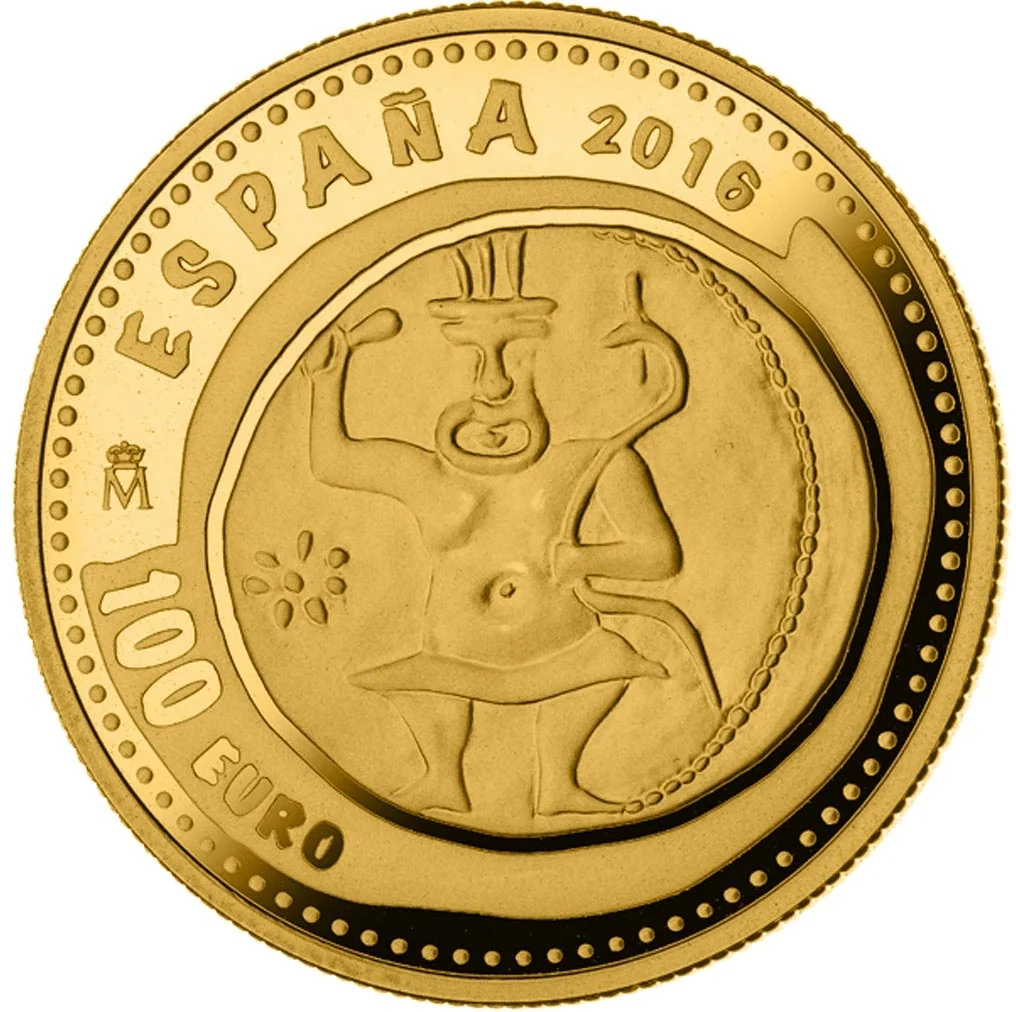
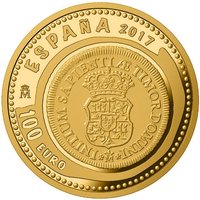
Commemoration: VII Serie – Phoenician and Iberian coinage
Series: Numismatic Jewels
Spain
Material
References
KM: #Click to copy to clipboard1388
Numista: #107547
Value
Exchange value: 100 EUR = $118.14
Bullion value: $1124.30
Inflation-adjusted value: 124.86 EUR
Obverse
Reverse
Description:
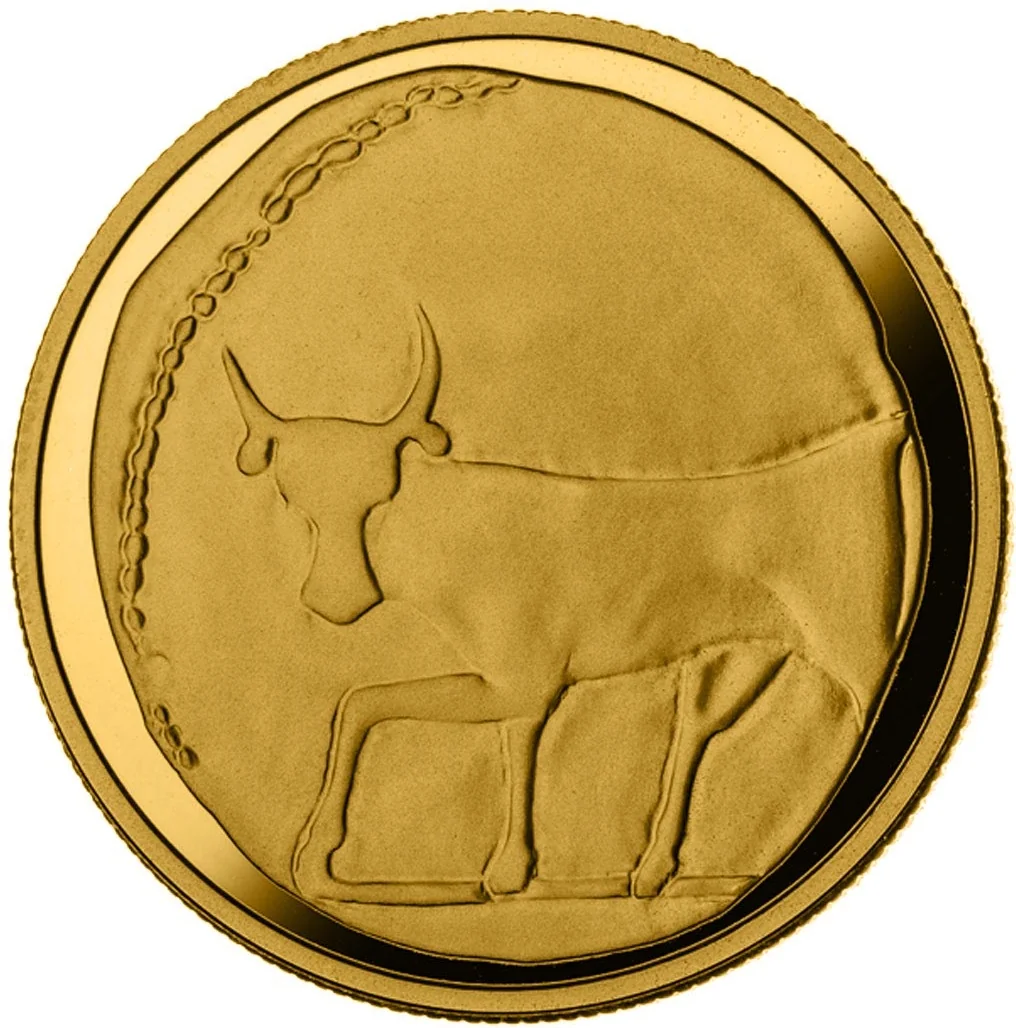
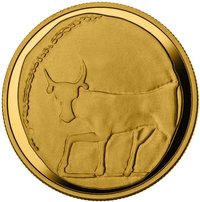
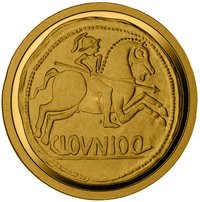
Bull walking left, head facing forward.
Edge
Reeded
Categories
| Animal> Cow |
| Currency> Coin depiction |
Mints
| Name | Mark |
|---|---|
| Royal Mint of Madrid | (M) |
Mintings
| Year | Mint Mark | Mintage | Quality | Collection |
|---|---|---|---|---|
| 2016 | M | 2,500 | Proof |
Historical background
In 2016, Spain was a full member of the Eurozone, having adopted the euro as its official currency in 1999 (for accounting) and 2002 (for physical notes and coins). The country no longer had an independent monetary policy, as this was set by the European Central Bank (ECB) in Frankfurt. The primary domestic currency focus was therefore not on a national currency but on managing the broader economic implications of the euro, particularly in the aftermath of the European debt crisis and the stringent austerity measures that had been implemented.
The year 2016 was a period of fragile but notable recovery for the Spanish economy. After a deep recession and a banking crisis that required a €41 billion EU bailout in 2012, Spain exited its excessive deficit procedure in 2015 and saw GDP growth of over 3% in 2016, one of the highest rates in the Eurozone. However, this recovery was uneven, with persistently high unemployment (around 19%) and concerns over public debt, which remained close to 100% of GDP. The ECB's policies, including historically low interest rates and quantitative easing programs, were crucial in supporting this recovery by keeping borrowing costs low for the Spanish government and businesses.
Politically, the currency situation was stable but existed within a context of broader European uncertainty. There was no serious political movement in Spain to leave the euro, as the currency was widely seen as a cornerstone of stability. However, 2016 was marked by prolonged political deadlock following two inconclusive general elections (in December 2015 and June 2016), which delayed crucial economic reforms. Furthermore, external risks like the Brexit referendum in June 2016 introduced volatility and concerns about the euro's stability, reminding Spain that its economic and currency fortunes were deeply intertwined with the broader political and economic health of the European Union.
The year 2016 was a period of fragile but notable recovery for the Spanish economy. After a deep recession and a banking crisis that required a €41 billion EU bailout in 2012, Spain exited its excessive deficit procedure in 2015 and saw GDP growth of over 3% in 2016, one of the highest rates in the Eurozone. However, this recovery was uneven, with persistently high unemployment (around 19%) and concerns over public debt, which remained close to 100% of GDP. The ECB's policies, including historically low interest rates and quantitative easing programs, were crucial in supporting this recovery by keeping borrowing costs low for the Spanish government and businesses.
Politically, the currency situation was stable but existed within a context of broader European uncertainty. There was no serious political movement in Spain to leave the euro, as the currency was widely seen as a cornerstone of stability. However, 2016 was marked by prolonged political deadlock following two inconclusive general elections (in December 2015 and June 2016), which delayed crucial economic reforms. Furthermore, external risks like the Brexit referendum in June 2016 introduced volatility and concerns about the euro's stability, reminding Spain that its economic and currency fortunes were deeply intertwined with the broader political and economic health of the European Union.
Series: Numismatic Jewels

✨ Legendary