

50 Dollars – Belize
Belize
Context
Material
References
KM: #Click to copy to clipboard66
Numista: #187204
Value
Exchange value: 50 BZD
Bullion value: $124.66
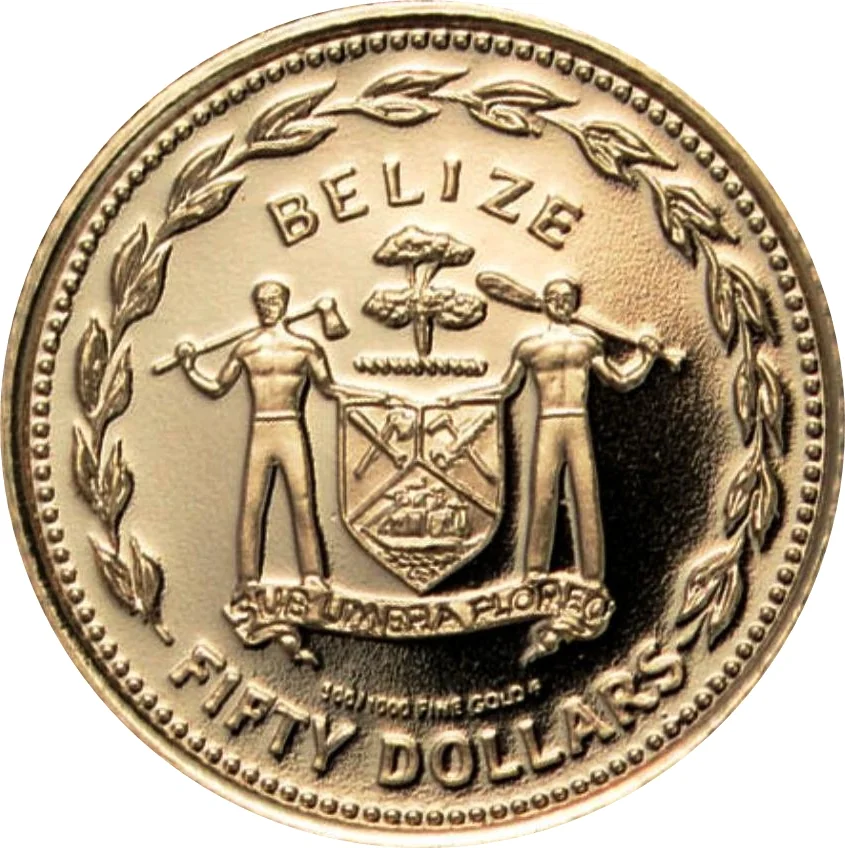
Obverse
Reverse
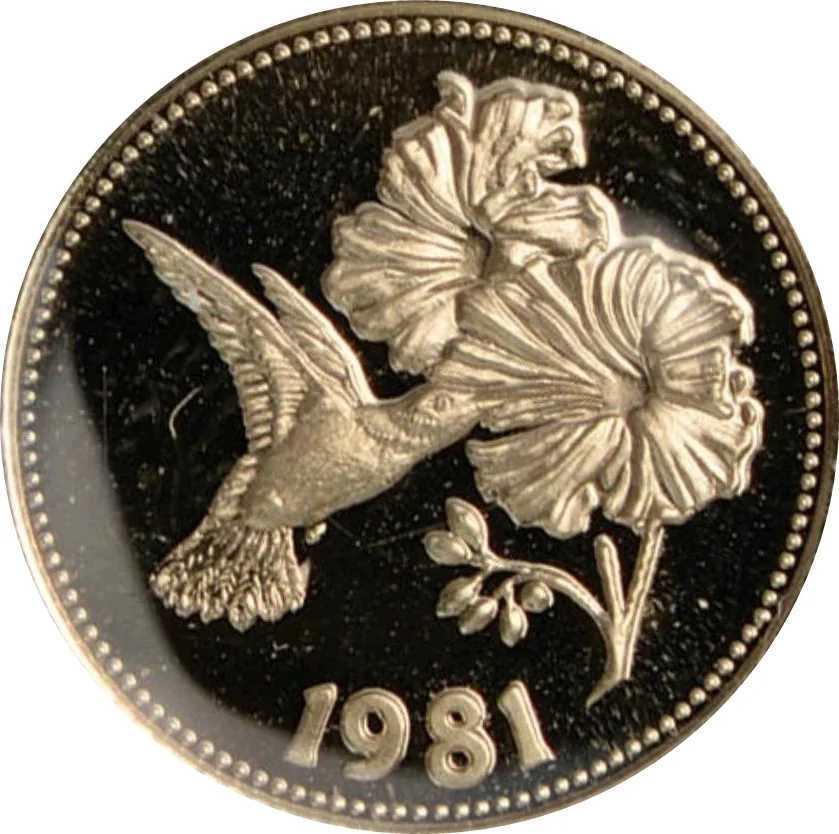
Description:
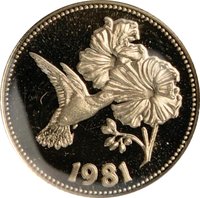
White-necked jacobin hummingbird feeding mid-flight. Beaded circular border.
Inscription:
1981
Script: Latin
Edge
Reeded
Categories
| Animal> Bird |
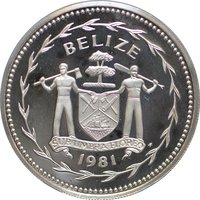
| Symbols> Coat of Arms |
Mints
| Name | Mark |
|---|---|
| Franklin Mint | (FM) |
Mintings
| Year | Mint Mark | Mintage | Quality | Collection |
|---|---|---|---|---|
| 1981 | FM | 200 | ||
| 1981 | FM | 2,873 | Proof |
Historical background
Upon gaining independence from the United Kingdom on September 21, 1981, Belize inherited a currency system that was directly pegged to the British pound sterling. This arrangement was a legacy of its colonial past, where the Belize dollar (BZD) had been fixed at a rate of BZ$4 = £1 since 1949. This peg provided a high degree of monetary stability and predictability for the small, open economy, which was heavily reliant on exports of sugar, citrus, and bananas. However, it also meant that Belize's monetary policy was effectively set by the Bank of England, with the Belize Currency Board managing the issue of notes and coins fully backed by sterling reserves.
The early 1980s presented a challenging economic context for the new nation. Global recession and falling commodity prices strained public finances, while the fixed exchange rate came under scrutiny. Pegging to the sterling, which was itself fluctuating significantly during this period due to Britain's own economic policies, introduced external vulnerabilities. There was growing domestic debate about whether maintaining the sterling peg was in Belize's best long-term interest, particularly as its major trade partner was not the United Kingdom but the United States.
Consequently, a pivotal monetary reform was enacted shortly after independence. On January 1, 1982, just over three months after independence, Belize decisively shifted its currency peg from the British pound sterling to the United States dollar at a fixed rate of BZ$2 = US$1. This move strategically aligned Belize's currency with its dominant trading and tourism partner, seeking to enhance trade stability and attract US investment. The BZ$2 to US$1 peg, managed by the newly established Central Bank of Belize, has remained remarkably resilient and continues to define the country's monetary framework to this day.
The early 1980s presented a challenging economic context for the new nation. Global recession and falling commodity prices strained public finances, while the fixed exchange rate came under scrutiny. Pegging to the sterling, which was itself fluctuating significantly during this period due to Britain's own economic policies, introduced external vulnerabilities. There was growing domestic debate about whether maintaining the sterling peg was in Belize's best long-term interest, particularly as its major trade partner was not the United Kingdom but the United States.
Consequently, a pivotal monetary reform was enacted shortly after independence. On January 1, 1982, just over three months after independence, Belize decisively shifted its currency peg from the British pound sterling to the United States dollar at a fixed rate of BZ$2 = US$1. This move strategically aligned Belize's currency with its dominant trading and tourism partner, seeking to enhance trade stability and attract US investment. The BZ$2 to US$1 peg, managed by the newly established Central Bank of Belize, has remained remarkably resilient and continues to define the country's monetary framework to this day.
Series: Birds
✨ Legendary