

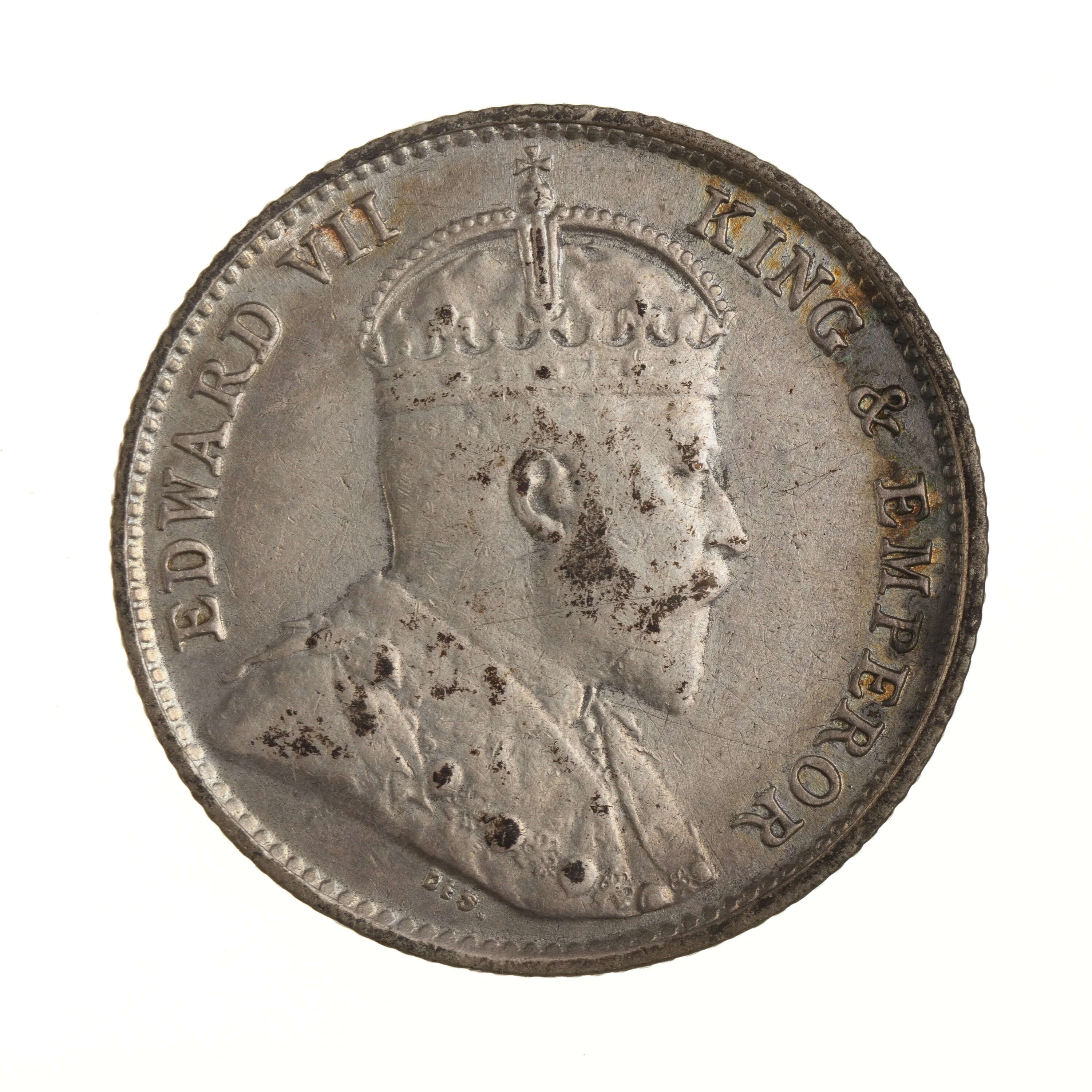
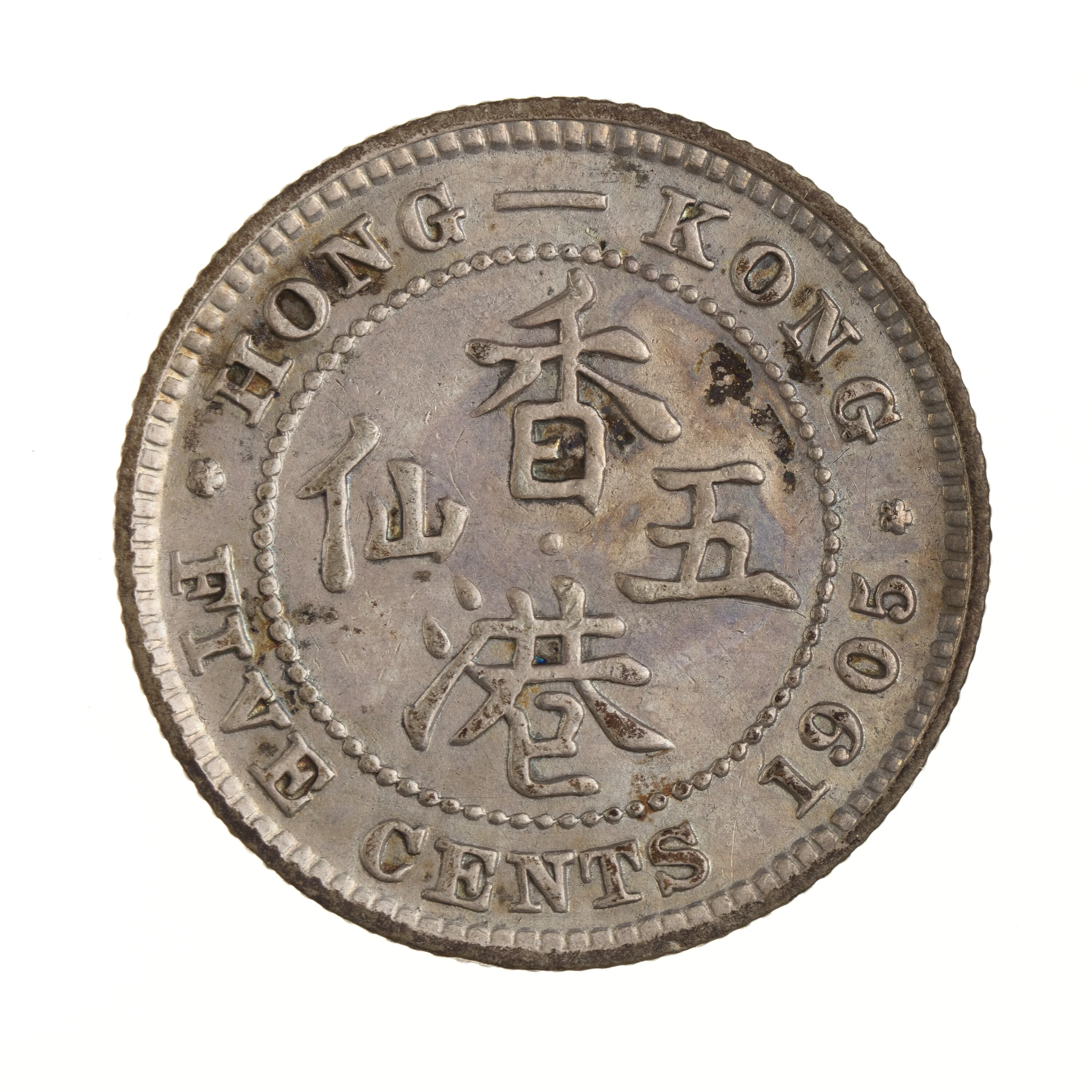
5 Cents – Hong Kong
China
Context
Years: 1903–1905
Country: China 
Issuer: Hong Kong 
Ruler: Edward VII
Currency:
(since 1863)
Demonetized: Yes
Total mintage: 22,000,000
Material
References
KM: #Click to copy to clipboard12
Numista: #18653
Value
Exchange value: 0.05 HKD = $0.01
Bullion value: $3.14
Obverse
Description:
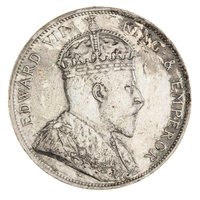
Right-facing crowned bust.
Inscription:
EDWARD VII KING & EMPEROR
Translation:
EDWARD VII KING & EMPEROR
Script: Latin
Engraver: George William de Saulles
Reverse
Edge
Reeded
Mints
| Name | Mark |
|---|---|
| Royal Mint (Tower Hill) | — |
| Heaton and Sons / The Mint Birmingham | H |
Mintings
| Year | Mint Mark | Mintage | Quality | Collection |
|---|---|---|---|---|
| 1903 | — | 6,000,000 | ||
| 1903 | — | — | Proof | |
| 1904 | — | 8,000,000 | ||
| 1904 | — | — | Proof | |
| 1905 | H | 7,000,000 | ||
| 1905 | — | 1,000,000 |
Historical background
In 1903, Hong Kong's currency situation was a complex and practical reflection of its role as a bustling British Crown Colony and international trading hub. The official unit of account was the silver dollar, but the monetary landscape was a diverse mix. The most prominent coin in daily circulation was the British silver trade dollar, minted specifically for East Asia and bearing the image of Britannia. It competed with other silver dollars, notably the Mexican "Carolus" dollar, which had been a regional standard for decades, and the newly emerging Japanese yen. Alongside these, subsidiary Hong Kong minted coins (ten-cent and five-cent pieces) and the British sterling coinage of pennies and shillings also circulated, creating a multi-currency environment.
This system was fundamentally anchored to a silver standard, meaning the value of these coins was tied to their intrinsic silver content. This presented both a key advantage and a significant vulnerability. The advantage was that Hong Kong's money automatically aligned with the monetary systems of its major trading partners, China and the Straits Settlements, which were also on a silver standard, facilitating seamless commerce. However, the colony was exposed to the global decline in the value of silver relative to gold, which had been ongoing since the 1870s. This depreciation caused exchange rate instability with gold-based currencies like the British pound sterling, complicating financial relations with the metropole and causing occasional budgetary concerns for the colonial government.
The Hong Kong government and its banking system, led by the powerful Hongkong and Shanghai Banking Corporation (HSBC), managed this heterogeneity through daily published exchange rates between the various silver coins and through the issuance of banknotes. These notes, issued by HSBC, the Chartered Bank of India, Australia and China, and the Mercantile Bank, were denominated in dollars and represented a growing share of the money in use. They provided a more convenient paper alternative to heavy silver, but their acceptance ultimately relied on the public's trust in the banks' promise to pay the equivalent in silver coin upon demand, a system that functioned effectively but was inherently tied to the fluctuating fortunes of the white metal.
This system was fundamentally anchored to a silver standard, meaning the value of these coins was tied to their intrinsic silver content. This presented both a key advantage and a significant vulnerability. The advantage was that Hong Kong's money automatically aligned with the monetary systems of its major trading partners, China and the Straits Settlements, which were also on a silver standard, facilitating seamless commerce. However, the colony was exposed to the global decline in the value of silver relative to gold, which had been ongoing since the 1870s. This depreciation caused exchange rate instability with gold-based currencies like the British pound sterling, complicating financial relations with the metropole and causing occasional budgetary concerns for the colonial government.
The Hong Kong government and its banking system, led by the powerful Hongkong and Shanghai Banking Corporation (HSBC), managed this heterogeneity through daily published exchange rates between the various silver coins and through the issuance of banknotes. These notes, issued by HSBC, the Chartered Bank of India, Australia and China, and the Mercantile Bank, were denominated in dollars and represented a growing share of the money in use. They provided a more convenient paper alternative to heavy silver, but their acceptance ultimately relied on the public's trust in the banks' promise to pay the equivalent in silver coin upon demand, a system that functioned effectively but was inherently tied to the fluctuating fortunes of the white metal.
🌱 Common