

Peru
Context

Material
References
KM: #Click to copy to clipboard201
Numista: #18647
Value
Bullion value: $63.89
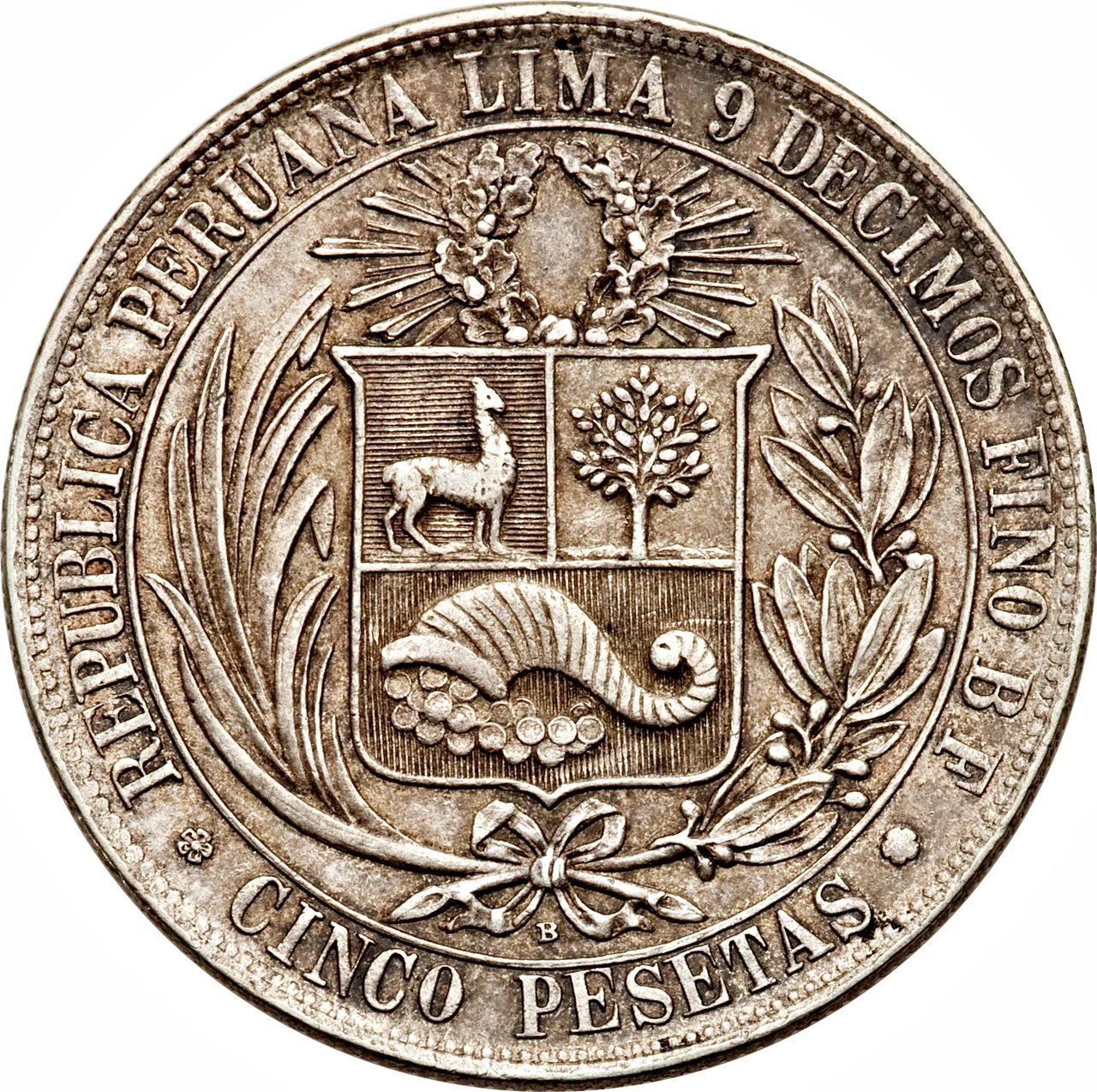
Obverse
Description:
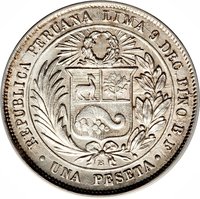
Peruvian coat of arms with legend.
Inscription:
REPUBLICA PERUANA LIMA.9 DECIMOS FINO.B.F. *CINCO PESETAS*
Translation:
REPUBLIC OF PERU LIMA. 9 DECIMOS FINE.B.F. *FIVE PESETAS*
Script: Latin
Language: Spanish
Engraver: Robert Britten
Reverse
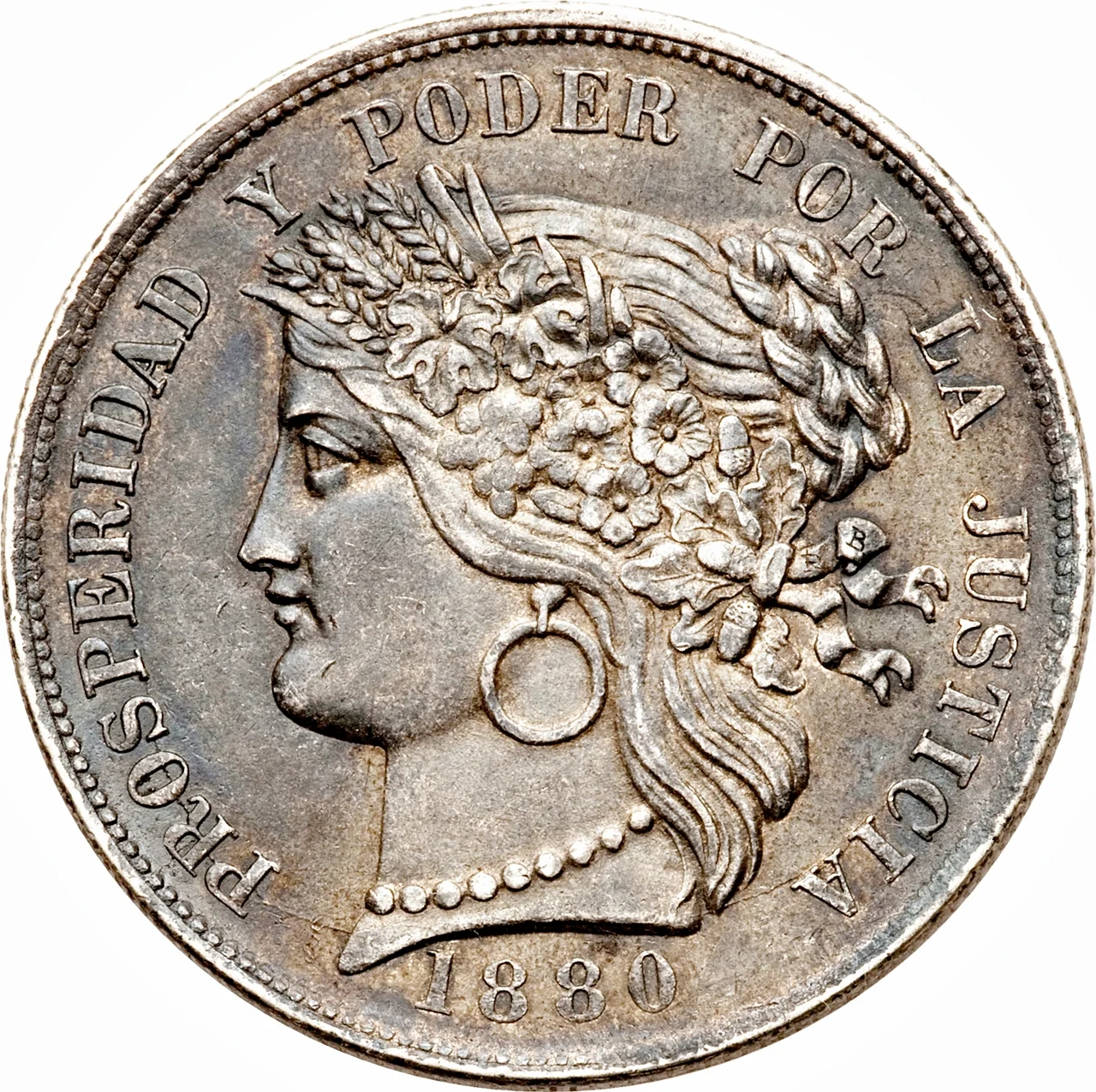
Description:
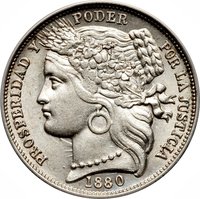
Woman's head left under legend, date at 6 o'clock.
Inscription:
PROSPERIDAD Y PODER POR LA JUSTICIA
1880
1880
Script: Latin
Engraver: Robert Britten
Edge
Reeded
Mintings
| Year | Mint Mark | Mintage | Quality | Collection |
|---|---|---|---|---|
| 1880 | BF | — | ||
| 1881 | B | — | ||
| 1882 | LM | — |
Historical background
In 1880, Peru's currency situation was one of profound crisis, directly stemming from the ongoing War of the Pacific (1879-1884). Following devastating defeats at sea and on land, including the loss of the vital nitrate-rich Tarapacá province, the Peruvian state faced financial collapse. To fund the war effort, the government of President Nicolás de Piérola had resorted to the massive printing of unbacked paper money, known as billetes fiscales (fiscal notes). This led to rampant inflation and a severe loss of public confidence, as the paper currency's value plummeted against silver and gold.
The monetary landscape was chaotic, characterized by a dual system. The old silver soles, minted before the war, retained their intrinsic value and were hoarded, disappearing from daily circulation. In their place, the devalued paper bills became the primary medium of exchange, but their worth fluctuated wildly based on war news. By 1880, the government was forced to officially recognize this devaluation, setting arbitrary exchange rates for the paper money against the silver sol for tax payments, which further complicated commerce and undermined the economy. In the capital, Lima, and other areas, foreign coins like British sovereigns and Chilean pesos also circulated at a premium.
This monetary disintegration crippled the Peruvian economy, exacerbating the hardships of war. Internal trade was hampered, government revenues became unpredictable, and the population, especially the poor and those on fixed incomes, suffered from the eroded purchasing power of the paper notes. The currency chaos of 1880 was both a symptom and a cause of the national emergency, reflecting a state financing a desperate war through inflation, which would leave deep economic scars long after the conflict ended.
The monetary landscape was chaotic, characterized by a dual system. The old silver soles, minted before the war, retained their intrinsic value and were hoarded, disappearing from daily circulation. In their place, the devalued paper bills became the primary medium of exchange, but their worth fluctuated wildly based on war news. By 1880, the government was forced to officially recognize this devaluation, setting arbitrary exchange rates for the paper money against the silver sol for tax payments, which further complicated commerce and undermined the economy. In the capital, Lima, and other areas, foreign coins like British sovereigns and Chilean pesos also circulated at a premium.
This monetary disintegration crippled the Peruvian economy, exacerbating the hardships of war. Internal trade was hampered, government revenues became unpredictable, and the population, especially the poor and those on fixed incomes, suffered from the eroded purchasing power of the paper notes. The currency chaos of 1880 was both a symptom and a cause of the national emergency, reflecting a state financing a desperate war through inflation, which would leave deep economic scars long after the conflict ended.
🌟 Uncommon