

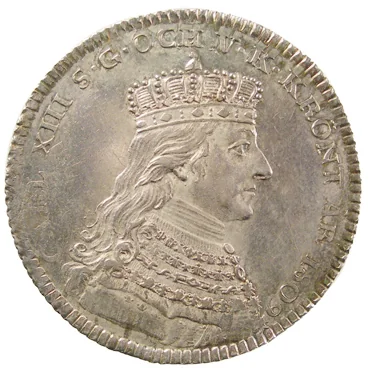
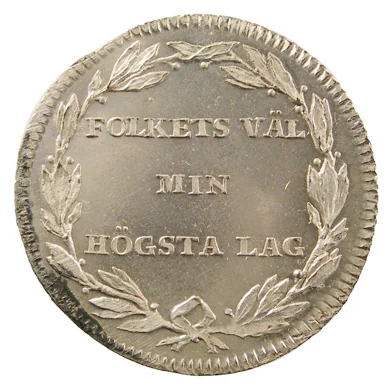
⅓ riksdaler – Sweden
Add to wishlist
Circulating commemorative coins
Commemoration: Largesse Money For The King's Coronation 1809
Sweden
Context
Material
References
Numista: #186170
Value
Bullion value: $21.49
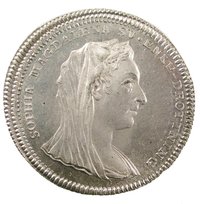
Obverse
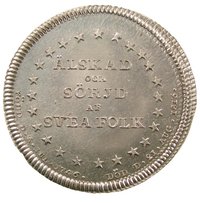
Reverse
Edge
Reeded
Mints
| Name | Mark |
|---|---|
| Stockholm | — |
Mintings
| Year | Mint Mark | Mintage | Quality | Collection |
|---|---|---|---|---|
| 1809 | — | — |
Historical background
In 1809, Sweden found itself in a profound monetary crisis, a direct consequence of its disastrous involvement in the Napoleonic Wars. The conflict, particularly the war against Russia (1808-1809), had drained the state's finances, leading to massive borrowing from the Riksbank. To cover these deficits, the bank engaged in excessive note-printing, severing the paper currency's link to its silver reserves. This resulted in severe inflation, where the value of the riksdaler riksmynt in paper notes plummeted to roughly one-third of its silver value, eroding public trust and causing economic hardship.
The situation was exacerbated by the political turmoil following Sweden's defeat. The loss of Finland to Russia in the Treaty of Fredrikshamn (September 1809) was a national trauma that also shattered the remaining confidence in the currency. The new constitution adopted that same year established a new monarchy under Jean-Baptiste Bernadotte, but the financial system was in ruins. A dual currency system existed de facto, with transactions often calculated in silver values while payments were made in depreciated paper, creating confusion and hindering trade.
Consequently, addressing the currency crisis became an immediate priority for the new regime. The Riksbank was essentially insolvent, and the state's credit was nonexistent. This dire backdrop set the stage for the major monetary reforms that would follow in the coming decades, most notably the establishment of the Skandinaviska Banken and, ultimately, the 1834 currency reform that finally restored the silver standard and stabilized the Swedish economy after a quarter-century of monetary disorder.
The situation was exacerbated by the political turmoil following Sweden's defeat. The loss of Finland to Russia in the Treaty of Fredrikshamn (September 1809) was a national trauma that also shattered the remaining confidence in the currency. The new constitution adopted that same year established a new monarchy under Jean-Baptiste Bernadotte, but the financial system was in ruins. A dual currency system existed de facto, with transactions often calculated in silver values while payments were made in depreciated paper, creating confusion and hindering trade.
Consequently, addressing the currency crisis became an immediate priority for the new regime. The Riksbank was essentially insolvent, and the state's credit was nonexistent. This dire backdrop set the stage for the major monetary reforms that would follow in the coming decades, most notably the establishment of the Skandinaviska Banken and, ultimately, the 1834 currency reform that finally restored the silver standard and stabilized the Swedish economy after a quarter-century of monetary disorder.
✨ Legendary