

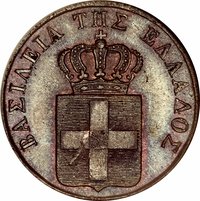
Obverse
Description:
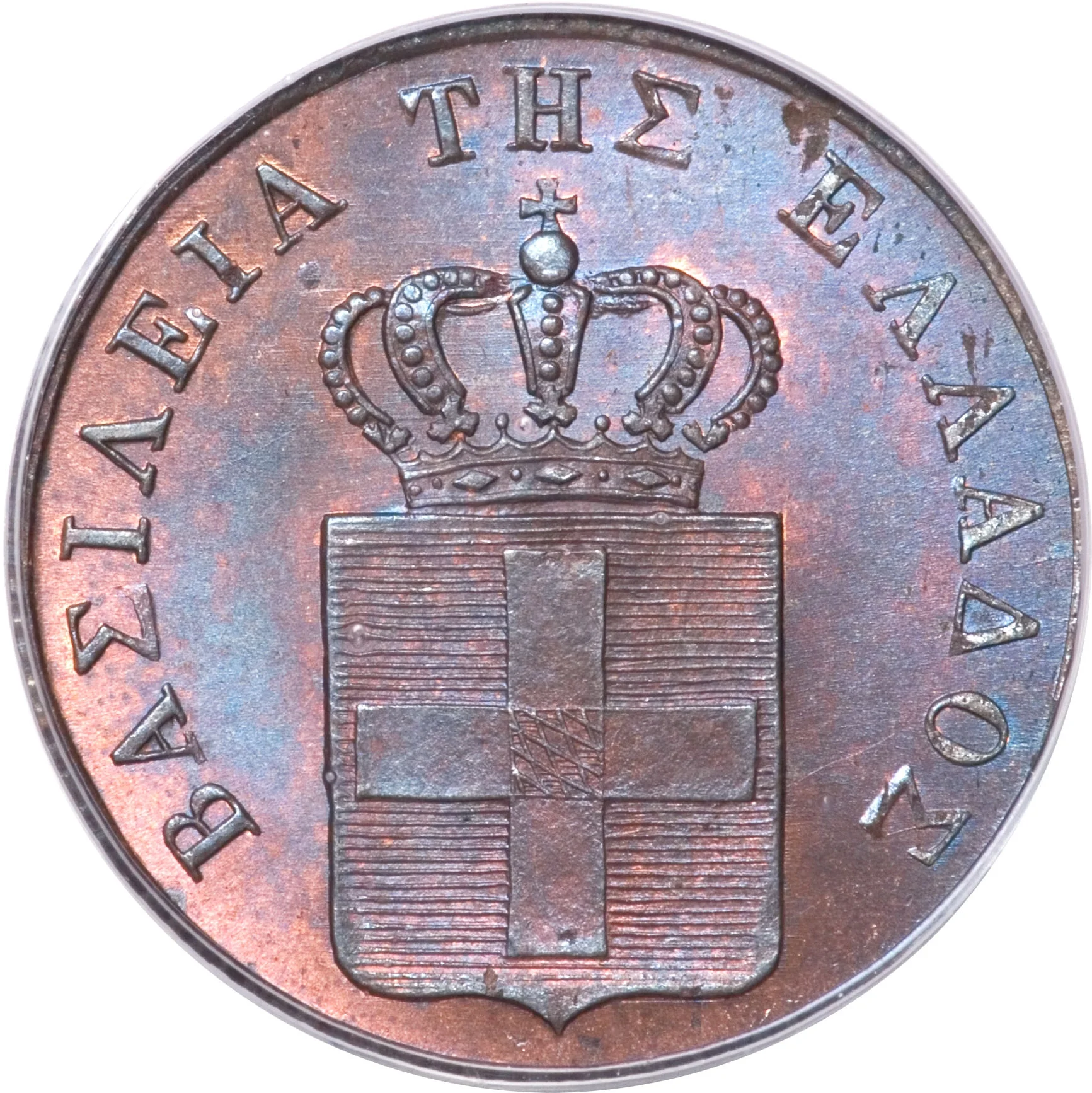
Cross shield, crowned.
Inscription:
ΒΑΣΙΛΕΙΑ ΤΗΣ ΕΛΛΑΔΟΣ
Translation:
Kingdom of Hellas
Script: Greek
Language: Greek
Engraver: Carl Friedrich Voigt
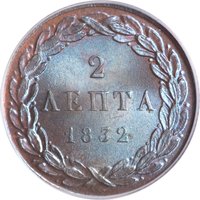
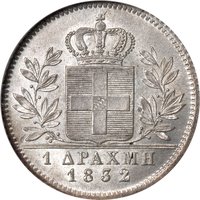
Reverse
Description:
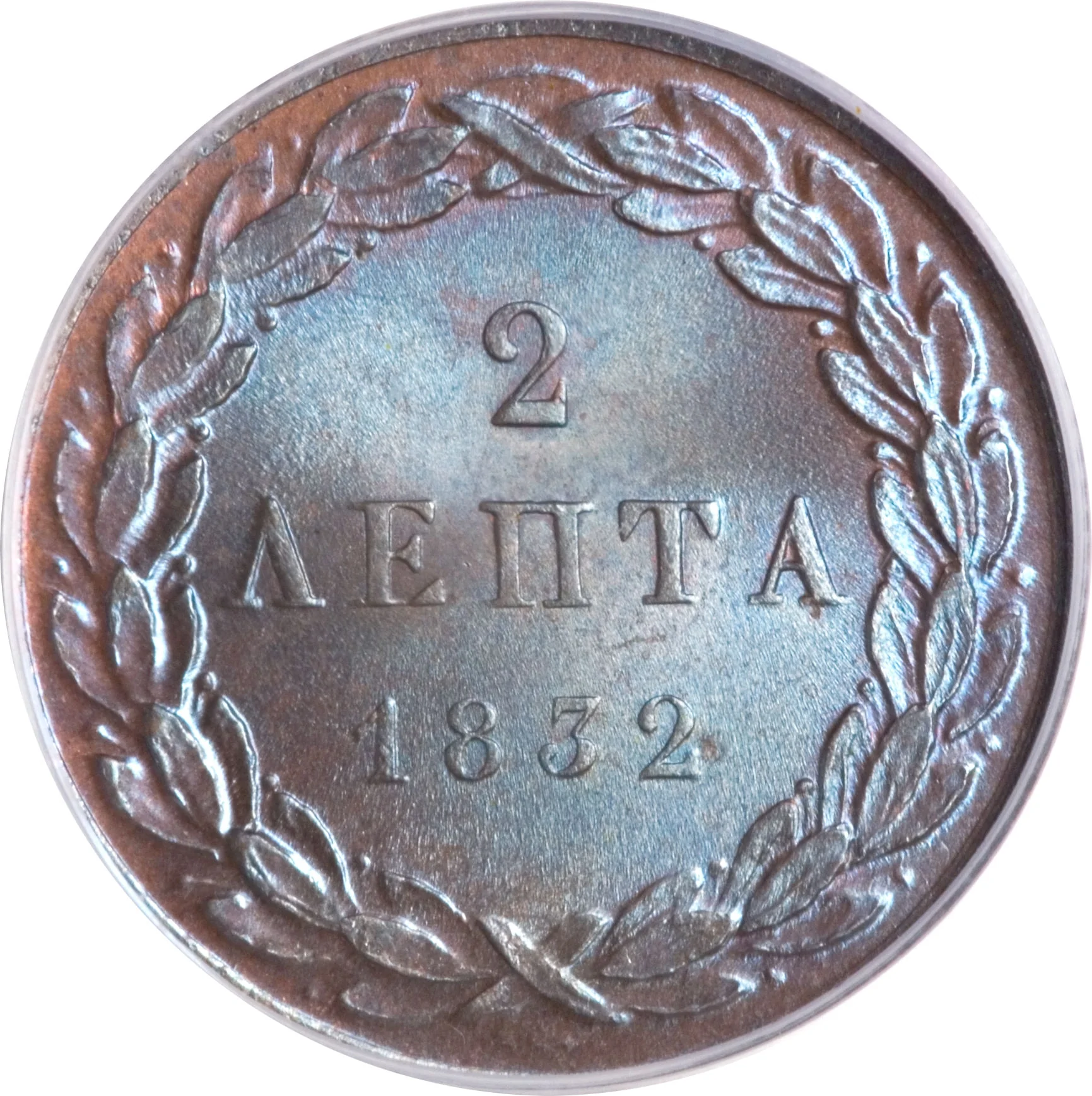
Denomination and date encircled by wreath.
Inscription:
2 ΛΕΠΤΑ 1832
Translation:
Two Lepta 1832
Script: Greek
Language: Greek
Engraver: Carl Friedrich Voigt
Edge
Milled
Mints
| Name | Mark |
|---|---|
| Athens Mint | — |
| Munich | — |
Mintings
| Year | Mint Mark | Mintage | Quality | Collection |
|---|---|---|---|---|
| 1832 | — | 2,475,000 | ||
| 1833 | — | — | ||
| 1834 | — | — | ||
| 1836 | — | 40,000 | ||
| 1837 | — | 222,000 | ||
| 1838 | — | 701,000 | ||
| 1839 | — | 661,000 | ||
| 1840 | — | 520,000 | ||
| 1842 | — | 471,000 |
Historical background
Following its War of Independence (1821-1829), the newly established Kingdom of Greece in 1832 inherited a monetary chaos. The Ottoman kuruş (piastre) remained in widespread circulation, but its value was unstable and it competed with a bewildering array of other currencies. These included French francs, Spanish dollars, Russian rubles, and various Italian coins, all brought by foreign fighters, traders, and lenders during the revolution. This fragmented system stifled trade, complicated taxation, and symbolized the lack of a unified national economy, posing a critical challenge to the fledgling state's stability and sovereignty.
The situation was formally addressed by the London Conference of 1832, where the Great Powers (Britain, France, and Russia) not only appointed Prince Otto of Bavaria as king but also dictated the terms of a new financial system. The treaty established the drachma as Greece's national currency, pegging it firmly to the French franc on the bimetallic standard (1 drachma = 1 franc). This meant the drachma's value was defined in terms of both silver and gold, aligning Greece with the Latin Monetary Union in practice. The move was a deliberate political and economic intervention, designed to integrate Greece into the Western European financial sphere and ensure stability for servicing the large foreign loan guaranteed by the Powers.
Despite this clear legal framework, the reality on the ground in 1832 and for years after was one of transition and scarcity. The government lacked the resources to immediately mint sufficient quantities of new coinage to replace the old mosaic of currencies. Consequently, the old foreign and Ottoman coins continued to circulate at negotiated values alongside the slowly introduced drachma. This period was marked by a chronic shortage of sound metallic money, which hindered commerce and state finances from the very birth of the modern Greek state, foreshadowing the profound economic challenges that would persist throughout the 19th century.
The situation was formally addressed by the London Conference of 1832, where the Great Powers (Britain, France, and Russia) not only appointed Prince Otto of Bavaria as king but also dictated the terms of a new financial system. The treaty established the drachma as Greece's national currency, pegging it firmly to the French franc on the bimetallic standard (1 drachma = 1 franc). This meant the drachma's value was defined in terms of both silver and gold, aligning Greece with the Latin Monetary Union in practice. The move was a deliberate political and economic intervention, designed to integrate Greece into the Western European financial sphere and ensure stability for servicing the large foreign loan guaranteed by the Powers.
Despite this clear legal framework, the reality on the ground in 1832 and for years after was one of transition and scarcity. The government lacked the resources to immediately mint sufficient quantities of new coinage to replace the old mosaic of currencies. Consequently, the old foreign and Ottoman coins continued to circulate at negotiated values alongside the slowly introduced drachma. This period was marked by a chronic shortage of sound metallic money, which hindered commerce and state finances from the very birth of the modern Greek state, foreshadowing the profound economic challenges that would persist throughout the 19th century.
⭐ Somewhat Rare