

10 lepta – Greece
Add to wishlist
Greece
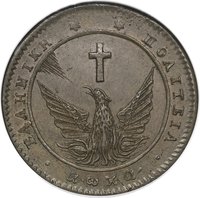
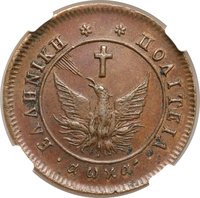
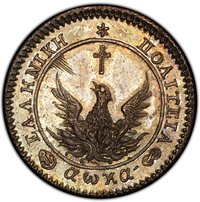
Obverse
Description:
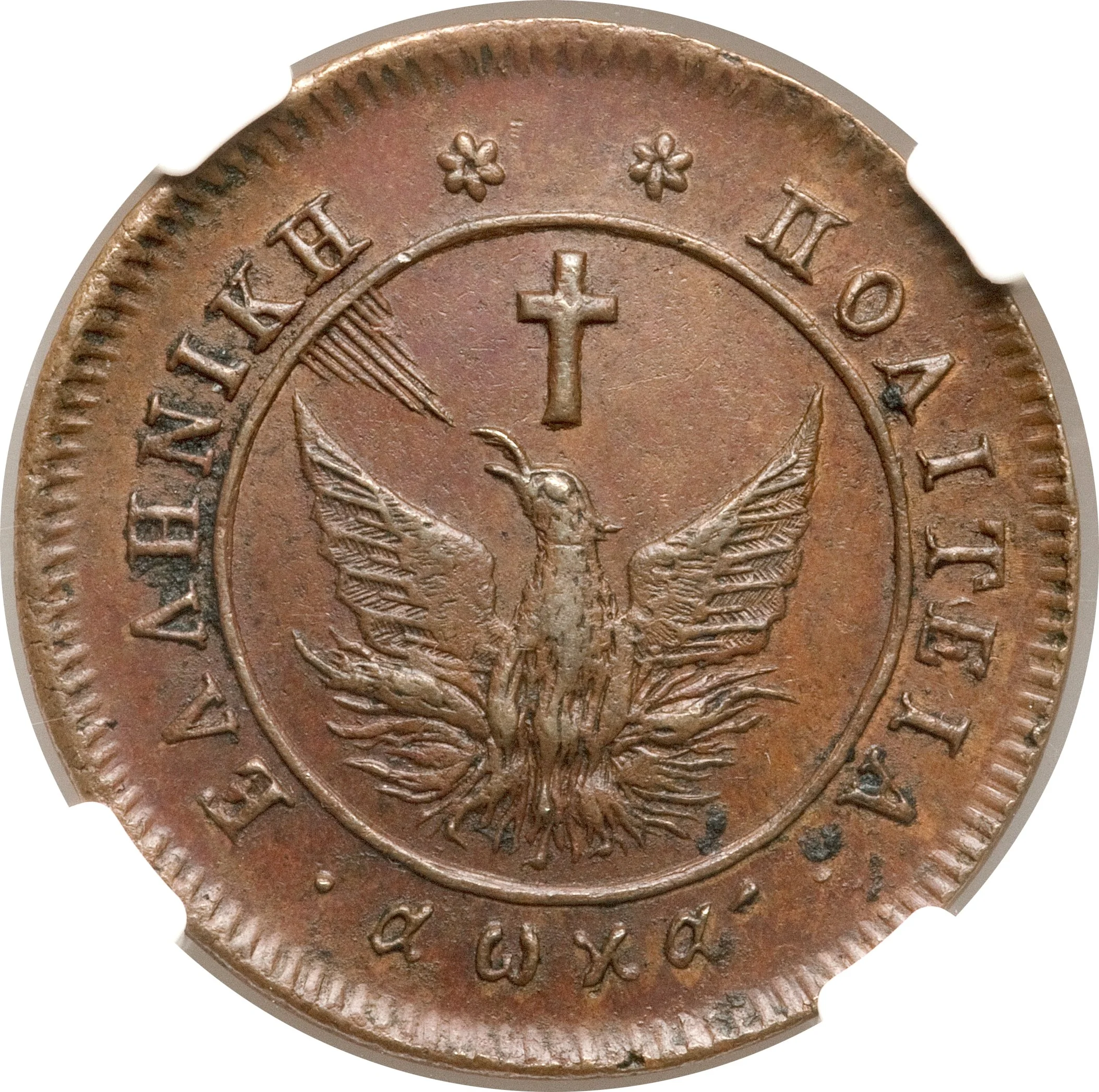
Phoenix with cross and sun rays inside a circle.
Inscription:
ΕΛΛΗΝΙΚΗ ΠΟΛΙΤΕΙΑ
αωκα΄
αωκα΄
Translation:
HELLENIC REPUBLIC
1971
1971
Script: Greek
Language: Greek
Engraver: Chatzigrigoris Pyrobolistis
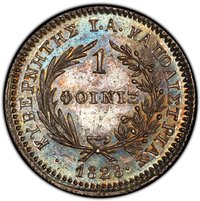
Reverse
Description:
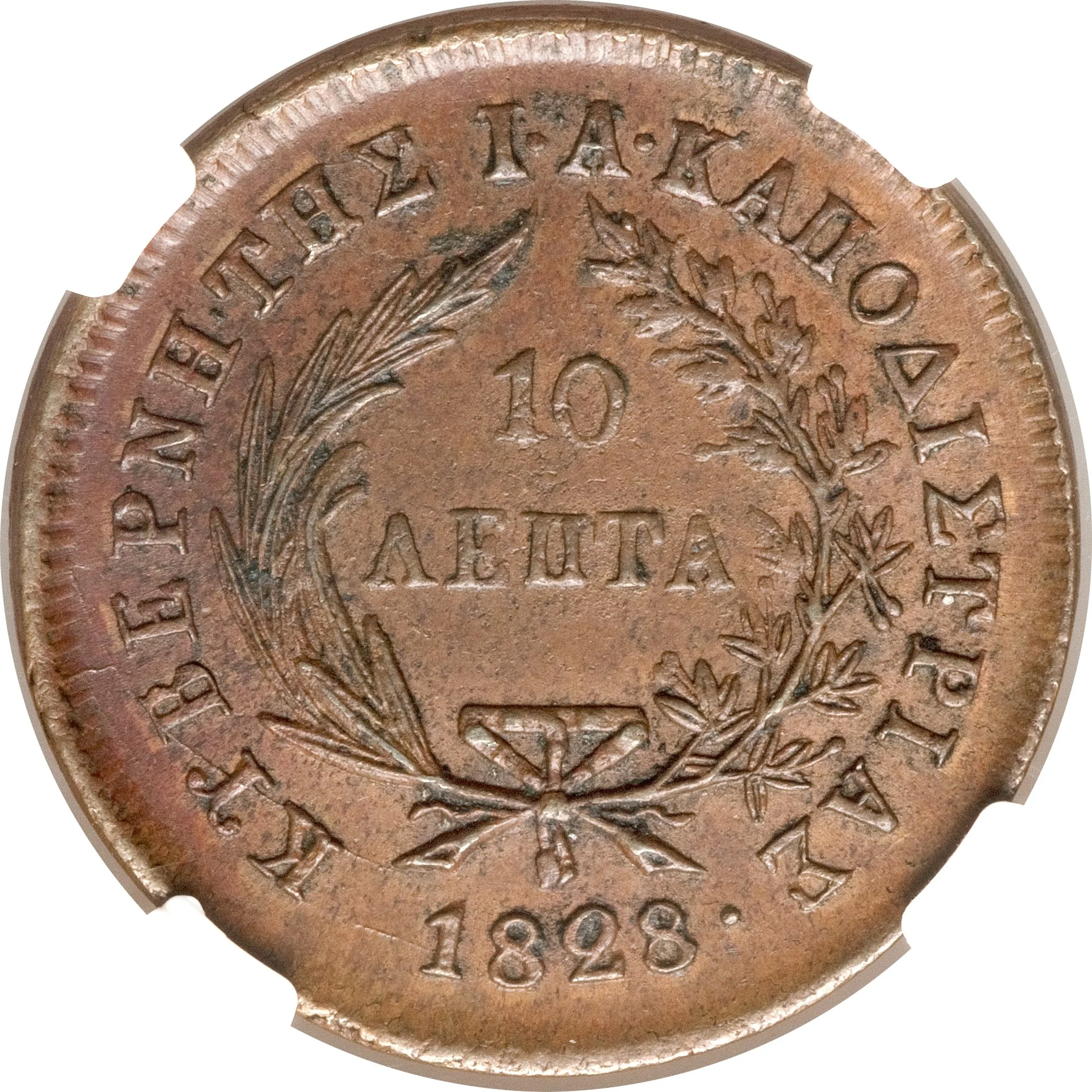
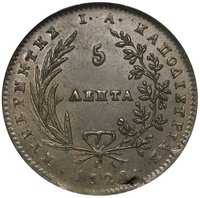
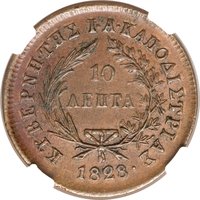
Laurel and olive branches encircling the denomination.
Inscription:
• ΚΥΒΕΡΝΗΤΗΣ Ι• Α• ΚΑΠΟΔΙΣΤΡΙΑΣ •
10
ΛΕΠΤΑ
1828
10
ΛΕΠΤΑ
1828
Translation:
Governor I. A. Kapodistrias
10
Lepta
1828
10
Lepta
1828
Script: Greek
Language: Greek
Engraver: Chatzigrigoris Pyrobolistis
Edge
Plain
Mints
| Name | Mark |
|---|---|
| National mint of Aegina Mint | — |
Mintings
| Year | Mint Mark | Mintage | Quality | Collection |
|---|---|---|---|---|
| 1828 | — | 450,000 | ||
| 1830 | — | 33,880 |
Historical background
Following its protracted War of Independence (1821-1829), Greece in 1828 existed as a nascent state with a chaotic and fragmented monetary landscape. The territory was flooded with a bewildering variety of coins from the receding Ottoman Empire, including the Ottoman kuruş (piastre), alongside a multitude of European currencies like Spanish dollars, Dutch leeuwendaalders, and French francs, which had been used by foreign philhellenes and traders. This proliferation of coins, each with fluctuating and unofficial exchange rates, created severe instability, hampered trade, and symbolized the lack of a unified national authority.
The first governor of Greece, Ioannis Kapodistrias, who arrived in 1828, recognized that establishing a stable currency was fundamental to state-building and economic recovery. His immediate solution was the introduction of the phoenix (Φοίνιξ), named after the mythical bird symbolizing rebirth. Struck from silver donated by supporters like philhellene committees, the phoenix was intended to be a national symbol and a practical tool to unify the monetary system. However, its issuance was extremely limited, and it failed to displace the plethora of foreign coins in circulation.
Consequently, the currency situation in 1828 remained one of transition and profound difficulty. While the phoenix represented the first official step toward a national currency, its practical impact was minimal against the backdrop of a war-ravaged economy and empty state coffers. The monetary chaos reflected the broader challenges of constructing a functional state from scratch, a problem that would only begin to be resolved after 1832 with the arrival of King Otto and the eventual introduction of the drachma, pegged to the French franc.
The first governor of Greece, Ioannis Kapodistrias, who arrived in 1828, recognized that establishing a stable currency was fundamental to state-building and economic recovery. His immediate solution was the introduction of the phoenix (Φοίνιξ), named after the mythical bird symbolizing rebirth. Struck from silver donated by supporters like philhellene committees, the phoenix was intended to be a national symbol and a practical tool to unify the monetary system. However, its issuance was extremely limited, and it failed to displace the plethora of foreign coins in circulation.
Consequently, the currency situation in 1828 remained one of transition and profound difficulty. While the phoenix represented the first official step toward a national currency, its practical impact was minimal against the backdrop of a war-ravaged economy and empty state coffers. The monetary chaos reflected the broader challenges of constructing a functional state from scratch, a problem that would only begin to be resolved after 1832 with the arrival of King Otto and the eventual introduction of the drachma, pegged to the French franc.
Series: 1828 Greece circulation coins
⭐ Rare