

500 Dinars – Iran
Iran
Context

Material
References
KM: #Click to copy to clipboard219
Numista: #185322
Value
Bullion value: $10.05
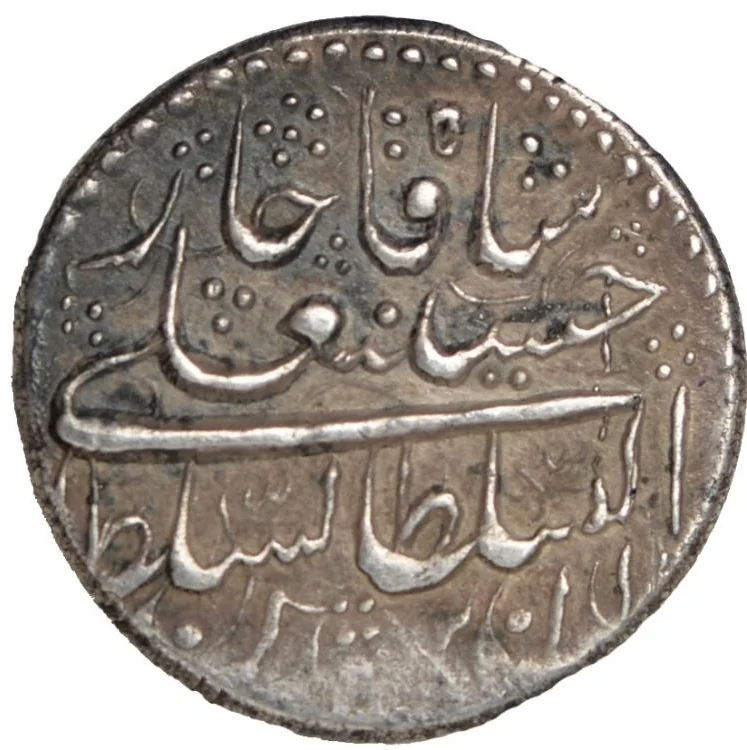
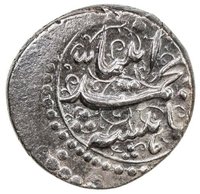
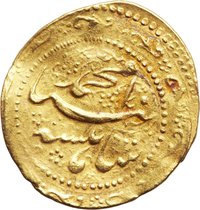
Obverse
Inscription:
السّلطان ابن السّلطان حسینعلی شاه قاجار
Translation:
The Sultan, son of the Sultan, Hossein Ali Shah Qajar
Script: Persian (nastaliq)
Language: Arabic
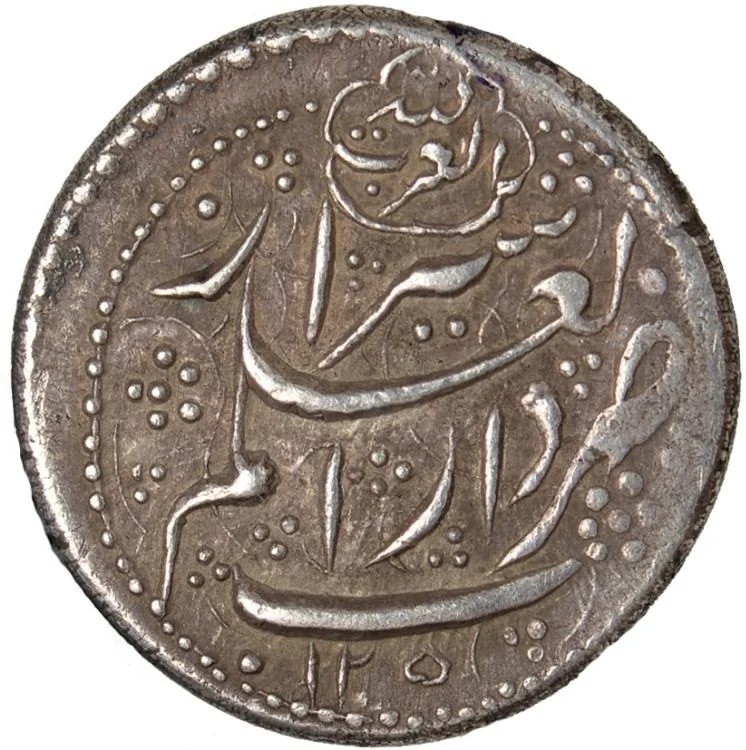
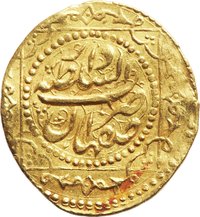
Reverse
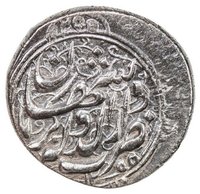
Inscription:
العزت لله
ضرب دارالعلم شیراز
۱۲۵۱
ضرب دارالعلم شیراز
۱۲۵۱
Translation:
Might belongs to God
Struck in Dar al-Elm Shiraz
1251
Struck in Dar al-Elm Shiraz
1251
Script: Persian (nastaliq)
Language: Arabic
Edge
Mintings
| Year | Mint Mark | Mintage | Quality | Collection |
|---|---|---|---|---|
| 1836 | — | — |
Historical background
In 1836, the currency situation in Iran under the Qajar dynasty was one of profound disorder and debasement. The monetary system was not unified, operating on a bimetallic standard of silver and copper, with the primary unit being the silver qiran (later the rial). However, a severe shortage of silver, stemming from a chronic trade deficit with Europe and Russia that drained bullion from the country, crippled the economy. This scarcity led to the widespread circulation of a plethora of foreign coins—including Austrian thalers, Russian rubles, and Indian rupees—alongside a chaotic mix of older Persian coins from various regions and reigns, all valued by weight and fineness rather than a fixed face value.
The crisis came to a head that very year when the reformist Crown Prince Abbas Mirza, hoping to modernize the state and centralize authority, attempted to introduce a new silver coin, the abbasi, at his Tabriz mint. This effort was part of a broader program of the nezam-e jadid (new order) reforms. However, the initiative failed spectacularly due to insufficient silver reserves and the government's inability to control the wider monetary landscape. Instead of providing stability, the new coins simply added to the confusion, as their intrinsic silver content was often lower than their nominal value, leading to public distrust and rejection.
Consequently, the currency chaos of 1836 reflected and exacerbated the weakening of the central Qajar state. Provincial rulers and powerful tribal khans operated their own mints, further fragmenting the system, while money-changers (sarrafs) held disproportionate power in determining daily exchange rates. The lack of a standardized, trusted currency stifled domestic trade, complicated tax collection, and highlighted Iran's integration into a global economy that was draining its wealth. This monetary anarchy would persist for decades until more concerted, but still troubled, reforms were attempted later in the 19th century.
The crisis came to a head that very year when the reformist Crown Prince Abbas Mirza, hoping to modernize the state and centralize authority, attempted to introduce a new silver coin, the abbasi, at his Tabriz mint. This effort was part of a broader program of the nezam-e jadid (new order) reforms. However, the initiative failed spectacularly due to insufficient silver reserves and the government's inability to control the wider monetary landscape. Instead of providing stability, the new coins simply added to the confusion, as their intrinsic silver content was often lower than their nominal value, leading to public distrust and rejection.
Consequently, the currency chaos of 1836 reflected and exacerbated the weakening of the central Qajar state. Provincial rulers and powerful tribal khans operated their own mints, further fragmenting the system, while money-changers (sarrafs) held disproportionate power in determining daily exchange rates. The lack of a standardized, trusted currency stifled domestic trade, complicated tax collection, and highlighted Iran's integration into a global economy that was draining its wealth. This monetary anarchy would persist for decades until more concerted, but still troubled, reforms were attempted later in the 19th century.
✨ Legendary