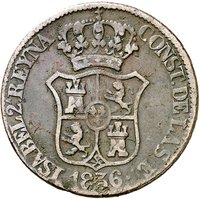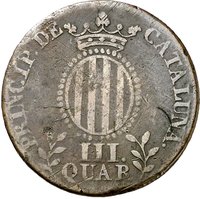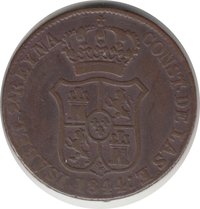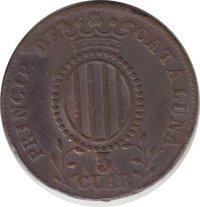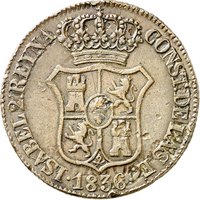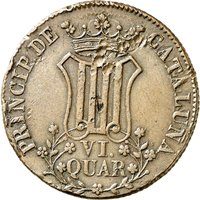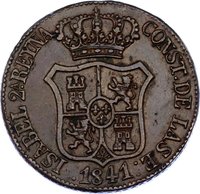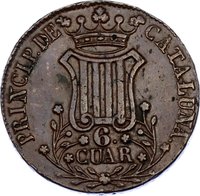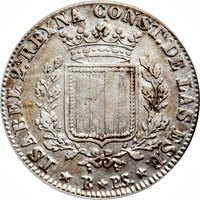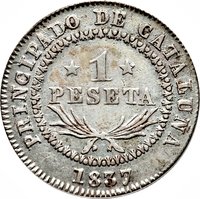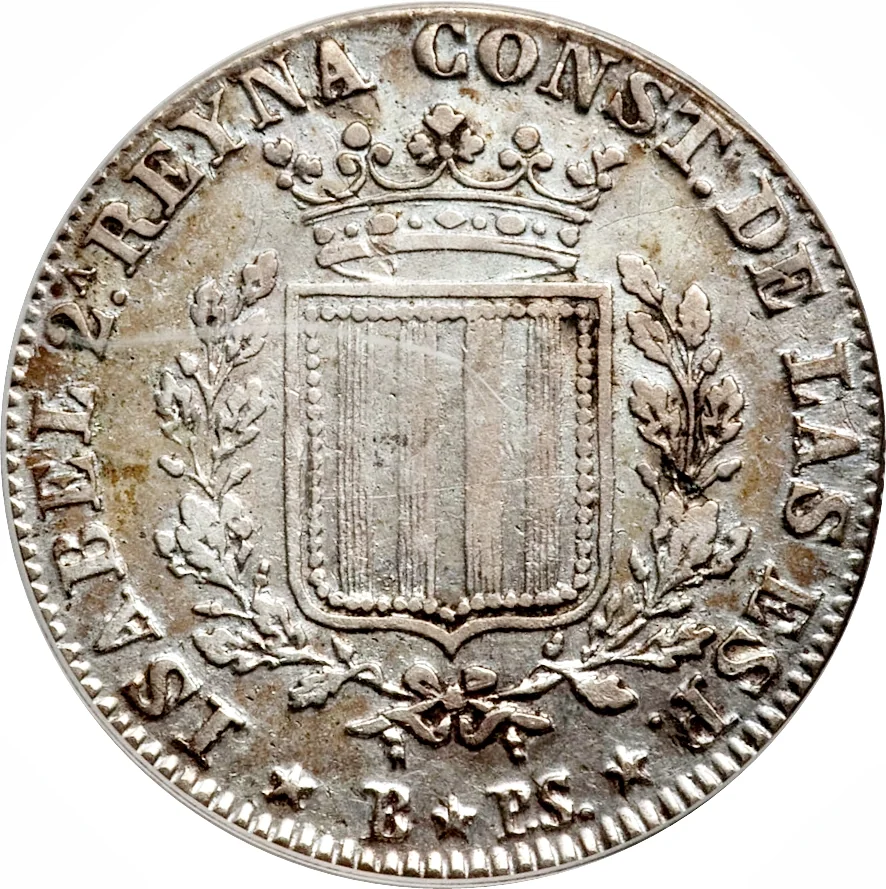
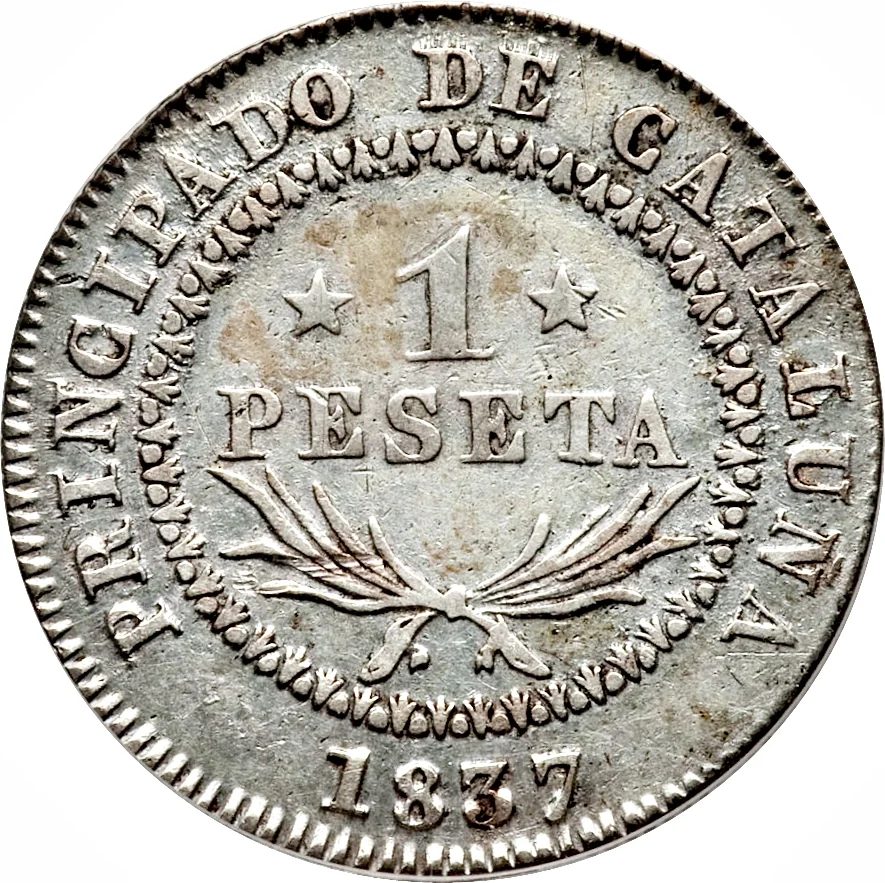
In 1836, the currency situation in the Principality of Catalonia was one of profound instability and complexity, deeply entangled with the political and military turmoil of the First Carlist War (1833-1840). The region, a stronghold for the liberal government in Barcelona but surrounded by Carlist-controlled rural areas, faced a fractured monetary landscape. The official currency was the
peseta, introduced by the liberal government in 1835, but it competed with older, more familiar coins like the
peso and
real. More critically, the scarcity of official coinage due to the war effort led to widespread use of locally issued emergency money, including tokens and paper notes from municipal councils and even private businesses.
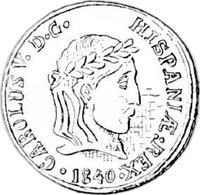
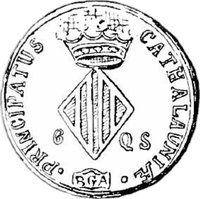
This monetary chaos was exacerbated by the Carlist forces, who minted and circulated their own counterfeit or "intrusion" coinage in territories they controlled, further devaluing and confusing the money supply. The Barcelona-based government struggled to assert its monetary authority, leading to a climate where the value and acceptability of any coin or note were highly localized and uncertain. Inflation was rampant, and public trust in any currency was low, severely disrupting commerce and daily economic life.
Ultimately, the situation reflected the broader struggle for political control of Spain. The currency anarchy of 1836 was a direct symptom of the civil war, demonstrating how the conflict had shattered not just political unity but also the fundamental economic systems. It underscored the urgent need for a stable, unified national currency—a goal that would only begin to be realized after the liberal victory, with the
peseta eventually being established as Spain's sole monetary unit in 1868.