

2 maravedis – Spain
Add to wishlist
Spain
Context
Material
References
KM: #
Numista: #18503
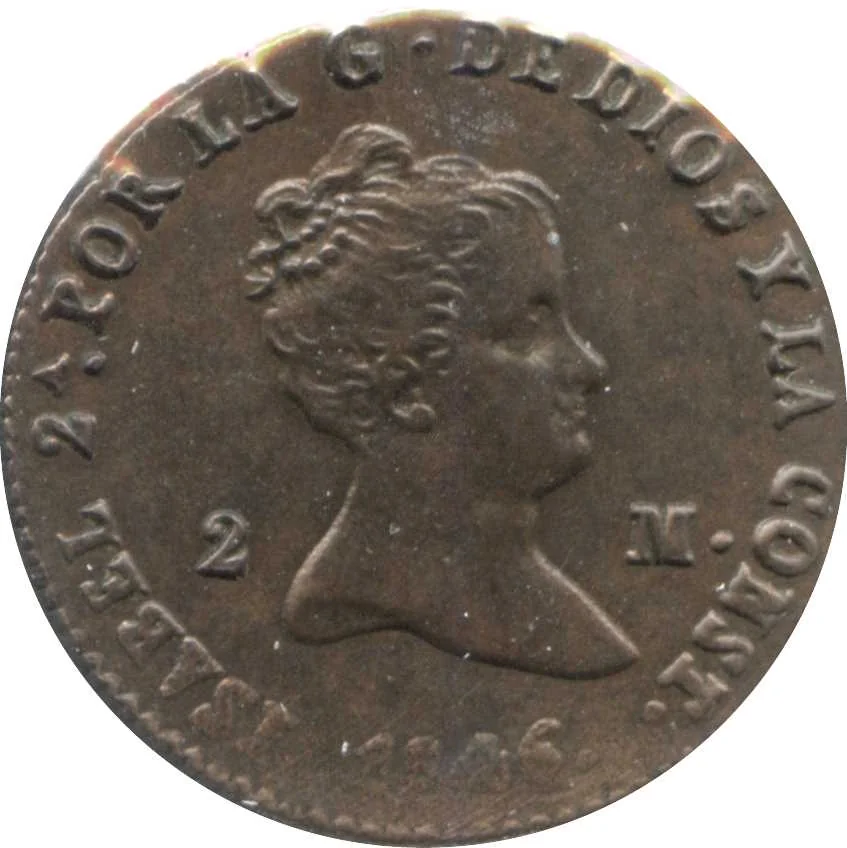
Obverse
Description:
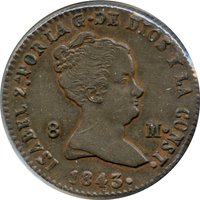
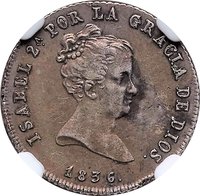
Queen Isabel II facing right.
Inscription:
ISABEL 2A. POR LA G· DE DIOS Y LA CONST·
2 M·
1846.
2 M·
1846.
Translation:
Isabel 2nd. By the Grace of God and the Constitution.
2 M.
1846.
2 M.
1846.
Script: Latin
Language: Spanish
Engraver: Mariano González de Sepúlveda Salazar
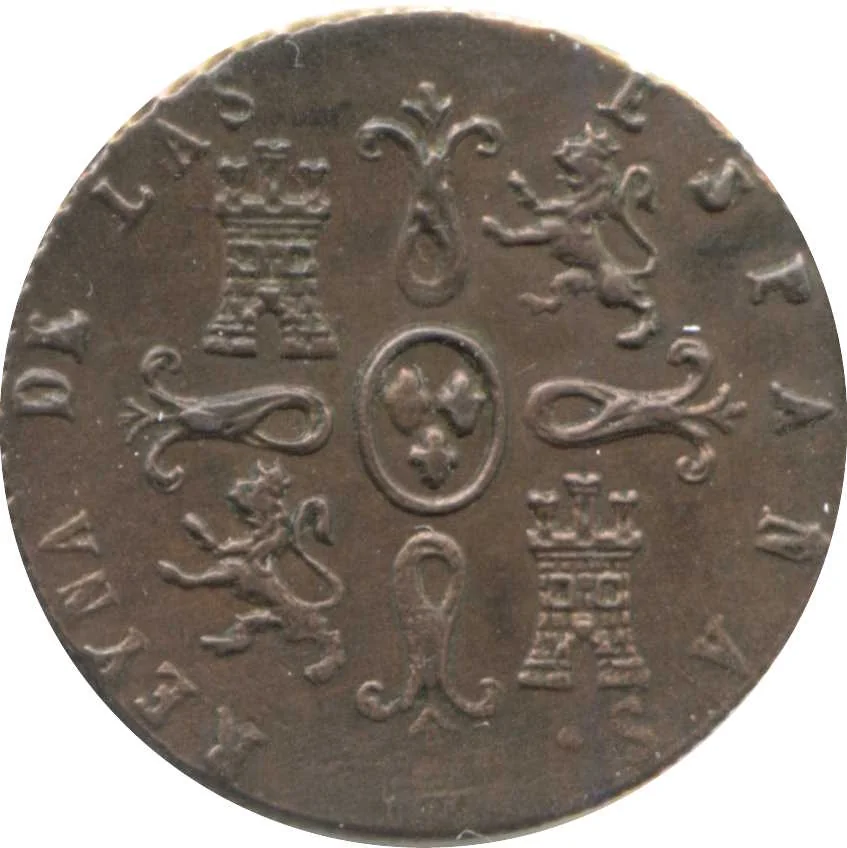
Reverse
Description:
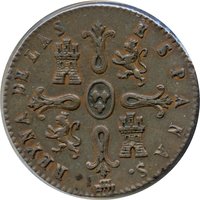
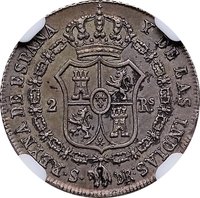
Cross of Pelayo with Castile-León lions and a Bourbon fleur-de-lis oval.
Inscription:
REYNA DE LAS ESPAÑAS.
Translation:
Queen of the Spains.
Script: Latin
Language: Spanish
Engraver: Mariano González de Sepúlveda Salazar
Edge
Categories
| Animal> Feline |
| Building> Castle or fortification |
| Symbol> Fleur-de-lis |
| Symbol> Cross |
Mints
| Name | Mark |
|---|---|
| Royal Mint of Madrid | — |
| Royal Mint of Segovia | — |
| Barcelona Mint / La Seca | (BA) |
| Jubia Mint | J |
Mintings
Historical background
In 1836, Spain was embroiled in the First Carlist War (1833-1839), a brutal civil conflict between the liberal Cristinos (supporters of Queen Isabella II) and the traditionalist Carlists. This war was the primary driver of the nation's severe monetary crisis. The state treasury was exhausted, and the government, under the regency of Maria Christina, resorted to desperate measures to finance the war effort. This included confiscating and selling church lands (the desamortización) and, most critically, issuing vast amounts of paper money without the necessary metallic backing, leading to rampant inflation and a collapse in public confidence.
The currency landscape was chaotic, defined by the proliferation of vales reales (royal bonds) and other government debt paper that circulated as de facto currency. These promissory notes had been in use since the late 18th century but were now issued in such excessive quantities that their value plummeted. They traded at a steep discount to their face value and against the scarce silver real and gold coins, which were hoarded by the public. This created a dual system where precious metal coins retained their intrinsic value but disappeared from daily circulation, while depreciating paper notes became the common, yet distrusted, medium of exchange.
This monetary instability severely disrupted the economy, crippling trade and exacerbating the hardships of the population. The government's inability to guarantee the value of its paper money reflected its weak authority and the immense cost of the civil war. The situation would only begin to stabilize after the war's end, leading to eventual monetary reforms, including the creation of the Bank of Spain in 1856 and the introduction of the peseta as the national currency in 1868, which aimed to unify and restore faith in the monetary system.
The currency landscape was chaotic, defined by the proliferation of vales reales (royal bonds) and other government debt paper that circulated as de facto currency. These promissory notes had been in use since the late 18th century but were now issued in such excessive quantities that their value plummeted. They traded at a steep discount to their face value and against the scarce silver real and gold coins, which were hoarded by the public. This created a dual system where precious metal coins retained their intrinsic value but disappeared from daily circulation, while depreciating paper notes became the common, yet distrusted, medium of exchange.
This monetary instability severely disrupted the economy, crippling trade and exacerbating the hardships of the population. The government's inability to guarantee the value of its paper money reflected its weak authority and the immense cost of the civil war. The situation would only begin to stabilize after the war's end, leading to eventual monetary reforms, including the creation of the Bank of Spain in 1856 and the introduction of the peseta as the national currency in 1868, which aimed to unify and restore faith in the monetary system.
Series: 1836 Spain circulation coins
🌱 Fairly Common