

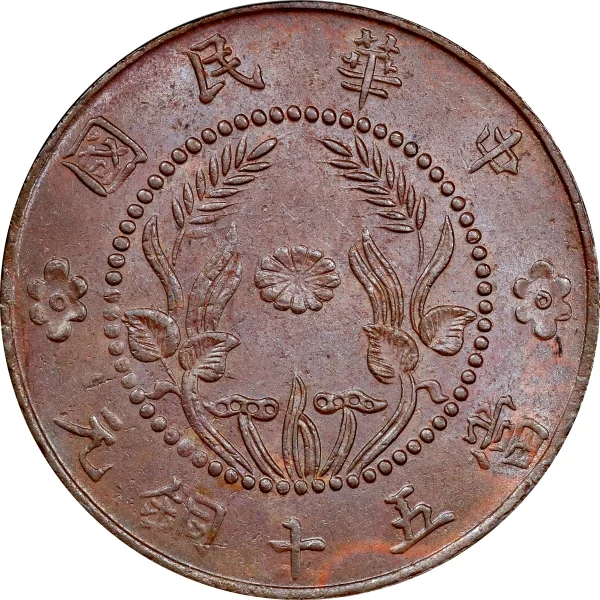
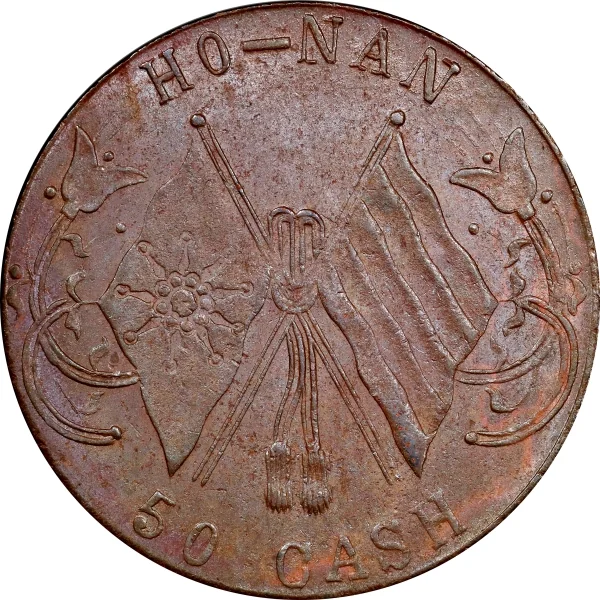
50 Cash – Honan Province
China
Context
Year: 1920
Country: China 
Issuer: Honan Province
Period:
(1912—1949)
Currency:
(1905—1949)
Demonetized: Yes
Material
References
Y: #Click to copy to clipboard394
Numista: #18477
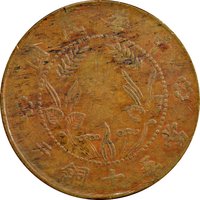
Obverse
Description:
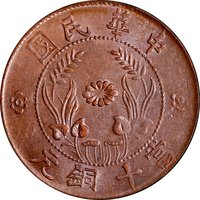
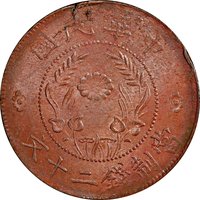
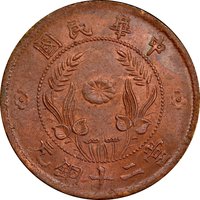
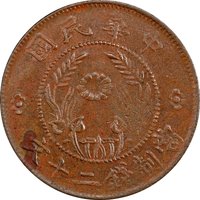
Wreath with central and side flowers, each flanked by Chinese ideograms.
Inscription:
國民華中
元銅十五當
元銅十五當
Translation:
Nationalist China
Fifteen Copper Cents Equal One Yuan
Fifteen Copper Cents Equal One Yuan
Language: Chinese
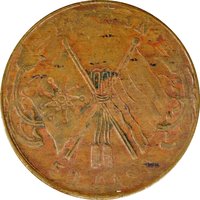
Reverse
Description:
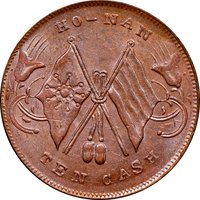
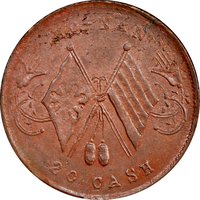
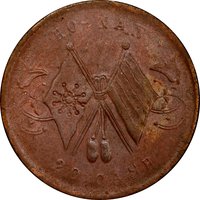
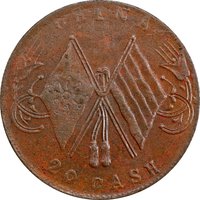
Crossed flags flanked by flowers, with English text above and below.
Inscription:
HO-NAN
50 CASH
50 CASH
Edge
Plain
Mintings
| Year | Mint Mark | Mintage | Quality | Collection |
|---|---|---|---|---|
| 1920 | — | — |
Historical background
In 1920, the currency situation in Honan (Henan) Province was one of profound instability and complexity, mirroring the wider fragmentation of China during the Warlord Era. Following the collapse of the Qing Dynasty and the weak authority of the Beijing government, provincial military governors and local banks issued a bewildering array of currencies with little to no centralized backing. In Honan, this meant that alongside the theoretical national currency, silver yuan and copper cash, there circulated a flood of local banknotes, military scrip, and privately issued "ticket money" from shops and guilds. The value of these notes was highly localized and fluctuated wildly based on the reputation and solvency of the issuer, leading to a patchwork of mutually suspicious monetary zones within the province itself.
This chaotic system was exacerbated by two critical factors. First, a severe silver shortage gripped the region, driven by both hoarding and the export of silver to coastal treaty ports. This drained the metallic reserve that traditionally underpinned confidence in paper notes. Second, the province was a contested zone between rival warlord cliques, leading to constant military exactions. Warlords, including those affiliated with the Zhili clique, frequently forced local banks to print unbacked currency to fund their armies, causing rapid depreciation and sometimes complete collapse of these notes when a military force retreated or was defeated.
The consequences for the populace, particularly peasants and urban workers, were dire. Hyperinflation of local scrip could erase savings and real wages overnight, while transaction costs soared as merchants had to constantly discount unfamiliar notes. Barter became a common refuge from worthless paper. This monetary chaos stifled commerce, deepened poverty, and fueled social resentment. It was a key symptom of the breakdown of central governance, where economic power was usurped by local military authorities, making daily trade a gamble and undermining any prospect of provincial economic recovery.
This chaotic system was exacerbated by two critical factors. First, a severe silver shortage gripped the region, driven by both hoarding and the export of silver to coastal treaty ports. This drained the metallic reserve that traditionally underpinned confidence in paper notes. Second, the province was a contested zone between rival warlord cliques, leading to constant military exactions. Warlords, including those affiliated with the Zhili clique, frequently forced local banks to print unbacked currency to fund their armies, causing rapid depreciation and sometimes complete collapse of these notes when a military force retreated or was defeated.
The consequences for the populace, particularly peasants and urban workers, were dire. Hyperinflation of local scrip could erase savings and real wages overnight, while transaction costs soared as merchants had to constantly discount unfamiliar notes. Barter became a common refuge from worthless paper. This monetary chaos stifled commerce, deepened poverty, and fueled social resentment. It was a key symptom of the breakdown of central governance, where economic power was usurped by local military authorities, making daily trade a gamble and undermining any prospect of provincial economic recovery.
🌟 Limited