

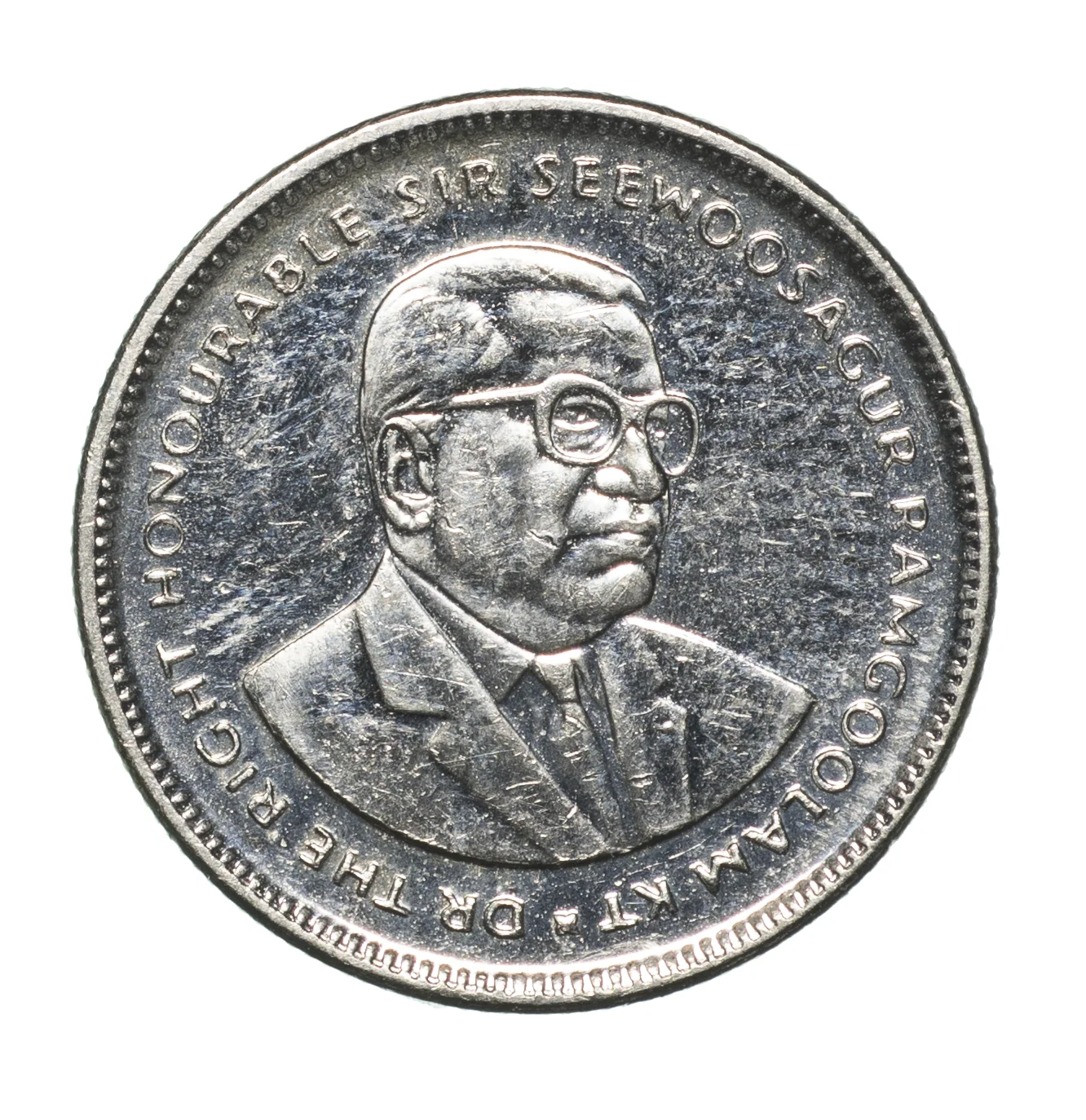
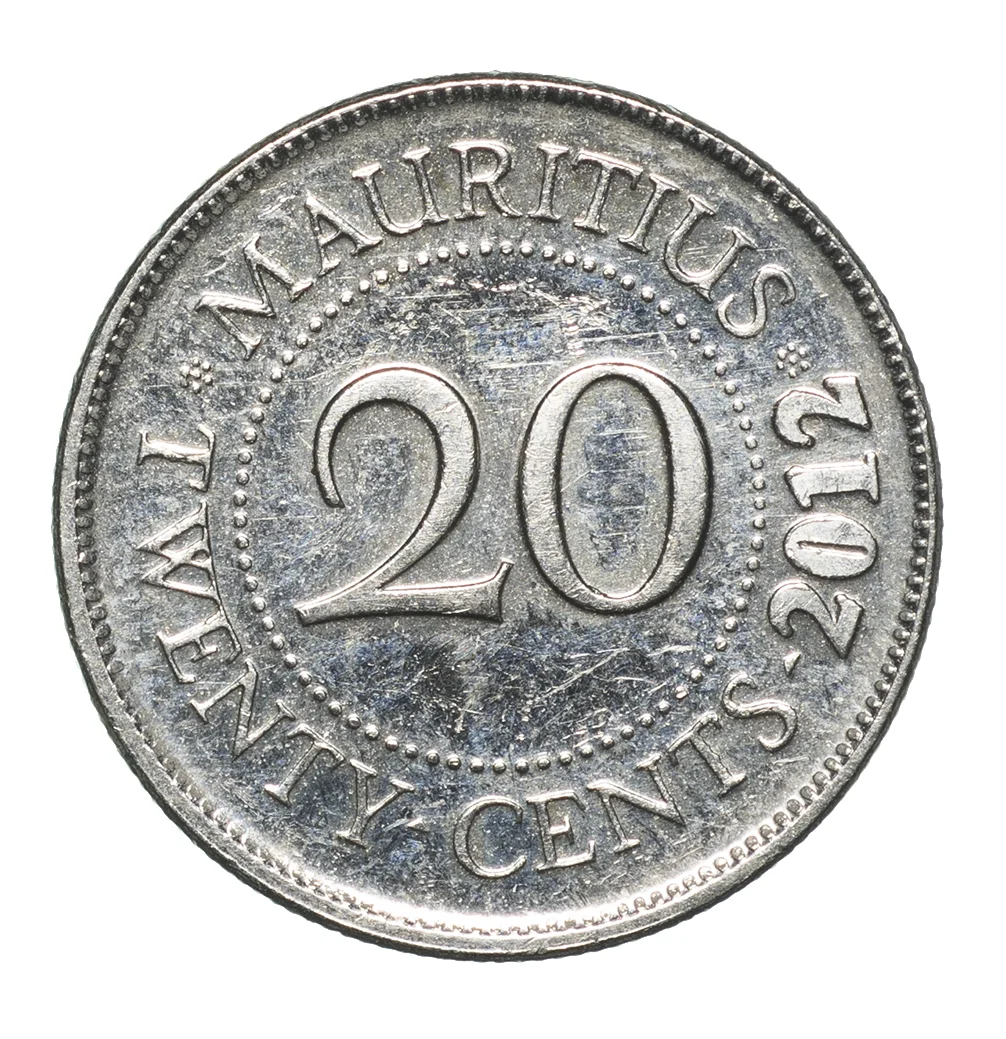
20 cents – Mauritius
Add to wishlist
Mauritius
Context
Years: 1987–2022
Issuer: Mauritius
Period:
(since 1992)
Ruler: Elizabeth II
Currency:
(since 1835)
Total mintage: 2,500
Material
References
KM: #
Numista: #1836
Value
Exchange value: 0.20 MUR
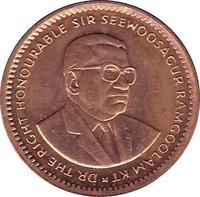
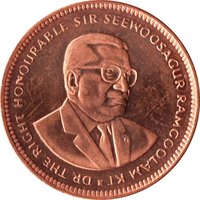
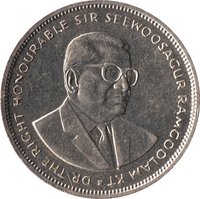
Obverse
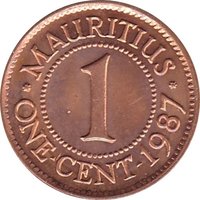
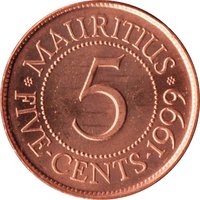
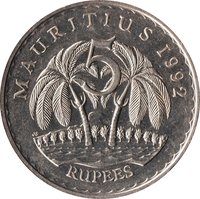
Reverse
Edge
Reeded
Categories
| Person> Politician |
Mints
| Name | Mark |
|---|---|
| Royal Mint | — |
Mintings
| Year | Mint Mark | Mintage | Quality | Collection |
|---|---|---|---|---|
| 1987 | — | — | ||
| 1987 | — | 2,500 | Proof | |
| 1990 | — | — | ||
| 1991 | — | — | ||
| 1993 | — | — | ||
| 1994 | — | — | ||
| 1995 | — | — | ||
| 1996 | — | — | ||
| 1999 | — | — | ||
| 2001 | — | — | ||
| 2003 | — | — | ||
| 2004 | — | — | ||
| 2005 | — | — | ||
| 2007 | — | — | ||
| 2010 | — | — | ||
| 2012 | — | — | ||
| 2016 | — | — | ||
| 2022 | — | — |
Historical background
In 1987, Mauritius was navigating a period of significant economic transition, having successfully diversified from a sugar-dependent monoculture towards a more industrial and service-oriented economy. The foundation for this shift was the Mauritian Rupee (MUR), which was pegged to a basket of currencies, primarily weighted towards the IMF's Special Drawing Rights (SDR). This managed float system, established in the early 1980s, provided a degree of stability by linking the rupee to a mix of major currencies like the US Dollar, British Pound, and French Franc, thereby insulating it somewhat from the volatility of any single one.
The economic context of 1987 was one of robust growth, driven by the booming Export Processing Zone (EPZ) for textiles and garments, and a nascent tourism sector. However, this expansion created persistent pressures on the currency. Strong import demand for capital goods and raw materials for the EPZ, coupled with rising domestic consumption, led to a widening trade deficit. Consequently, the rupee faced steady depreciation pressure against its basket peg. The Bank of Mauritius managed this through periodic devaluations and active intervention in the foreign exchange market to control the pace of decline and maintain export competitiveness, which was vital for the EPZ's success.
Overall, the currency situation in 1987 reflected the challenges of managing success. The peg provided necessary stability for investment and planning but required careful stewardship to balance the competing needs of controlling inflation (fueled by a weaker rupee making imports more expensive) and supporting the export-led growth model. This period underscored the central bank's critical role in a small, open economy, setting the stage for the continued liberalisation and managed flexibility of the exchange rate regime in the following decades.
The economic context of 1987 was one of robust growth, driven by the booming Export Processing Zone (EPZ) for textiles and garments, and a nascent tourism sector. However, this expansion created persistent pressures on the currency. Strong import demand for capital goods and raw materials for the EPZ, coupled with rising domestic consumption, led to a widening trade deficit. Consequently, the rupee faced steady depreciation pressure against its basket peg. The Bank of Mauritius managed this through periodic devaluations and active intervention in the foreign exchange market to control the pace of decline and maintain export competitiveness, which was vital for the EPZ's success.
Overall, the currency situation in 1987 reflected the challenges of managing success. The peg provided necessary stability for investment and planning but required careful stewardship to balance the competing needs of controlling inflation (fueled by a weaker rupee making imports more expensive) and supporting the export-led growth model. This period underscored the central bank's critical role in a small, open economy, setting the stage for the continued liberalisation and managed flexibility of the exchange rate regime in the following decades.
Series: 1987 Mauritius circulation coins
🌱 Very Common