

2 shillings – Kenya
Add to wishlist
Kenya
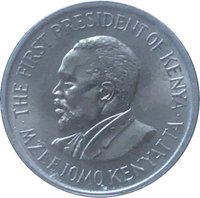
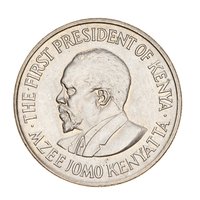
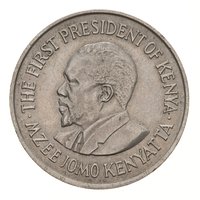
Obverse
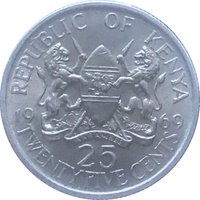
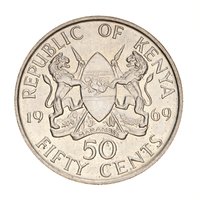
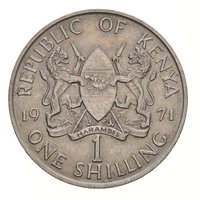
Reverse
Description:
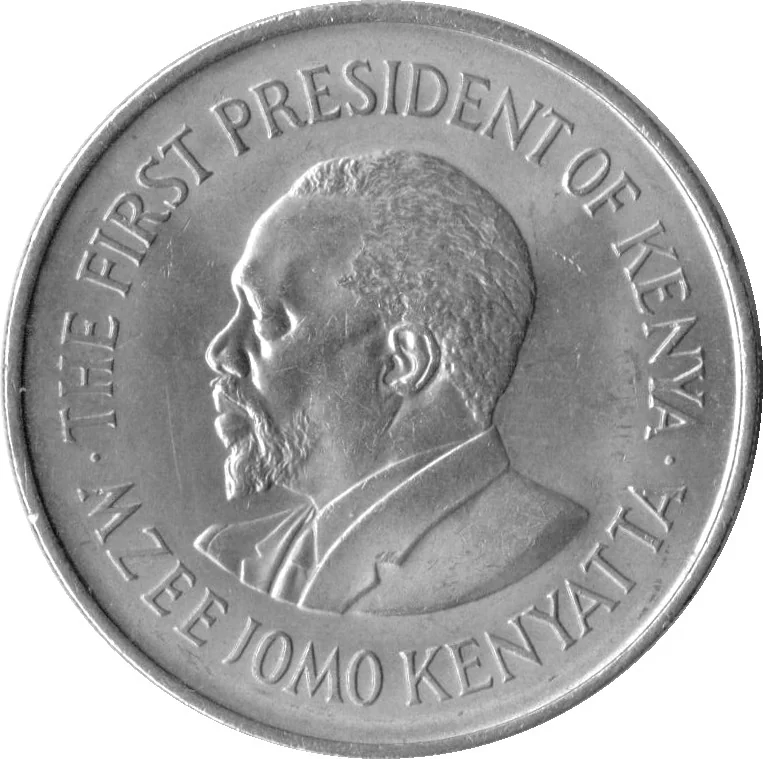
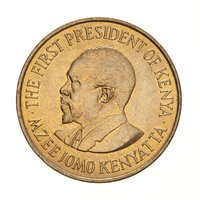
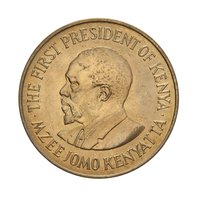
Bust of Jomo Kenyatta facing left, with surrounding legend.
Inscription:
FIRST PRESIDENT OF KENYA
· MZEE JOMO KENYATTA ·
· MZEE JOMO KENYATTA ·
Script: Latin
Edge
Reeded
Categories
| Person> Politician |
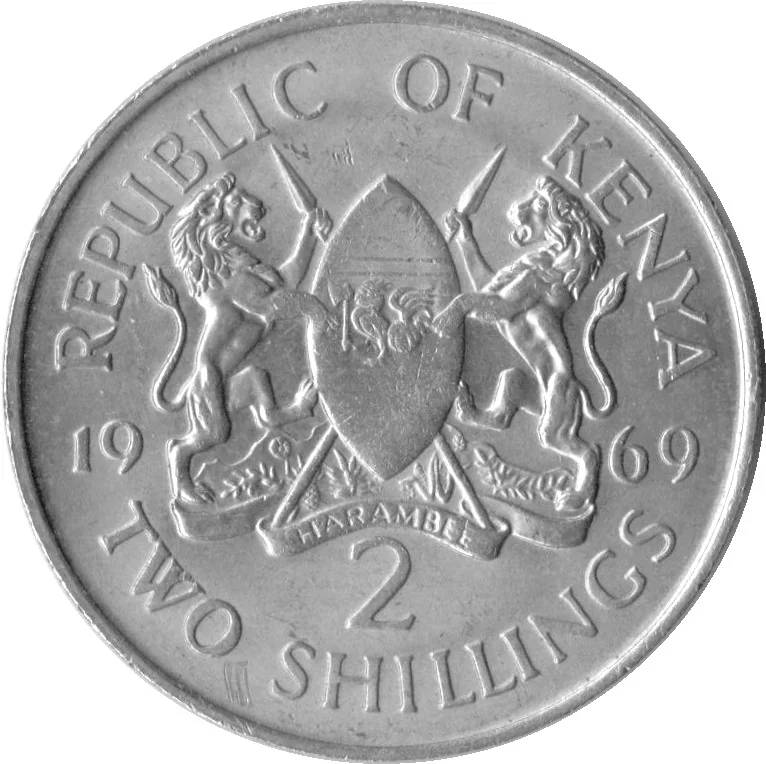
| Symbols> Coat of Arms |
Mints
| Name | Mark |
|---|---|
| Royal Mint (Tower Hill) | — |
| Royal Mint | — |
Mintings
| Year | Mint Mark | Mintage | Quality | Collection |
|---|---|---|---|---|
| 1969 | — | 100,000 | ||
| 1969 | — | 15 | Proof | |
| 1971 | — | 1,920,000 | ||
| 1973 | — | 500 | Proof |
Historical background
In 1969, Kenya's currency situation was defined by its recent transition to a fully independent monetary system. Just three years prior, in 1966, the East African shilling (used across Kenya, Uganda, and Tanzania) was replaced by the Kenyan shilling, marking a crucial step in economic sovereignty following political independence. The new currency, issued by the Central Bank of Kenya (established in 1966), was a symbol of national identity, featuring the portrait of the country's first president, Jomo Kenyatta, and iconic local imagery.
Economically, the period was one of relative stability and optimism, often referred to as part of Kenya's "economic miracle." The shilling was pegged to the US dollar under the Bretton Woods system at a fixed rate of KSh 7.14 = US$1, which provided predictability for trade and investment. This stability was underpinned by strong agricultural exports, particularly coffee and tea, and a growing tourism sector, which ensured healthy foreign exchange reserves and confidence in the new currency.
However, this stability existed alongside underlying challenges. The government was actively pursuing an import-substitution industrialization policy, which required careful management of foreign exchange for capital goods. Furthermore, the breakup of the East African Currency Board had created complexities in regional trade with Uganda and Tanzania, necessitating new monetary agreements. While not yet in crisis, 1969 represented a period where Kenya's young central bank was consolidating control over its monetary policy, navigating the balance between maintaining a strong, fixed exchange rate and managing the demands of a developing economy.
Economically, the period was one of relative stability and optimism, often referred to as part of Kenya's "economic miracle." The shilling was pegged to the US dollar under the Bretton Woods system at a fixed rate of KSh 7.14 = US$1, which provided predictability for trade and investment. This stability was underpinned by strong agricultural exports, particularly coffee and tea, and a growing tourism sector, which ensured healthy foreign exchange reserves and confidence in the new currency.
However, this stability existed alongside underlying challenges. The government was actively pursuing an import-substitution industrialization policy, which required careful management of foreign exchange for capital goods. Furthermore, the breakup of the East African Currency Board had created complexities in regional trade with Uganda and Tanzania, necessitating new monetary agreements. While not yet in crisis, 1969 represented a period where Kenya's young central bank was consolidating control over its monetary policy, navigating the balance between maintaining a strong, fixed exchange rate and managing the demands of a developing economy.
Series: 1969 series
🌟 Uncommon