

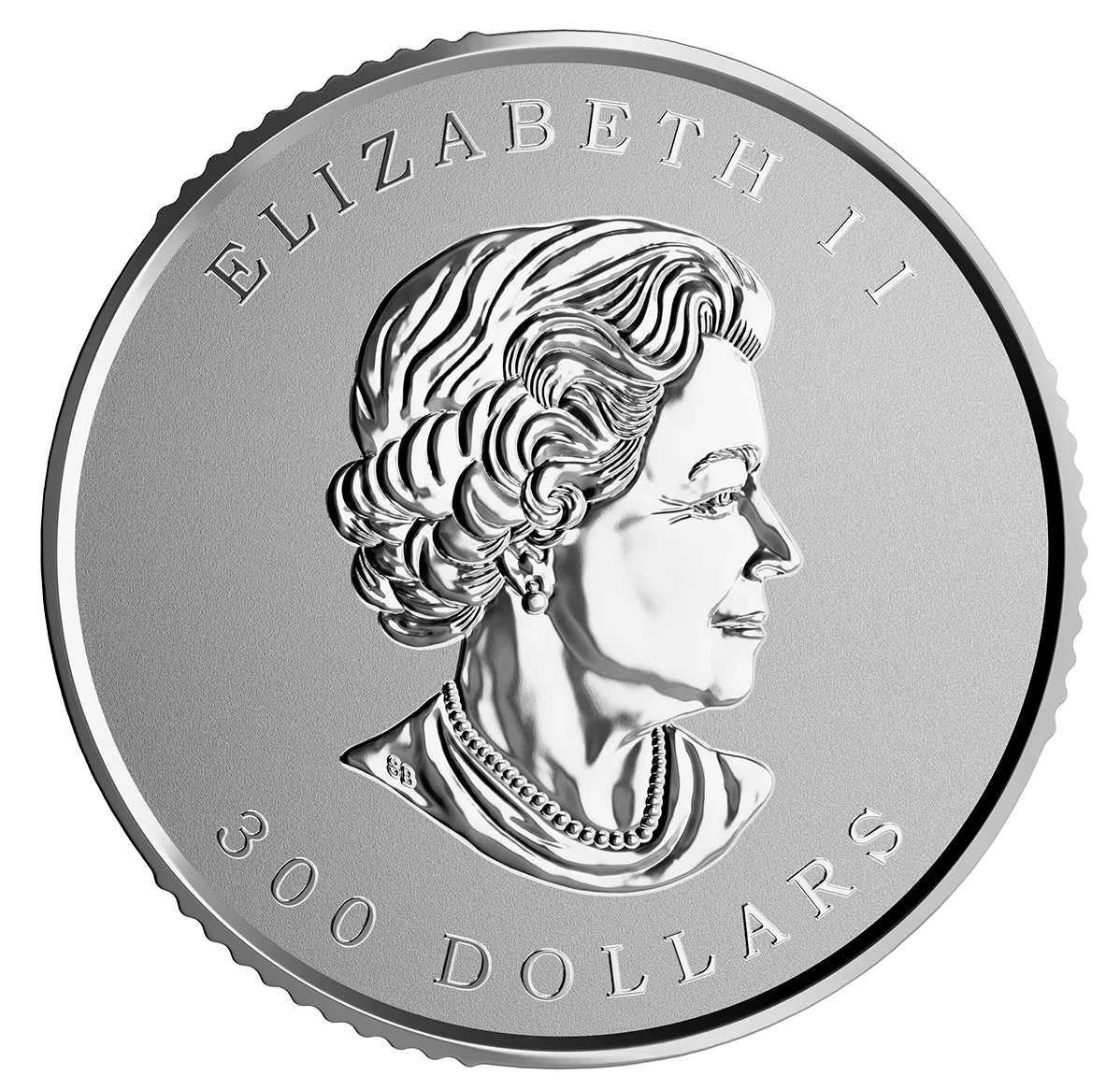

300 dollars – Canada
Add to wishlist
Canada
Context
Material
Diameter: 30 mm
Weight: 31.15 g
Platinum Weight:: 31.13 g
Thickness: 2.5 mm
Shape: Round
Composition: 99.95% Platinum
Standard: Silver ounce
Technique: Milled
Alignment: Medal alignment
flip

References
KM: #
Numista: #183122
Value
Exchange value: 300 CAD
Bullion value: $2100.09
Inflation-adjusted value: 387.89 CAD
Obverse
Description:
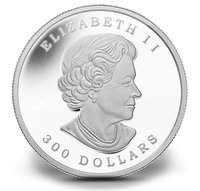
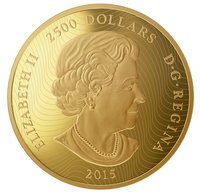
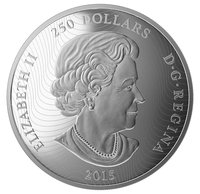
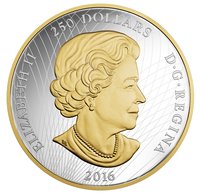
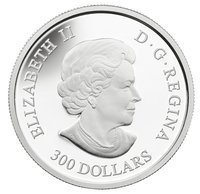
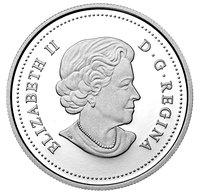
Queen Elizabeth II at 77, facing right, wearing a necklace and earrings.
Inscription:
ELIZABETH II
SB
300 DOLLARS
SB
300 DOLLARS
Script: Latin
Engraver: Susan Taylor
Designer: Susanna Blunt
Reverse
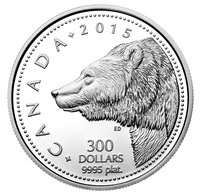
Description:
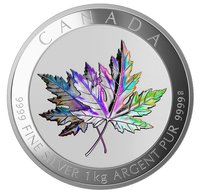
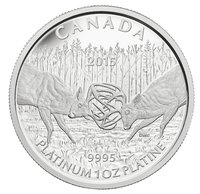
Canada's flag symbol.
Inscription:
CANADA
9995
MG
2015
PLATINUM 1 OZ PLATINE
9995
MG
2015
PLATINUM 1 OZ PLATINE
Script: Latin
Designer: Michelle Grant
Edge
Reeded
Mints
| Name | Mark |
|---|---|
| Royal Canadian Mint of Ottawa | — |
Mintings
| Year | Mint Mark | Mintage | Quality | Collection |
|---|---|---|---|---|
| 2015 | — | 250 | Proof |
Historical background
In 2015, Canada's currency situation was dominated by the dramatic and sustained depreciation of the Canadian dollar against its U.S. counterpart. Having traded near or above parity for much of the early 2010s, the loonie began a sharp decline in late 2014, plunging from approximately US$0.94 in June 2014 to a low near US$0.69 by the end of 2015. This represented an 11-year low and was the currency's weakest annual average since 2003. The primary driver was a collapse in global crude oil prices, which fell from over US$100 per barrel to below US$50, severely impacting Canada's export-heavy, resource-dependent economy.
The currency's decline created a complex economic landscape. For exporters outside the energy sector, such as manufacturers and tourism, a weaker dollar provided a significant competitive boost, making Canadian goods and services cheaper for foreign buyers. However, it also increased the cost of imports, contributing to higher consumer prices for many goods, including fresh produce, and squeezing household purchasing power. The Bank of Canada, under Governor Stephen Poloz, responded to the oil price shock with a surprise interest rate cut in January 2015, lowering the overnight rate to 0.75%, which further pressured the currency but aimed to stimulate non-energy exports and business investment.
Politically, the currency's weakness became a focal point during the federal election campaign that ultimately brought Justin Trudeau's Liberal Party to power in October 2015. The declining loonie symbolized broader economic anxieties, contrasting with a stronger U.S. economy and a diverging monetary policy path as the U.S. Federal Reserve moved toward tightening. While the low dollar offered an economic adjustment mechanism, it underscored Canada's vulnerability to commodity cycles and set the stage for ongoing challenges in achieving balanced growth beyond the energy sector.
The currency's decline created a complex economic landscape. For exporters outside the energy sector, such as manufacturers and tourism, a weaker dollar provided a significant competitive boost, making Canadian goods and services cheaper for foreign buyers. However, it also increased the cost of imports, contributing to higher consumer prices for many goods, including fresh produce, and squeezing household purchasing power. The Bank of Canada, under Governor Stephen Poloz, responded to the oil price shock with a surprise interest rate cut in January 2015, lowering the overnight rate to 0.75%, which further pressured the currency but aimed to stimulate non-energy exports and business investment.
Politically, the currency's weakness became a focal point during the federal election campaign that ultimately brought Justin Trudeau's Liberal Party to power in October 2015. The declining loonie symbolized broader economic anxieties, contrasting with a stronger U.S. economy and a diverging monetary policy path as the U.S. Federal Reserve moved toward tightening. While the low dollar offered an economic adjustment mechanism, it underscored Canada's vulnerability to commodity cycles and set the stage for ongoing challenges in achieving balanced growth beyond the energy sector.
Series: Maple Leaf Forever





✨ Legendary