

50 Dinars (Yugoslav Republic) – Yugoslavia
Non-circulating coins
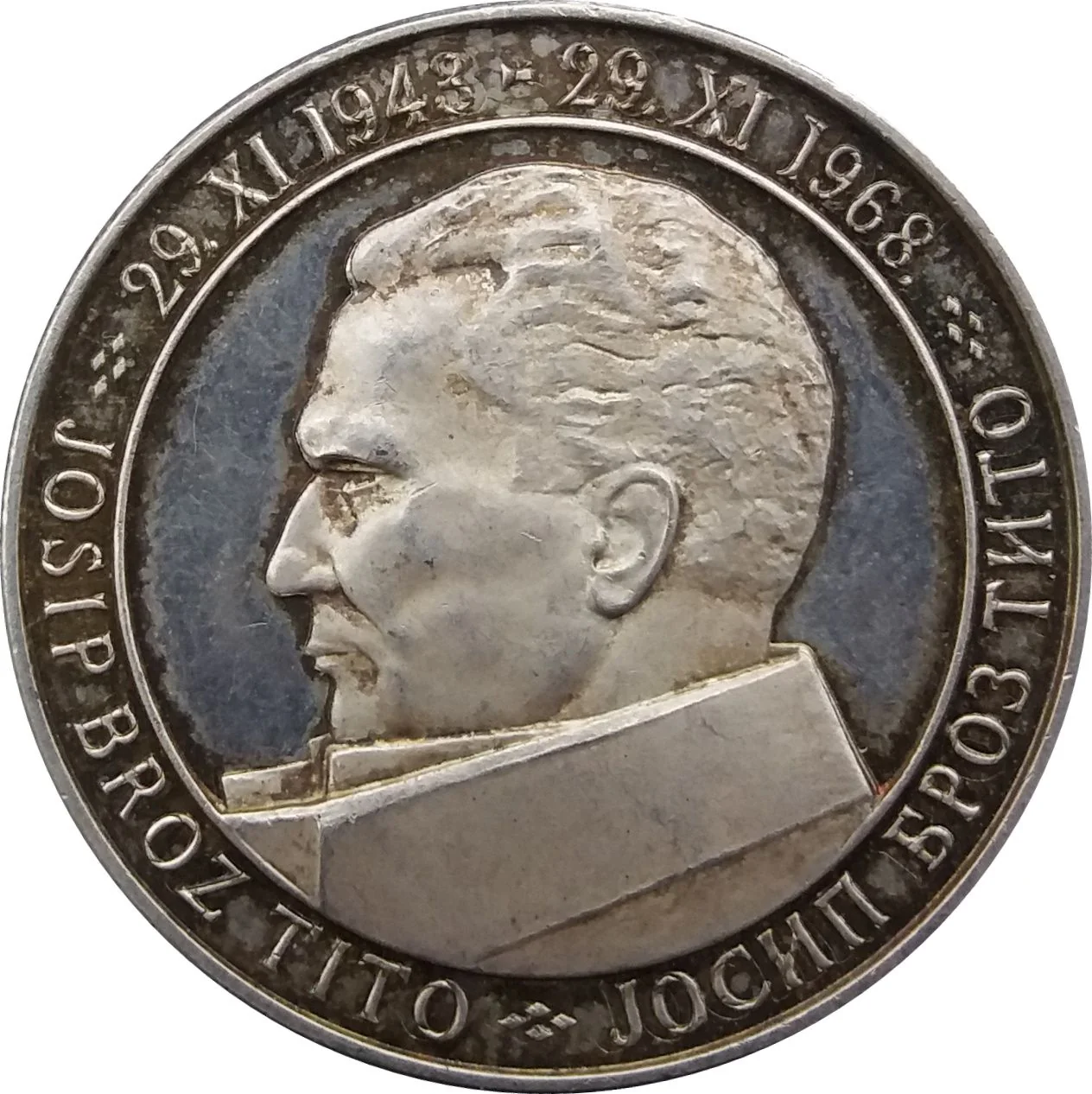
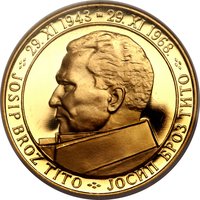
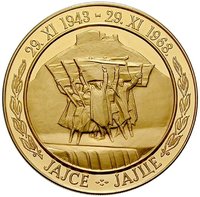
Commemoration: 25th Anniversary of Yugoslav Republic
Series: 25th Anniversary of the Republic
Context
Material
References
KM: #Click to copy to clipboard50
Numista: #18312
Value
Exchange value: 50 YUD
Bullion value: $53.33
Obverse
Description:
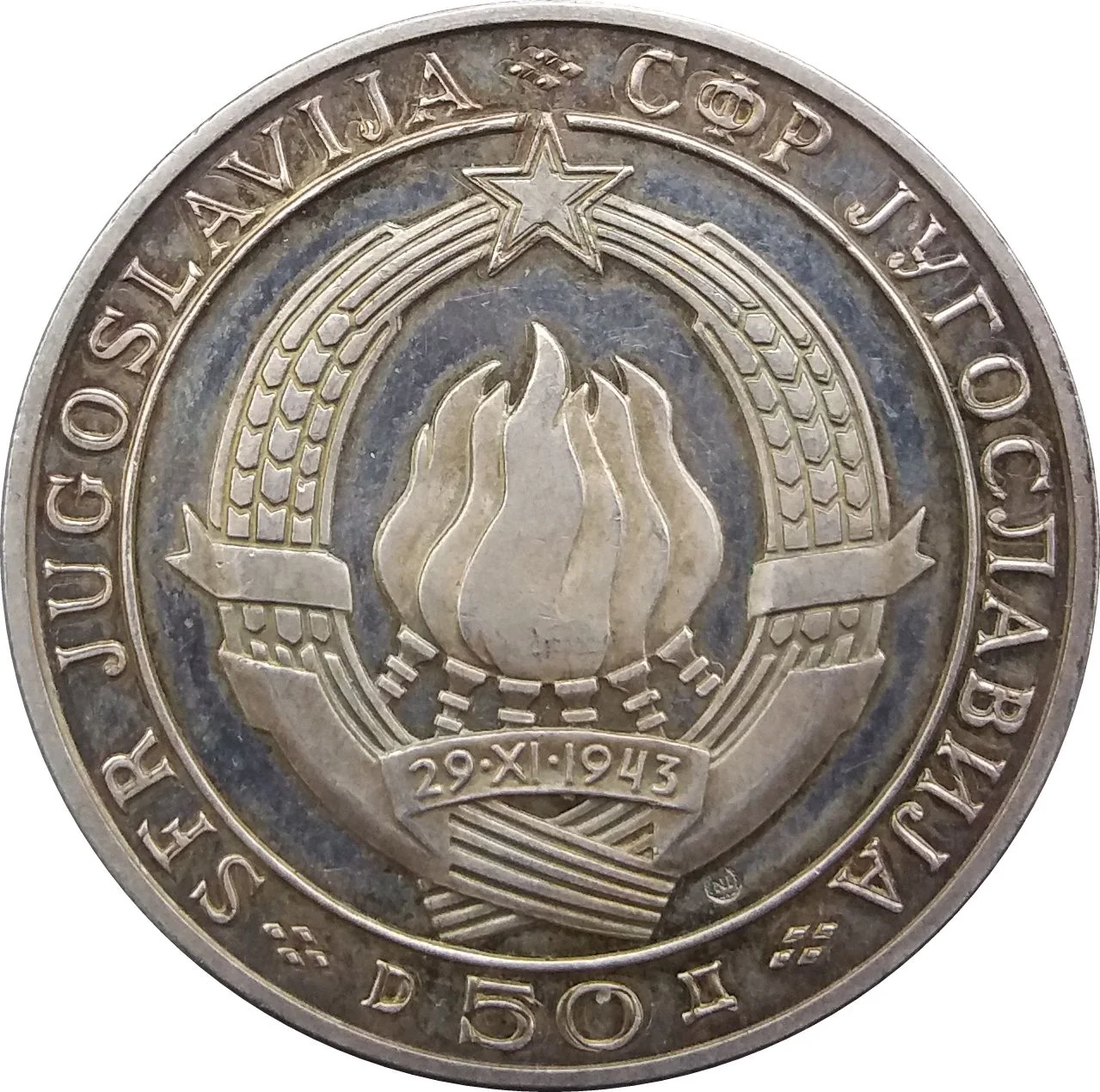
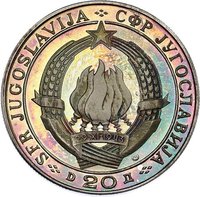
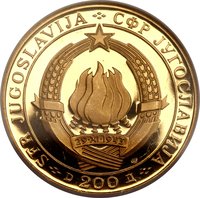
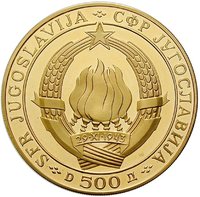
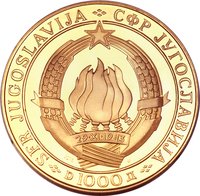
Yugoslavia emblem encircled by text.
Inscription:
SFR JUGOSLAVIJA ❖ СФР JУГОСЛАВИJА
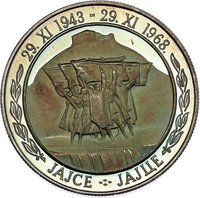
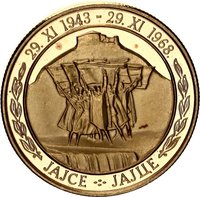
29.XI.1943
NI
❖ D 50 Д ❖
29.XI.1943
NI
❖ D 50 Д ❖
Translation:
SFR YUGOSLAVIA ❖ SFR YUGOSLAVIA
29 NOVEMBER 1943
50 DINARS ❖ 50 DINARS
29 NOVEMBER 1943
50 DINARS ❖ 50 DINARS
Languages: Serbo-Croatian, Serbo-Croatian
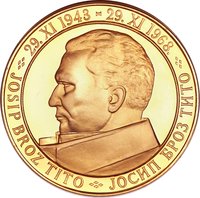
Reverse
Edge
Reeded
Categories
| Person> Politician |
| Symbols> Coat of Arms |
Mintings
| Year | Mint Mark | Mintage | Quality | Collection |
|---|---|---|---|---|
| 1968 | — | — | Proof |
Historical background
In 1968, Yugoslavia operated under a unique economic model known as the "socialist market economy," which sought to blend worker self-management with elements of market competition. The national currency was the Yugoslav dinar (YUD), whose value and stability were centrally managed by the National Bank of Yugoslavia. However, the system was characterized by a complex web of fixed and multiple exchange rates, with different rates applied to various sectors like tourism, essential imports, and non-essential goods. This intricate system was designed to control foreign exchange, protect domestic industries, and manage the country's balance of payments, but it also created inefficiencies and opportunities for arbitrage.
The broader economic context was one of growing strain. While the 1960s had seen significant economic growth and liberalizing reforms, by 1968 inflationary pressures were building due to excessive investment, loose credit policies, and rising wages that outpaced productivity. The country was running persistent trade deficits, depleting foreign currency reserves. This situation was exacerbated by the political and economic aftermath of the 1965 reforms, which had aimed to decentralize the economy and expose Yugoslav firms to international competition but had also led to increased unemployment and regional disparities.
Consequently, 1968 was a year of underlying monetary tension, setting the stage for more pronounced difficulties in the following decade. The multiple exchange rate regime and administrative controls were becoming increasingly unsustainable, masking the dinar's overvaluation. While a full-scale currency crisis was not yet imminent, the foundations for the chronic inflation and devaluations that would plague Yugoslavia in the 1970s and 1980s were firmly in place. The system's inherent contradictions—between market openness and administrative control—were becoming more apparent, challenging the stability of the dinar.
The broader economic context was one of growing strain. While the 1960s had seen significant economic growth and liberalizing reforms, by 1968 inflationary pressures were building due to excessive investment, loose credit policies, and rising wages that outpaced productivity. The country was running persistent trade deficits, depleting foreign currency reserves. This situation was exacerbated by the political and economic aftermath of the 1965 reforms, which had aimed to decentralize the economy and expose Yugoslav firms to international competition but had also led to increased unemployment and regional disparities.
Consequently, 1968 was a year of underlying monetary tension, setting the stage for more pronounced difficulties in the following decade. The multiple exchange rate regime and administrative controls were becoming increasingly unsustainable, masking the dinar's overvaluation. While a full-scale currency crisis was not yet imminent, the foundations for the chronic inflation and devaluations that would plague Yugoslavia in the 1970s and 1980s were firmly in place. The system's inherent contradictions—between market openness and administrative control—were becoming more apparent, challenging the stability of the dinar.
Series: 25th Anniversary of the Republic

⭐ Somewhat Rare