

Denmark
Context
Years: 1867–1872
Issuer: Denmark 
Ruler: Christian IX
Currency:
(1854—1873)
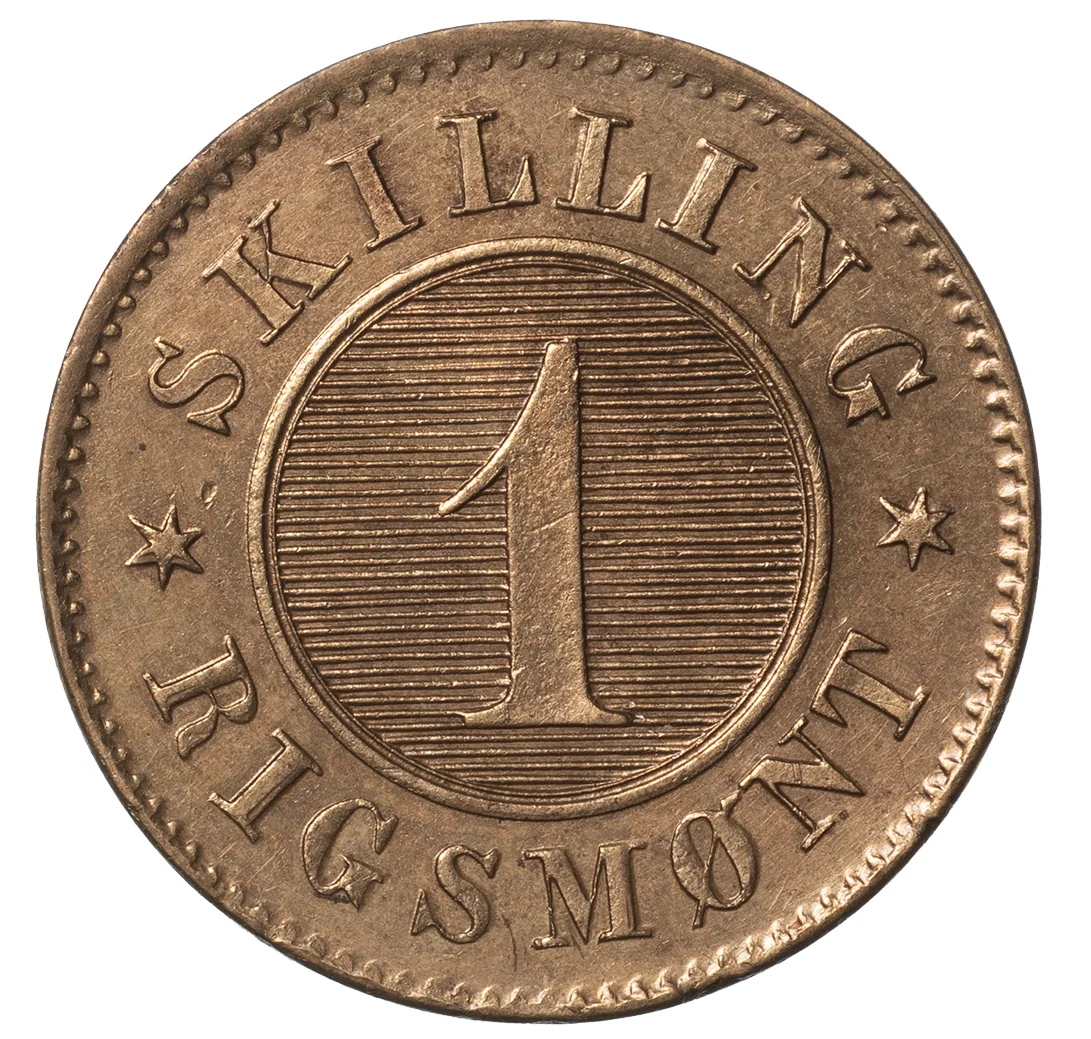
Subdivision: 1 Skilling rigsmont = 1⁄16 Rigsdaler courant = 1⁄96 Rigsdaler
Demonetized: Yes
Material
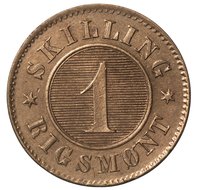
References
KM: #Click to copy to clipboard774
Numista: #18277
Obverse
Description:
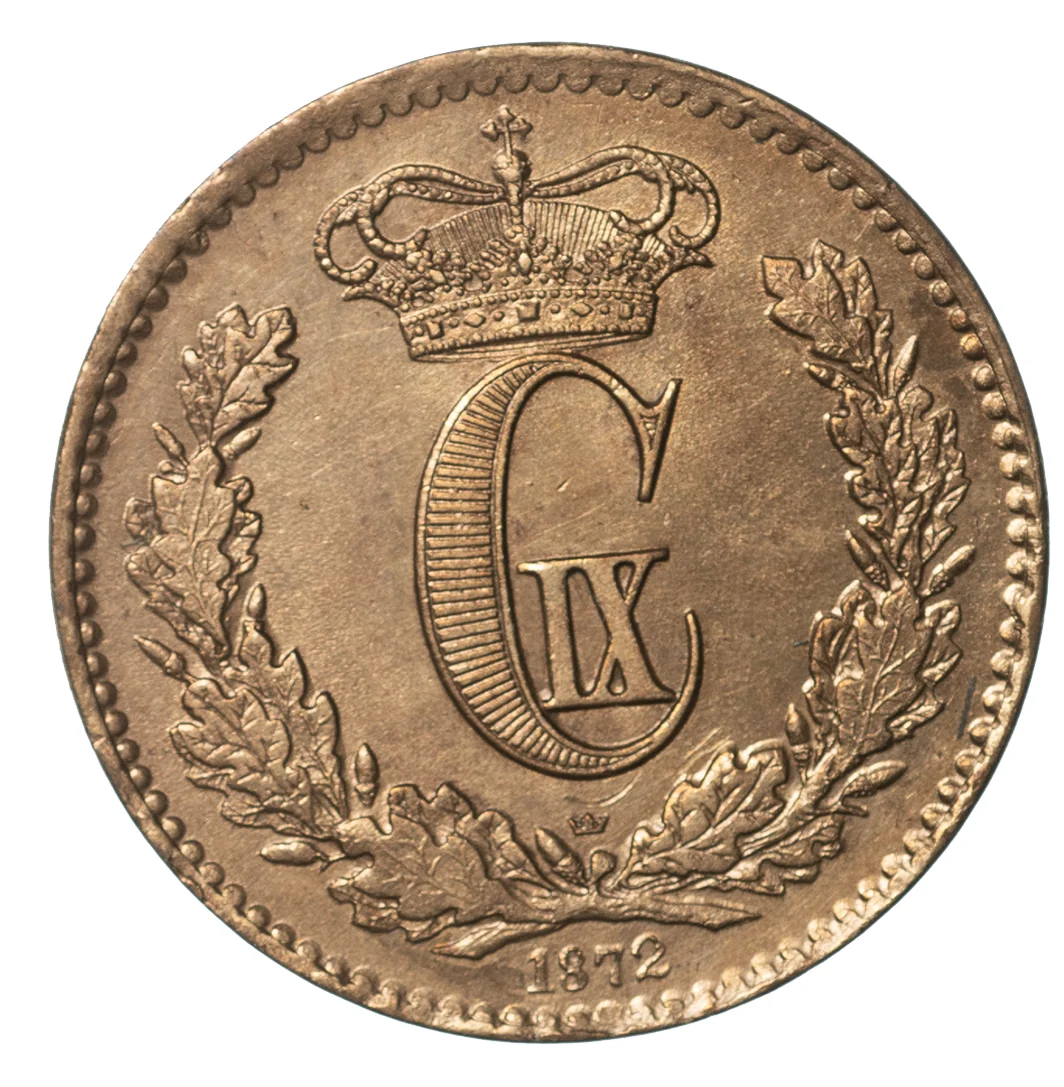
King's crowned monogram above an oak leaf half-wreath, with mintmark below. Date at the bottom.
Inscription:
C IX
♔
1867
♔
1867
Script: Latin
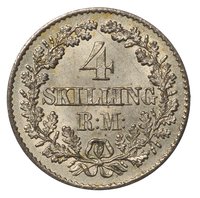
Reverse
Edge
Plain
Mints
| Name | Mark |
|---|---|
| Royal Danish Mint | ♔ |
Historical background
In 1867, Denmark’s currency situation was defined by its adherence to the Scandinavian Monetary Union (SMU), established in 1873. Therefore, the year 1867 itself represents the final period of a complex and unstable pre-union system. Denmark, like much of Europe, was on a silver standard, but the discovery of vast silver deposits had caused the metal's value to fall relative to gold, leading to monetary instability and uncertainty in international trade. Furthermore, the country's circulating coinage was a mixture of older Danish rigsdaler and skilling species, alongside a confusing array of foreign coins, creating practical difficulties for commerce.
The decisive catalyst for change was Denmark's devastating defeat in the Second Schleswig War of 1864, which resulted in significant territorial and population loss. This national crisis underscored the economic vulnerabilities of the existing fragmented monetary system and created a pressing need for modernization and closer integration with potential allies. Policymakers, led by Finance Minister C.A. Hansen, began actively pursuing a stable, uniform currency that could facilitate recovery and strengthen economic ties, particularly with Sweden.
Consequently, 1867 was a year of intense preparation and negotiation. The Danish government passed a pivotal law that June, laying the groundwork for a shift to the gold standard and defining the future krone (crown) as the basic unit, divided into 100 øre. This domestic legislation was not implemented in isolation but was designed to align with parallel efforts in Sweden, setting the formal stage for the treaty that would create the Scandinavian Monetary Union just a few years later. Thus, 1867 was the pivotal turning point where post-war necessity forged the concrete plans that would soon replace Denmark's outdated silver-based currency with a modern, gold-backed system shared with its Nordic neighbors.
The decisive catalyst for change was Denmark's devastating defeat in the Second Schleswig War of 1864, which resulted in significant territorial and population loss. This national crisis underscored the economic vulnerabilities of the existing fragmented monetary system and created a pressing need for modernization and closer integration with potential allies. Policymakers, led by Finance Minister C.A. Hansen, began actively pursuing a stable, uniform currency that could facilitate recovery and strengthen economic ties, particularly with Sweden.
Consequently, 1867 was a year of intense preparation and negotiation. The Danish government passed a pivotal law that June, laying the groundwork for a shift to the gold standard and defining the future krone (crown) as the basic unit, divided into 100 øre. This domestic legislation was not implemented in isolation but was designed to align with parallel efforts in Sweden, setting the formal stage for the treaty that would create the Scandinavian Monetary Union just a few years later. Thus, 1867 was the pivotal turning point where post-war necessity forged the concrete plans that would soon replace Denmark's outdated silver-based currency with a modern, gold-backed system shared with its Nordic neighbors.
🌱 Common