

2 euro (Constitution Act of Finland) – Finland
Add to wishlist
Circulating commemorative coins
Commemoration: 100th anniversary of the Constitution Act of Finland
Finland
Obverse
Description:
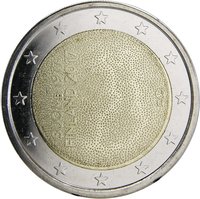
The design features three interconnected circles, symbolizing the trias politica (legislative, executive, and judiciary branches). "2019" is at centre-left, with "FI" and the mint mark at bottom right. The outer ring bears the 12 stars of the European flag.
Inscription:
2019
FI
FI
Engraver: Dario Vidal
Reverse
Description:
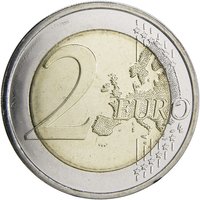
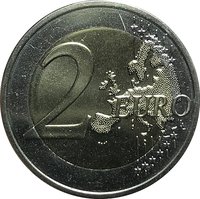
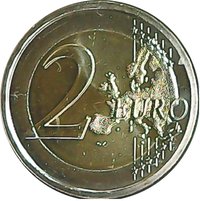
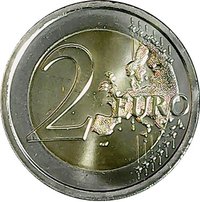
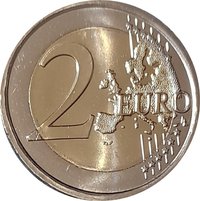
A map shows Europe borderless beside its face value.
Inscription:
2 EURO
LL
LL
Engraver: Luc Luycx
Categories
| Map |
Mints
| Name | Mark |
|---|---|
| Mint of Finland | FI |
Mintings
| Year | Mint Mark | Mintage | Quality | Collection |
|---|---|---|---|---|
| 2019 | FI | 500,000 |
Historical background
In 2019, Finland remained a committed member of the Eurozone, using the euro (€) as its sole official currency since its introduction in 2002. The country's monetary policy was therefore set by the European Central Bank (ECB), with a focus on maintaining price stability across the bloc. Domestically, the Finnish economy was experiencing modest growth after a prolonged period of stagnation, but inflation remained relatively low, aligning with the ECB's broader targets. The euro provided stability for trade and investment, which was crucial for Finland's open, export-driven economy, with key sectors like technology, forestry, and manufacturing deeply integrated into European and global markets.
A significant background theme was the ongoing public debate around the costs and benefits of euro membership. While mainstream political parties and the central bank strongly supported the common currency, the populist Finns Party maintained a skeptical stance, periodically advocating for a return to the Finnish markka. This debate was fueled by lingering memories of the Eurozone crisis and a perception among some citizens that the ECB's one-size-fits-all policy was not always optimal for Finland's specific economic cycles. However, support for the euro among the Finnish populace remained consistently high in polls, reflecting a pragmatic acceptance of its role in European integration and economic stability.
Technologically, 2019 saw Finland continuing its global leadership in the move towards a cashless society. The use of cash was in steep decline, with digital payments and card transactions becoming overwhelmingly dominant in everyday life. This shift was facilitated by robust digital infrastructure and widespread adoption of domestic mobile payment platforms like MobilePay. The trend prompted discussions about financial inclusion and the role of central bank digital currencies, though the euro's physical cash remained legal tender. Thus, the currency situation was characterized by both deep European integration and a rapid, domestic-driven evolution in how money was used in daily transactions.
A significant background theme was the ongoing public debate around the costs and benefits of euro membership. While mainstream political parties and the central bank strongly supported the common currency, the populist Finns Party maintained a skeptical stance, periodically advocating for a return to the Finnish markka. This debate was fueled by lingering memories of the Eurozone crisis and a perception among some citizens that the ECB's one-size-fits-all policy was not always optimal for Finland's specific economic cycles. However, support for the euro among the Finnish populace remained consistently high in polls, reflecting a pragmatic acceptance of its role in European integration and economic stability.
Technologically, 2019 saw Finland continuing its global leadership in the move towards a cashless society. The use of cash was in steep decline, with digital payments and card transactions becoming overwhelmingly dominant in everyday life. This shift was facilitated by robust digital infrastructure and widespread adoption of domestic mobile payment platforms like MobilePay. The trend prompted discussions about financial inclusion and the role of central bank digital currencies, though the euro's physical cash remained legal tender. Thus, the currency situation was characterized by both deep European integration and a rapid, domestic-driven evolution in how money was used in daily transactions.
Series: Finland 2 euro commemoratives

🌱 Common