

10 piastres – Egypt
Add to wishlist
Egypt
Context
Year: 1992
Islamic (Hijri) Year:: 1413
Issuer: Egypt
Period:
(since 1971)
Currency:
(since 1916)
Total mintage: 175,198,000
Material
Diameter: 23 mm
Weight: 4.9 g
Thickness: 1.2 mm
Shape: Round
Composition: Aluminium bronze
Magnetic: No
Technique: Milled
Alignment: Medal alignment
flip
References
KM: #
Numista: #1826
Value
Exchange value: 0.10 EGP
Obverse
Description:
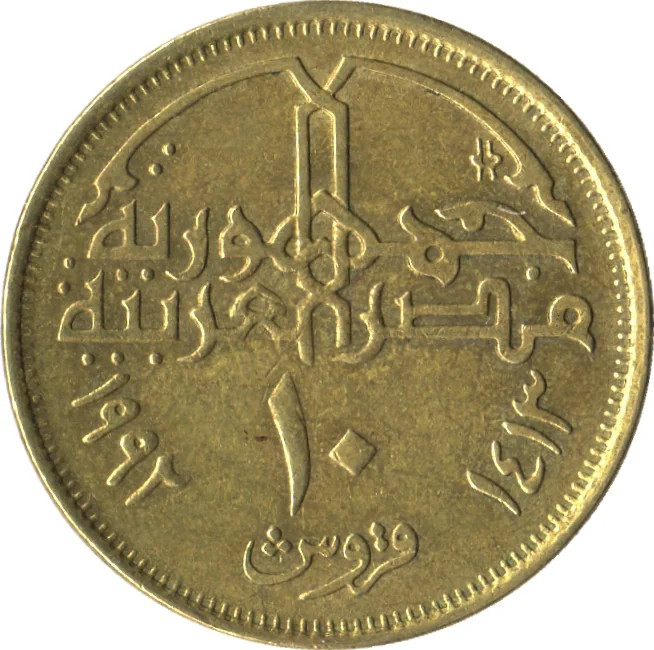
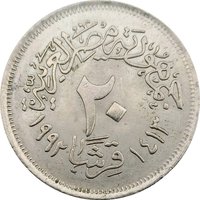
Stylized state name, denomination, and Hijri/Gregorian issue years in Arabic.
Inscription:
جمهورية مصر العربيه
١٠
قروش
١٤١٣ ١٩٩٢
١٠
قروش
١٤١٣ ١٩٩٢
Translation:
Ten
Qirsh
1413 1992
Qirsh
1413 1992
Language: Arabic
Reverse
Description:
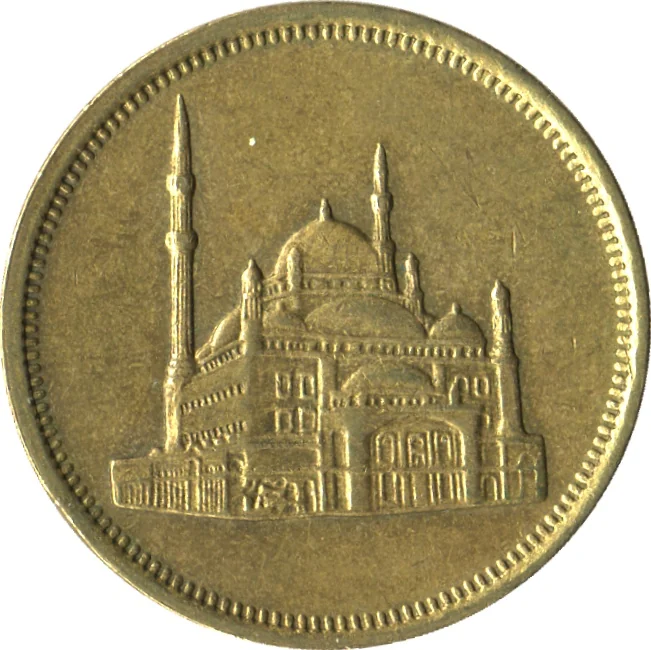
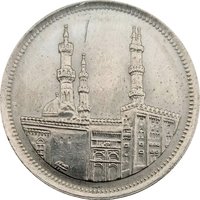
Illustration of the Muhammad Ali Mosque in Cairo's Citadel.
Edge
Plain
Categories
| Building> Religious building |
Mints
| Name | Mark |
|---|---|
| Egyptian Mint Authority | — |
Mintings
| Year | Mint Mark | Mintage | Quality | Collection |
|---|---|---|---|---|
| 1992 | — | 175,198,000 |
Historical background
In 1992, Egypt was in the midst of a pivotal economic transition, grappling with the legacy of a tightly controlled, socialist-inspired system. The Egyptian pound (EGP) was officially pegged to the U.S. dollar, but this masked a complex and problematic dual-exchange-rate regime. The government maintained an overvalued official rate for priority imports and debt servicing, while a parallel "black market" rate flourished, reflecting the currency's true, weaker value. This disparity created significant distortions, encouraged corruption, and acted as a major deterrent to foreign investment and efficient trade.
Recognizing these crippling inefficiencies, the Egyptian government, under President Hosni Mubarak and with strong encouragement from the International Monetary Fund (IMF) and World Bank, had embarked on a structural adjustment program. A cornerstone of this reform, initiated in 1991, was the unification of the exchange rate. By early 1992, Egypt had largely succeeded in eliminating the official peg, allowing the pound to be determined by a new, more transparent interbank market. This devaluation was a painful but necessary step to correct the macroeconomic imbalances and unify the currency's value.
The immediate effect in 1992 was a significantly depreciated pound, increasing the cost of imports and contributing to inflation, which placed a burden on the population. However, the reforms were viewed as essential for long-term stability. The unified, market-driven exchange rate aimed to boost Egypt's competitiveness by making exports cheaper, attract crucial foreign capital, and restore international creditor confidence. Thus, 1992 stands as a defining year, marking Egypt's decisive, albeit challenging, shift from a state-controlled to a market-oriented currency system.
Recognizing these crippling inefficiencies, the Egyptian government, under President Hosni Mubarak and with strong encouragement from the International Monetary Fund (IMF) and World Bank, had embarked on a structural adjustment program. A cornerstone of this reform, initiated in 1991, was the unification of the exchange rate. By early 1992, Egypt had largely succeeded in eliminating the official peg, allowing the pound to be determined by a new, more transparent interbank market. This devaluation was a painful but necessary step to correct the macroeconomic imbalances and unify the currency's value.
The immediate effect in 1992 was a significantly depreciated pound, increasing the cost of imports and contributing to inflation, which placed a burden on the population. However, the reforms were viewed as essential for long-term stability. The unified, market-driven exchange rate aimed to boost Egypt's competitiveness by making exports cheaper, attract crucial foreign capital, and restore international creditor confidence. Thus, 1992 stands as a defining year, marking Egypt's decisive, albeit challenging, shift from a state-controlled to a market-oriented currency system.
🌱 Very Common