

1 shilling – Fiji
Add to wishlist
Fiji
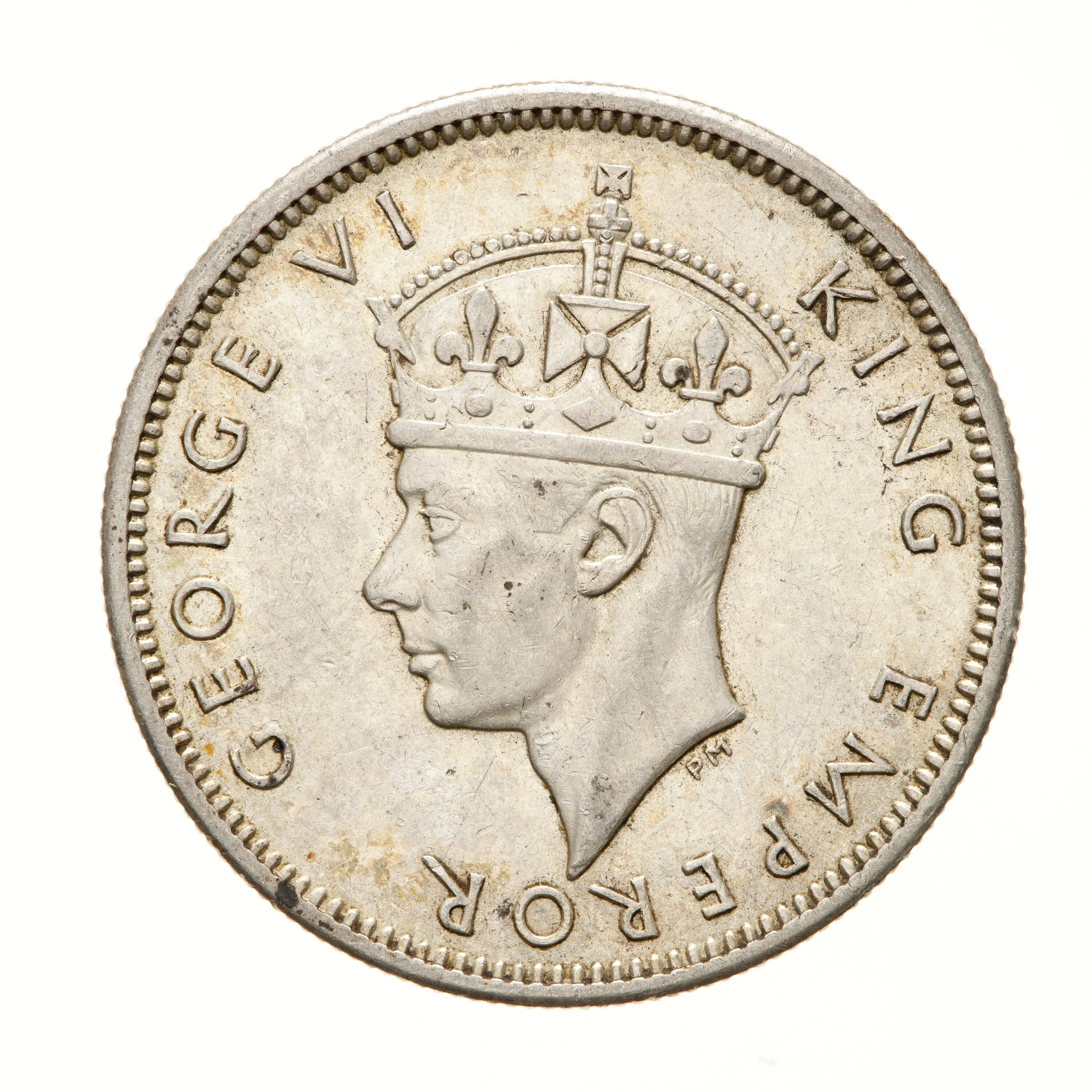
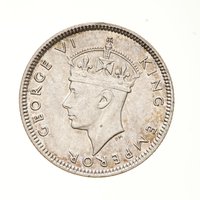
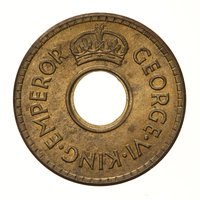
Obverse
Description:
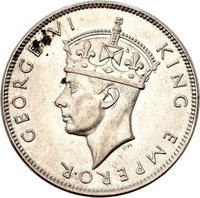
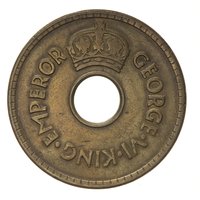
George VI left-facing crowned bust.
Inscription:
GEORGE VI KING EMPEROR
Translation:
GEORGE VI KING EMPEROR
Script: Latin
Language: English
Engraver: Percy Metcalfe
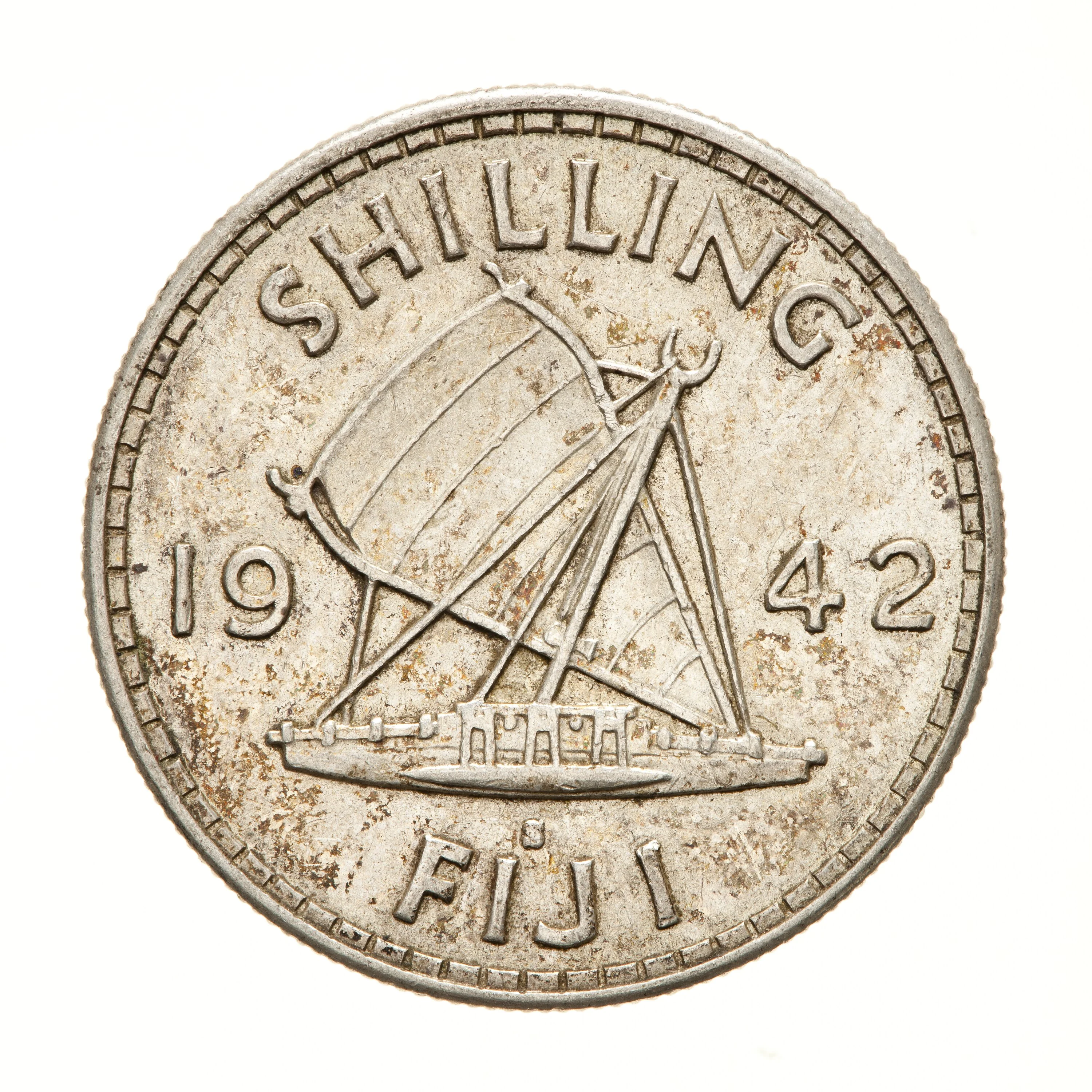
Reverse
Description:
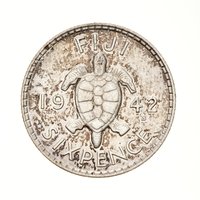
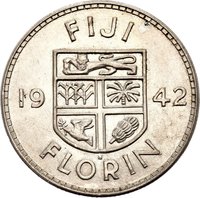
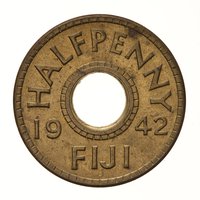
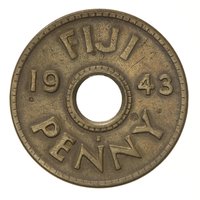
Outrigger splits dates and denominations.
Inscription:
SHILLING
1943
S
FIJI
1943
S
FIJI
Script: Latin
Engraver: Percy Metcalfe
Edge
Reeded
Categories
| Person> Monarch |
| Transportation> Watercraft |
Mints
| Name | Mark |
|---|---|
| United States Mint of San Francisco | S |
Historical background
In 1942, Fiji, a British Crown Colony, found its currency situation directly shaped by the exigencies of the Pacific War. Following the outbreak of hostilities with Japan and the rapid advance of Japanese forces through Southeast Asia, Fiji was transformed into a crucial Allied forward base. The influx of tens of thousands of American and New Zealand troops, along with the construction of airfields and naval facilities, created a sudden and massive demand for goods and services, straining the local monetary system. The official currency was the Fiji pound, pegged at par with the British pound sterling, but the colony's economy was suddenly operating at a wartime scale and pace.
This economic pressure led to a significant, though unofficial, dual-currency environment. While the Fiji pound remained legal tender, the sheer volume and spending power of the stationed U.S. forces meant that the United States dollar circulated widely and was often preferred by local businesses. This created practical challenges but also injected substantial funds into the local economy. Concurrently, to address a shortage of small change and to prevent the export of coinage by servicemen, the colony's government issued its first low-denomination banknotes for one shilling and two shillings, a direct administrative response to the unique circumstances of the wartime economy.
Overall, Fiji's 1942 currency situation was characterized by a colonial monetary system adapting under duress. The pegged Fiji pound was the official framework, but the reality on the ground was one of a dollarized garrison economy, supplemented by new fiduciary note issues. This period highlighted Fiji's strategic importance and exposed its financial system to external forces that would eventually contribute to post-war discussions about decimalization and greater monetary autonomy, which would culminate in the introduction of the Fijian dollar decades later.
This economic pressure led to a significant, though unofficial, dual-currency environment. While the Fiji pound remained legal tender, the sheer volume and spending power of the stationed U.S. forces meant that the United States dollar circulated widely and was often preferred by local businesses. This created practical challenges but also injected substantial funds into the local economy. Concurrently, to address a shortage of small change and to prevent the export of coinage by servicemen, the colony's government issued its first low-denomination banknotes for one shilling and two shillings, a direct administrative response to the unique circumstances of the wartime economy.
Overall, Fiji's 1942 currency situation was characterized by a colonial monetary system adapting under duress. The pegged Fiji pound was the official framework, but the reality on the ground was one of a dollarized garrison economy, supplemented by new fiduciary note issues. This period highlighted Fiji's strategic importance and exposed its financial system to external forces that would eventually contribute to post-war discussions about decimalization and greater monetary autonomy, which would culminate in the introduction of the Fijian dollar decades later.
Series: 1942 Fiji circulation coins
🌱 Common