

100 rials – Iran
Add to wishlist
Iran
Context
Material
Diameter: 22.95 mm
Weight: 4.6 g
Thickness: 1.36 mm
Shape: Round
Composition: Aluminium bronze
Magnetic: No
Technique: Milled
Alignment: Coin alignment
flip
References
KM: #
Numista: #10721
Value
Exchange value: 100 IRR
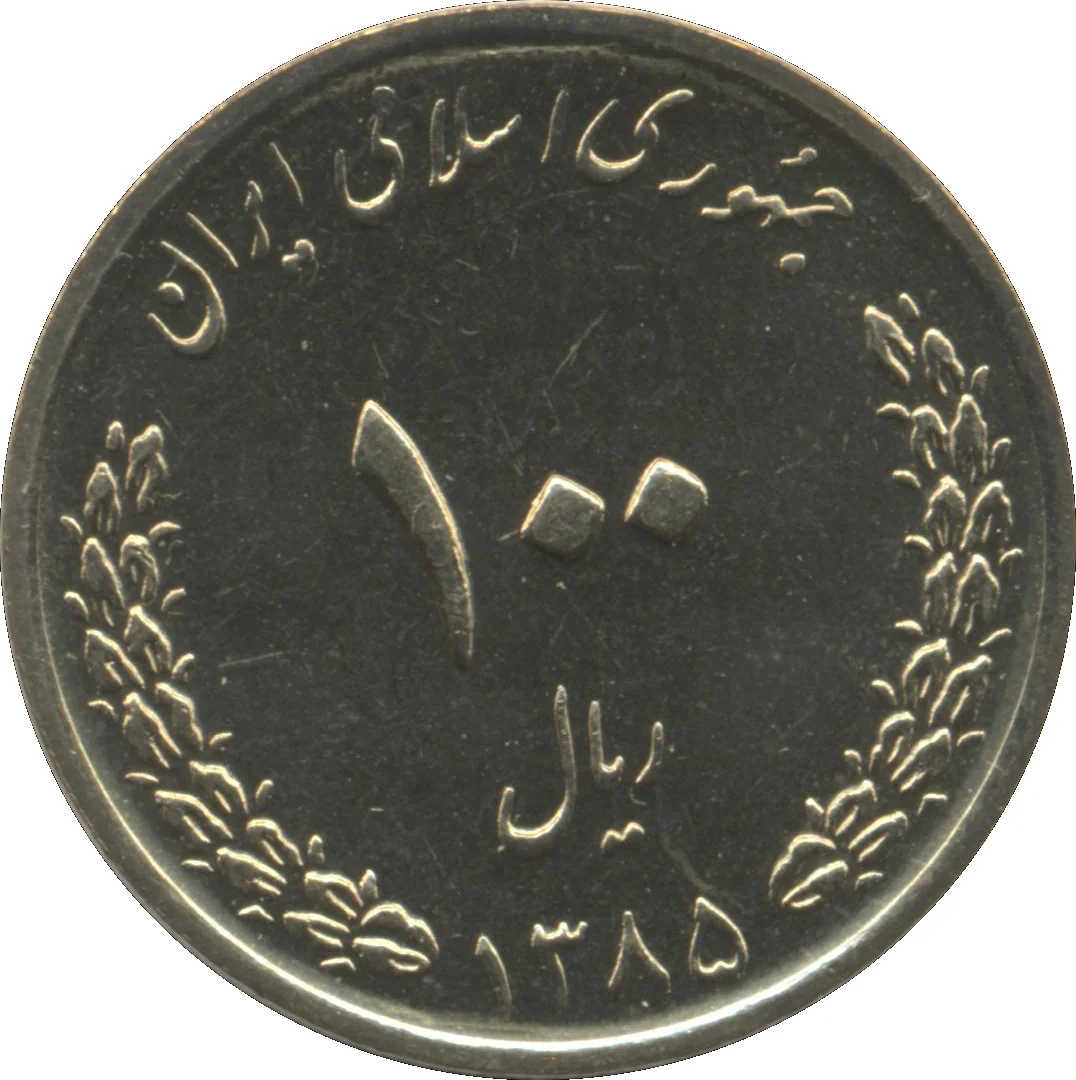
Obverse
Description:
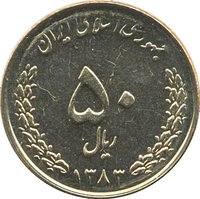
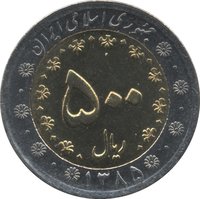
Iran 100 Rials
Inscription:
جمهوری اسلامی ایران
۱۰۰
ریال
۱۳۸۳
۱۰۰
ریال
۱۳۸۳
Translation:
Islamic Republic of Iran
100
Rials
1383
100
Rials
1383
Language: Persian
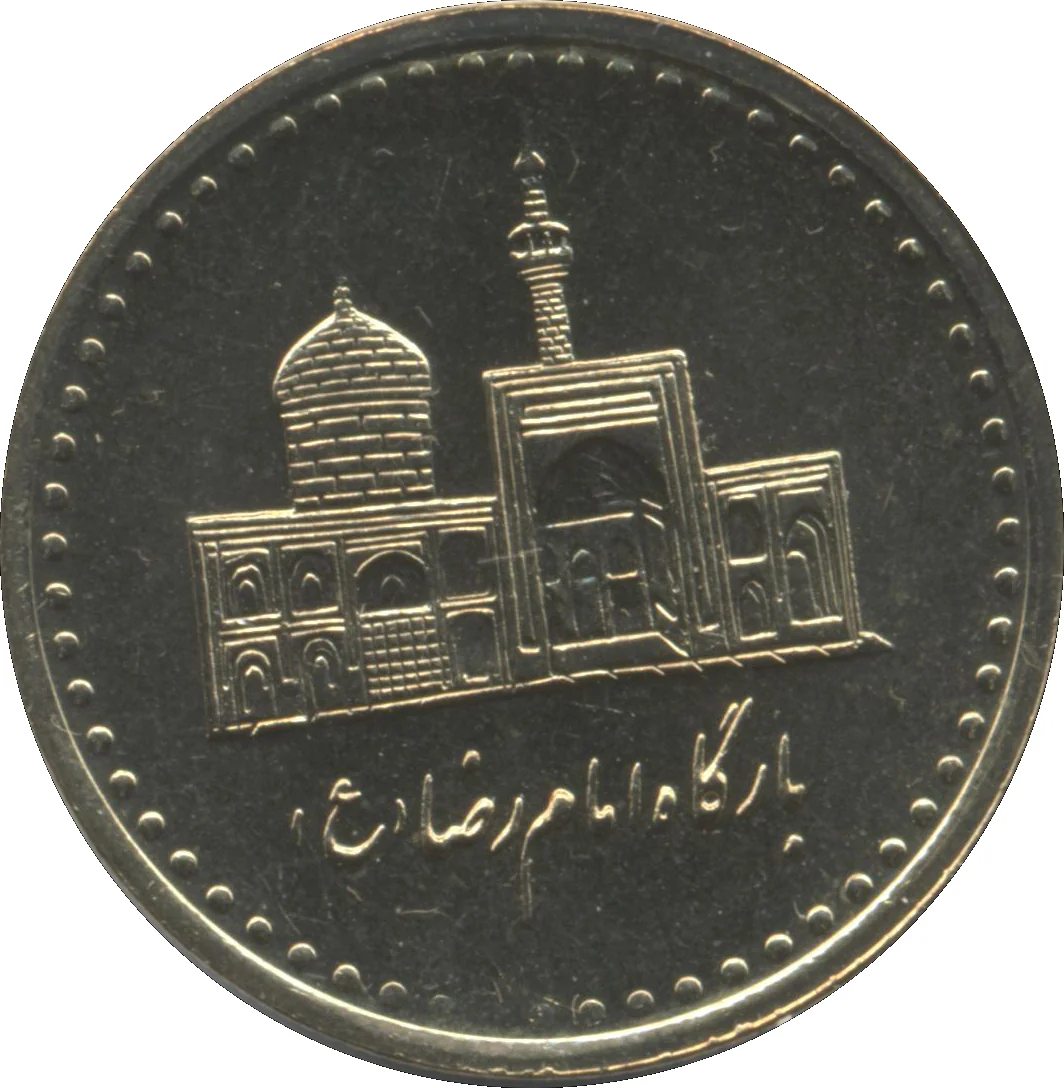
Reverse
Description:
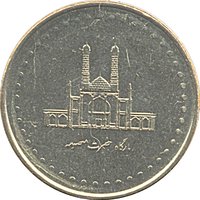
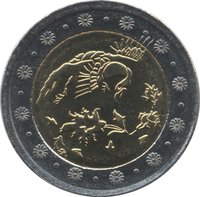
Imam Reza's tomb complex
Inscription:
حرم امام رضا
Translation:
Sanctuary of Imam Rida
Language: Arabic
Edge
Reeded
Categories
| Building> Religious building |
Mintings
| Year | Mint Mark | Mintage | Quality | Collection |
|---|---|---|---|---|
| 2003 | — | — | ||
| 2004 | — | — | ||
| 2005 | — | — | ||
| 2006 | — | — |
Historical background
In 2003, Iran's currency situation was characterized by relative stability but underlying vulnerability, operating under a multi-tiered exchange rate system. The official rate was fixed at 1,750 rials to the US dollar, heavily subsidized and reserved for imports of essential goods like food and medicine. However, a parallel market rate (often called the "market" or "free" rate) existed at approximately 8,000 rials per dollar, reflecting a more realistic valuation of the currency's strength and used for most other transactions. This complex system, designed to control inflation and shield the population from external shocks, created significant distortions, opportunities for corruption, and a growing black market for foreign exchange.
The stability of this period was largely artificial, propped up by high oil prices—which averaged around $28 per barrel that year—providing the government with substantial hard currency revenues. These petrodollars allowed the Central Bank of Iran to defend the fixed official rate and maintain large reserves. However, the economy was burdened by inefficiencies, significant state subsidies, and the beginnings of international scrutiny over Iran's nuclear program, which cast a long shadow over future economic prospects. Inflation was a persistent concern, running at an annual rate of approximately 15-16%, eroding purchasing power despite the fixed exchange rate.
Looking ahead, the currency regime of 2003 was unsustainable in the long term. The large gap between the official and market rates imposed a heavy fiscal burden on the state and discouraged foreign investment. Furthermore, the increasing geopolitical tensions with the West, which would later lead to severe financial sanctions, had already begun to heighten economic uncertainty. Thus, while the rial did not experience a major crisis in 2003, the year represented a calm before the storm, with the structural weaknesses of the multi-rate system setting the stage for the profound currency depreciations and unification challenges that would follow in the coming decade.
The stability of this period was largely artificial, propped up by high oil prices—which averaged around $28 per barrel that year—providing the government with substantial hard currency revenues. These petrodollars allowed the Central Bank of Iran to defend the fixed official rate and maintain large reserves. However, the economy was burdened by inefficiencies, significant state subsidies, and the beginnings of international scrutiny over Iran's nuclear program, which cast a long shadow over future economic prospects. Inflation was a persistent concern, running at an annual rate of approximately 15-16%, eroding purchasing power despite the fixed exchange rate.
Looking ahead, the currency regime of 2003 was unsustainable in the long term. The large gap between the official and market rates imposed a heavy fiscal burden on the state and discouraged foreign investment. Furthermore, the increasing geopolitical tensions with the West, which would later lead to severe financial sanctions, had already begun to heighten economic uncertainty. Thus, while the rial did not experience a major crisis in 2003, the year represented a calm before the storm, with the structural weaknesses of the multi-rate system setting the stage for the profound currency depreciations and unification challenges that would follow in the coming decade.
Series: 2003 Iran circulation coins
🌱 Common