

8 maravedis – Spain
Add to wishlist
Spain
Context
Material
References
KM: #
Numista: #18168
Obverse
Description:
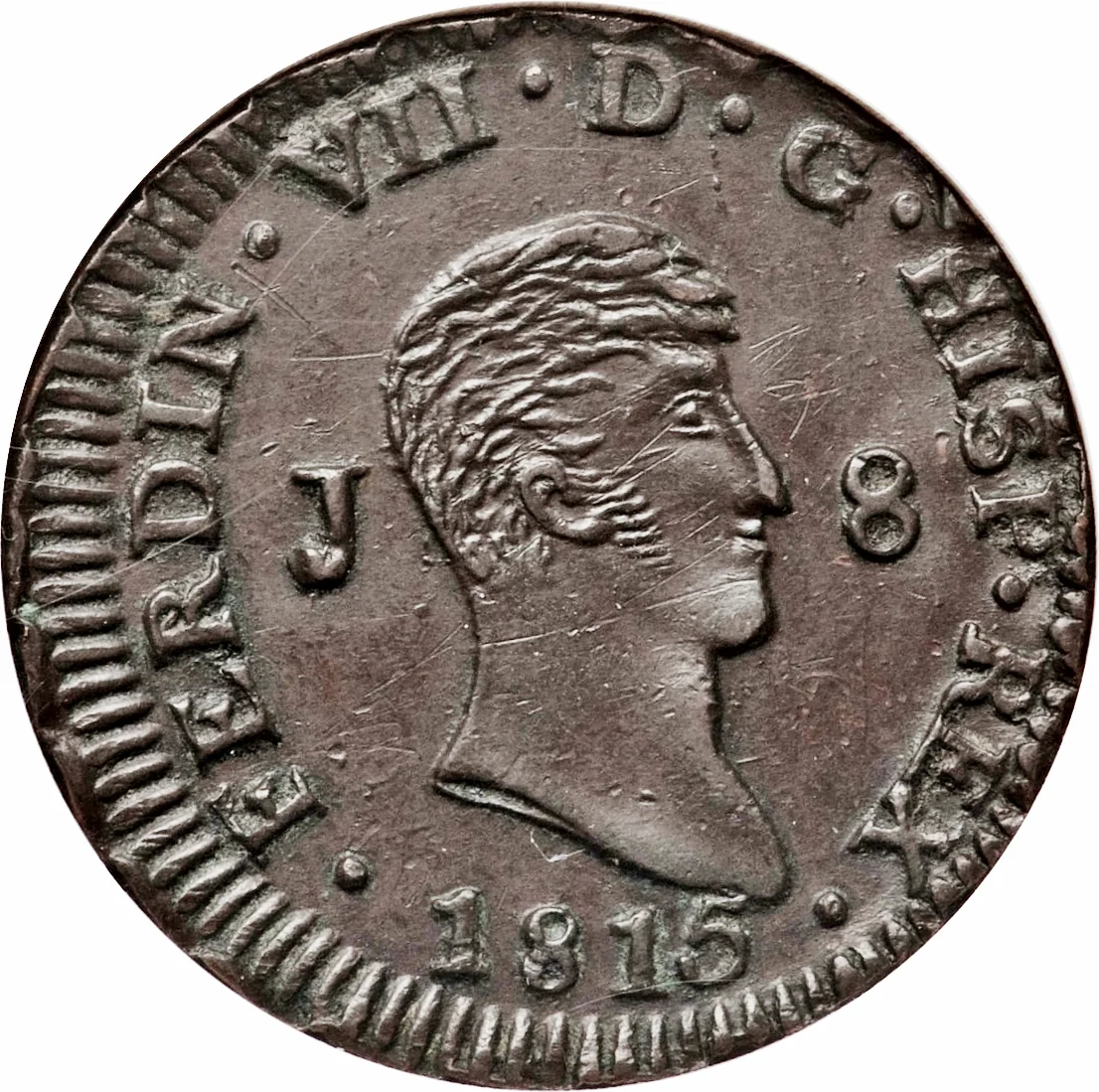
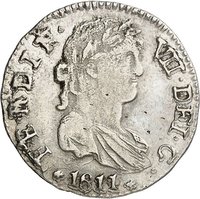
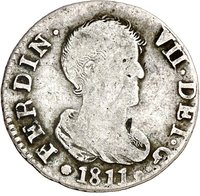
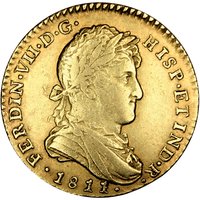
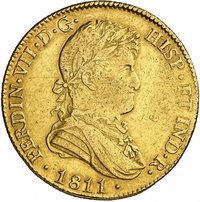
King Fernando VII facing right.
Inscription:
FERDIN · VII· D · G · HISP · REX
J 8
· 1815 ·
J 8
· 1815 ·
Translation:
FERDINAND VII, BY THE GRACE OF GOD, KING OF SPAIN
J 8
1815
J 8
1815
Script: Latin
Language: Latin
Engraver: Félix Sagau y Dalmau de Galcerán
Reverse
Description:
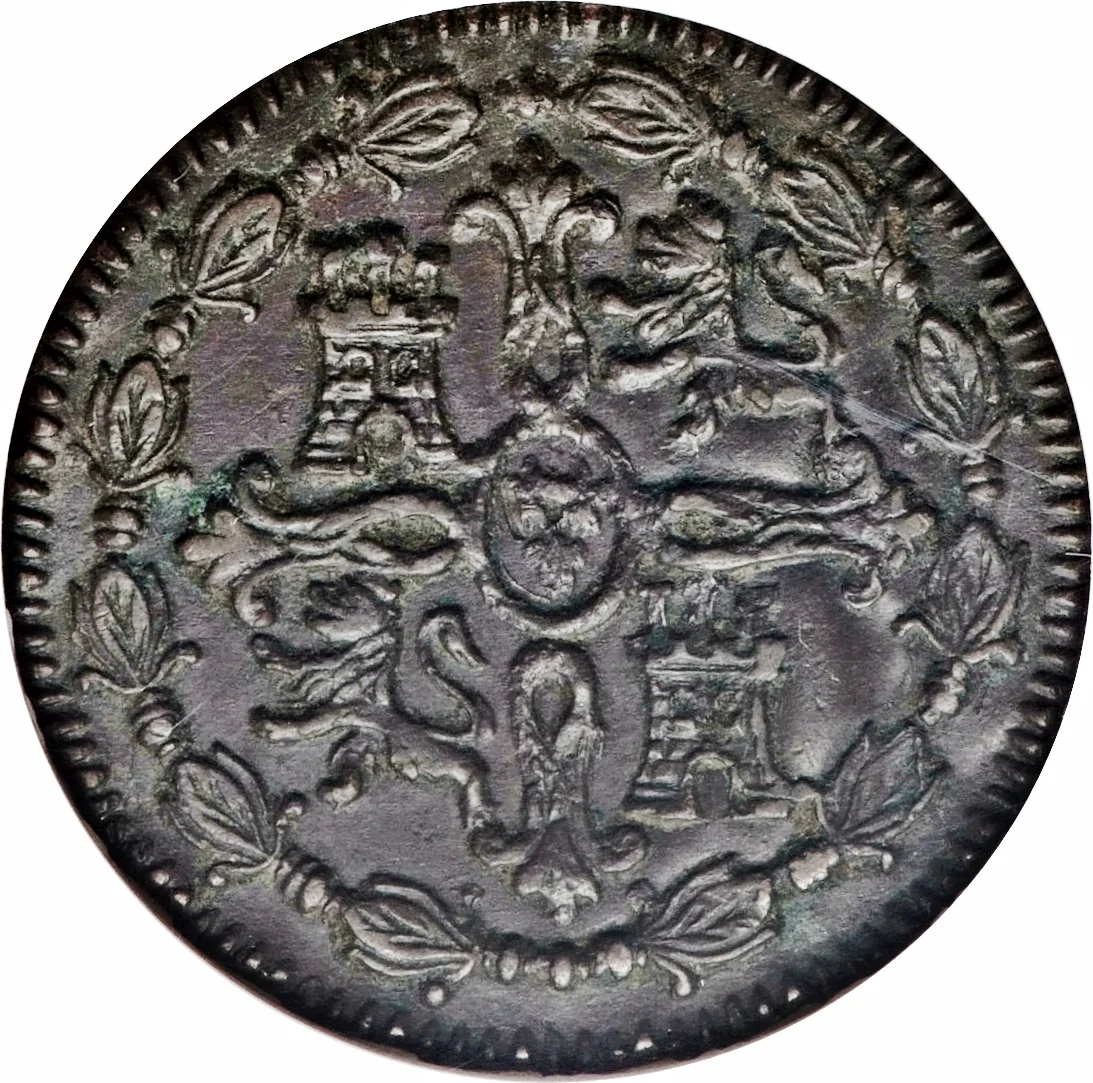
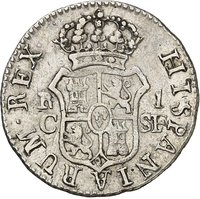
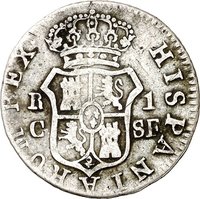
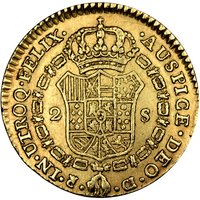
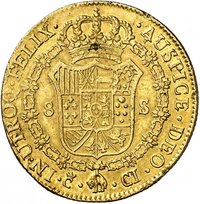
Cross of Don Pelayo featuring castles and lions for Castile and Leon, a central Bourbon fleur-de-lis oval, and a perimeter wreath.
Engraver: Félix Sagau y Dalmau de Galcerán
Edge
Categories
| Symbol> Cross |
| Symbol> Fleur-de-lis |
| Animal> Feline |
| Building> Castle or fortification |
| Symbol> Wreath |
Mints
| Name | Mark |
|---|---|
| Jubia Mint | J |
Historical background
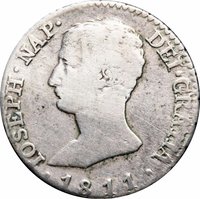
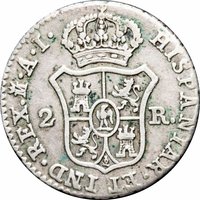
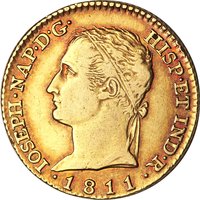
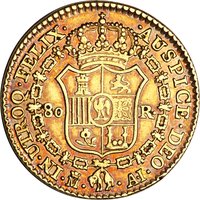
In 1811, Spain was embroiled in the Peninsular War (1808-1814), a brutal conflict against Napoleon's occupying forces. This wartime crisis had completely shattered the nation's financial system. The traditional royal treasury was depleted, and the country was effectively split between French-controlled territories and regions loyal to the exiled Ferdinand VII, governed by the Cádiz Cortes. Both sides faced desperate needs to fund their armies and administrations, leading to a chaotic and inflationary monetary landscape.
The most significant development was the issuance of paper money by the patriotic Spanish government in Cádiz. Known as "vales reales" (royal bonds) earlier, and now as "vales de las Cortes" (Cortes bonds), these were essentially forced credit notes decreed as legal tender. However, with little public confidence and no substantial precious metal reserves to back them, they rapidly depreciated in value. This depreciation was exacerbated by the widespread counterfeiting of notes by French authorities in occupied zones, deliberately aiming to undermine the Spanish economy.
Consequently, Spain suffered from severe inflation and a fractured currency system. In practice, people resorted to hoarding older silver and gold coins (like the real and peso), while the depreciating paper notes circulated at a steep discount. Barter became common in many areas. Thus, 1811 represents a low point of monetary authority, where the currency was not a symbol of sovereign stability but a stark reflection of the war's economic devastation and the struggle for national survival.
The most significant development was the issuance of paper money by the patriotic Spanish government in Cádiz. Known as "vales reales" (royal bonds) earlier, and now as "vales de las Cortes" (Cortes bonds), these were essentially forced credit notes decreed as legal tender. However, with little public confidence and no substantial precious metal reserves to back them, they rapidly depreciated in value. This depreciation was exacerbated by the widespread counterfeiting of notes by French authorities in occupied zones, deliberately aiming to undermine the Spanish economy.
Consequently, Spain suffered from severe inflation and a fractured currency system. In practice, people resorted to hoarding older silver and gold coins (like the real and peso), while the depreciating paper notes circulated at a steep discount. Barter became common in many areas. Thus, 1811 represents a low point of monetary authority, where the currency was not a symbol of sovereign stability but a stark reflection of the war's economic devastation and the struggle for national survival.
Series: 1811 Spain circulation coins
🌱 Fairly Common