

Obverse
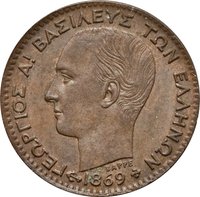
Description:
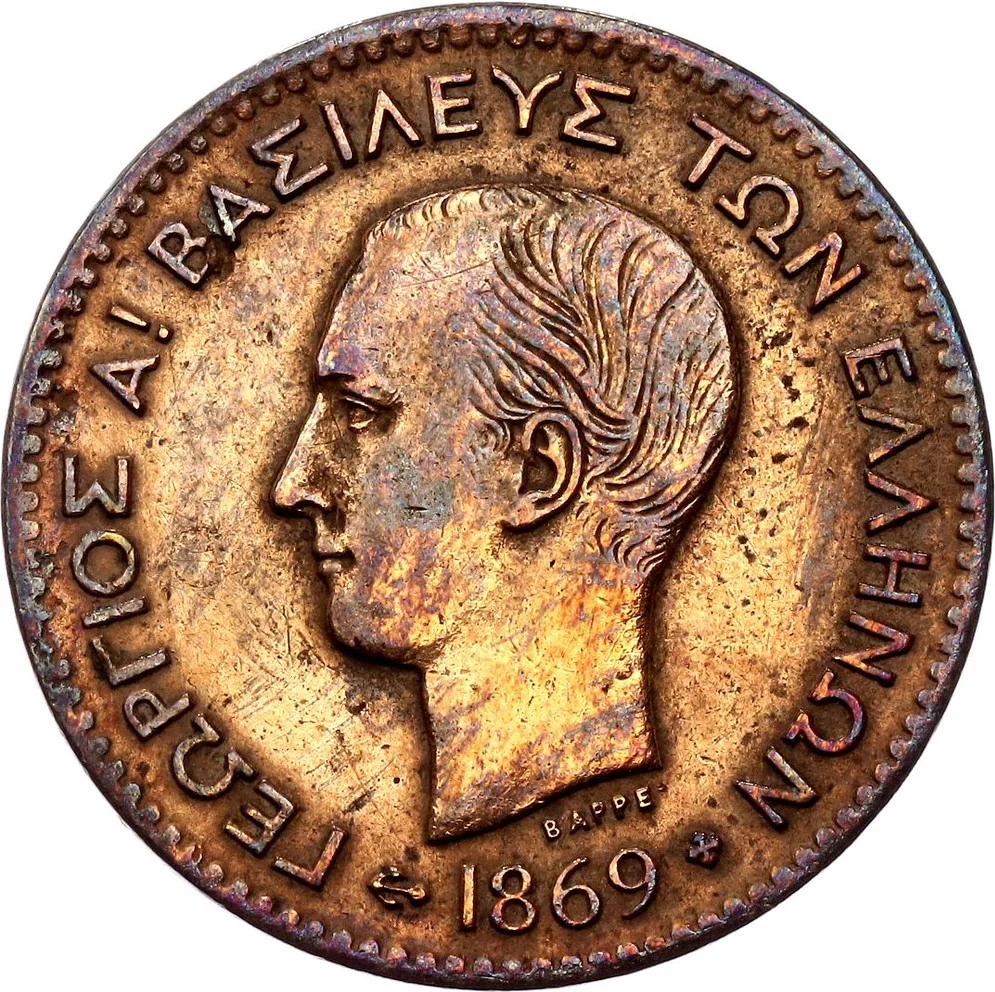
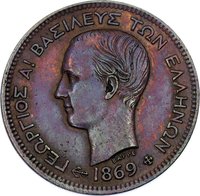
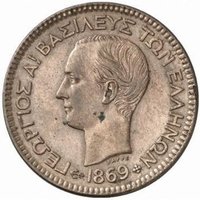
Portrait of young King George I facing left, with date and engraver's name below.
Inscription:
ΓΕΩΡΓΙΟΣ Α! ΒΑΣΙΛΕΥΣ ΤΩΝ ΕΛΛΗΝΩΝ
ΒΑΡΡΕ
1869
ΒΑΡΡΕ
1869
Translation:
GEORGE A! KING OF THE GREEKS
BARRE
1869
BARRE
1869
Script: Greek
Language: Greek
Engraver: Désiré-Albert Barre
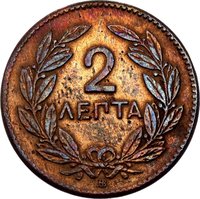
Reverse
Description:
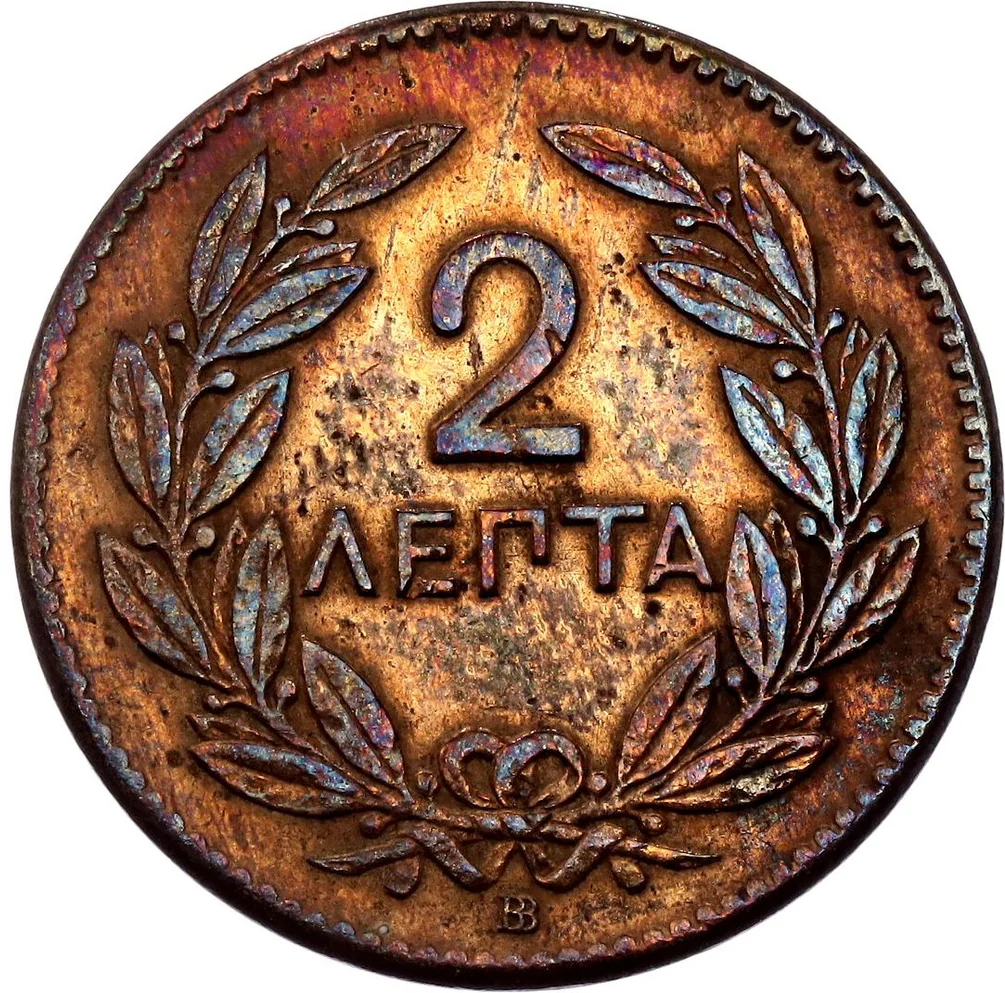
Denomination within wreath, mintmark below.
Inscription:
2
ΛΕΠΤΑ
BB
ΛΕΠΤΑ
BB
Translation:
Two Lepta
Script: Greek
Language: Greek
Engraver: Désiré-Albert Barre
Edge
Plain
Mints
| Name | Mark |
|---|---|
| Strasbourg | BB |
Historical background
In 1869, Greece was navigating a complex monetary landscape as a young kingdom striving for economic stability and international integration. The nation operated on the bimetallic standard, legally recognizing both gold and silver coins, but in practice, the currency system was fragmented and unreliable. A multitude of foreign coins, particularly the French franc, circulated alongside the official national currency, the drachma, which struggled to establish full public confidence and uniform acceptance.
This period was one of transition following the Latin Monetary Union (LMU), which Greece had joined in 1868. The LMU aimed to standardize coinage across several European nations, fixing the drachma to the franc and specifying the weight and fineness of silver coins. However, Greece's entry was provisional; the country was required to reform its finances and curtail the excessive issuance of fractional currency that had fueled inflation. Thus, 1869 fell within a tense probationary period where the Greek government was under pressure to align its monetary practices with LMU standards to achieve full and uncontested membership.
Consequently, the currency situation was marked by a duality: an official policy of adherence to an international system promising stability and trade benefits, and an on-the-ground reality of monetary inconsistency. The government's challenge was to retire debased small-change coins, manage public debt, and instill fiscal discipline—all essential to solidify the drachma's value. The success of this alignment was seen as crucial not only for domestic economic health but also for Greece's credibility within the European financial community.
This period was one of transition following the Latin Monetary Union (LMU), which Greece had joined in 1868. The LMU aimed to standardize coinage across several European nations, fixing the drachma to the franc and specifying the weight and fineness of silver coins. However, Greece's entry was provisional; the country was required to reform its finances and curtail the excessive issuance of fractional currency that had fueled inflation. Thus, 1869 fell within a tense probationary period where the Greek government was under pressure to align its monetary practices with LMU standards to achieve full and uncontested membership.
Consequently, the currency situation was marked by a duality: an official policy of adherence to an international system promising stability and trade benefits, and an on-the-ground reality of monetary inconsistency. The government's challenge was to retire debased small-change coins, manage public debt, and instill fiscal discipline—all essential to solidify the drachma's value. The success of this alignment was seen as crucial not only for domestic economic health but also for Greece's credibility within the European financial community.
Series: 1869 Greece circulation coins
🌱 Fairly Common