

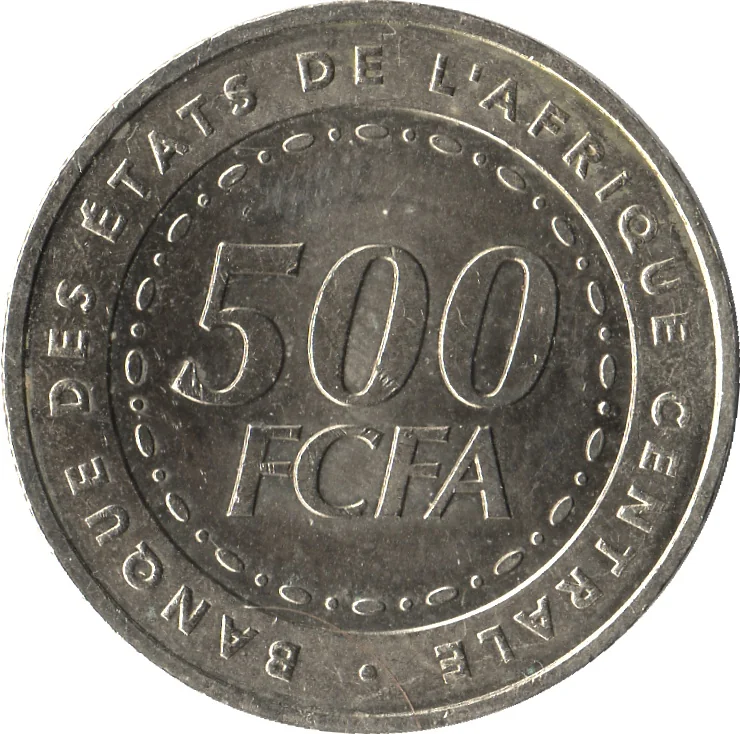
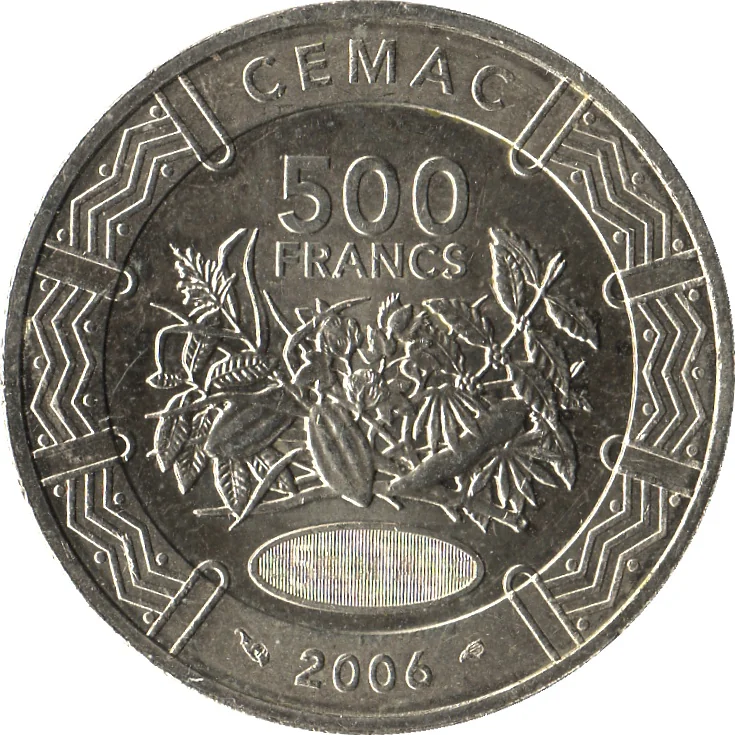
500 francs cfa – Central African States
Add to wishlist
Context
Year: 2006
Issuer: Central African States
Issuing organization: Bank of Central African States
Currency:
(since 1973)
Material
Diameter: 26 mm
Weight: 8 g
Thickness: 2.03 mm
Shape: Round
Composition: Copper-nickel
Technique: Milled
Alignment: Coin alignment
flip
References
KM: #
Numista: #1808
Value
Exchange value: 500 XAF
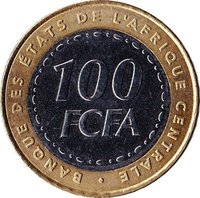
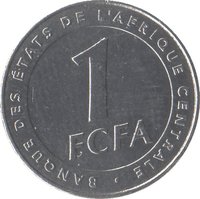
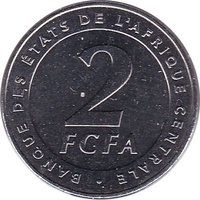
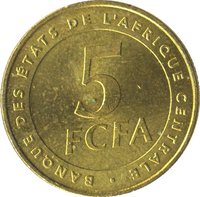
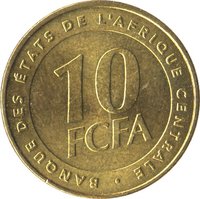
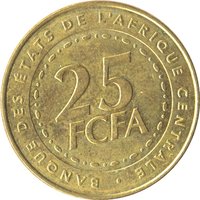
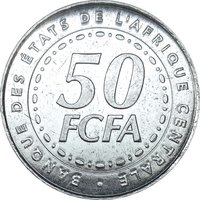
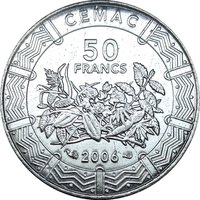
Obverse
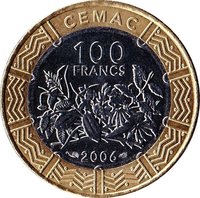
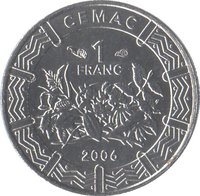
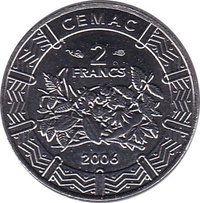
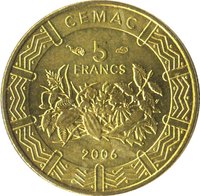
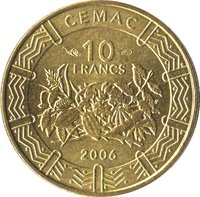
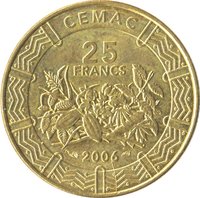
Reverse
Edge
Mints
| Name | Mark |
|---|---|
| Monnaie de Paris | — |
Mintings
| Year | Mint Mark | Mintage | Quality | Collection |
|---|---|---|---|---|
| 2006 | — | — |
Historical background
In 2006, the currency situation in the Central African States was defined by the shared use of the CFA franc, specifically the Coopération Financière en Afrique centrale (CFA) franc, issued by the Bank of Central African States (BEAC). This currency was (and remains) used by the six members of the Central African Economic and Monetary Community (CEMAC): Cameroon, Central African Republic, Chad, Republic of the Congo, Equatorial Guinea, and Gabon. The CFA franc was pegged to the euro at a fixed and guaranteed exchange rate (1 euro = 655.957 CFA francs), a arrangement backed by the French Treasury, which provided monetary stability but also meant France held significant influence over the zone's monetary policy.
The year 2006 was one of relative macroeconomic stability for the CEMAC zone, following a period of economic recovery from internal conflicts and the completion of debt relief under the Heavily Indebted Poor Countries (HIPC) initiative for several members. High global oil prices were a dominant economic factor, benefiting major oil exporters like Gabon, Congo, and Equatorial Guinea, and leading to overall fiscal surpluses and growing foreign reserves. However, this also highlighted a critical vulnerability: the currency zone's economy was heavily dependent on volatile primary commodity exports, with limited diversification and intra-regional trade.
Despite the stability provided by the fixed peg, underlying tensions and debates persisted. Critics argued that the arrangement limited monetary sovereignty and hindered competitiveness for non-oil exporting members. Furthermore, while the zone maintained a common external tariff and aimed for deeper economic integration, progress was slow, and disparities between oil-rich and poorer, often conflict-affected members like the Central African Republic remained stark. Thus, in 2006, the currency situation was stable on the surface but underscored by long-standing debates about dependency, economic divergence, and the future path of monetary integration within the region.
The year 2006 was one of relative macroeconomic stability for the CEMAC zone, following a period of economic recovery from internal conflicts and the completion of debt relief under the Heavily Indebted Poor Countries (HIPC) initiative for several members. High global oil prices were a dominant economic factor, benefiting major oil exporters like Gabon, Congo, and Equatorial Guinea, and leading to overall fiscal surpluses and growing foreign reserves. However, this also highlighted a critical vulnerability: the currency zone's economy was heavily dependent on volatile primary commodity exports, with limited diversification and intra-regional trade.
Despite the stability provided by the fixed peg, underlying tensions and debates persisted. Critics argued that the arrangement limited monetary sovereignty and hindered competitiveness for non-oil exporting members. Furthermore, while the zone maintained a common external tariff and aimed for deeper economic integration, progress was slow, and disparities between oil-rich and poorer, often conflict-affected members like the Central African Republic remained stark. Thus, in 2006, the currency situation was stable on the surface but underscored by long-standing debates about dependency, economic divergence, and the future path of monetary integration within the region.
🌱 Common