

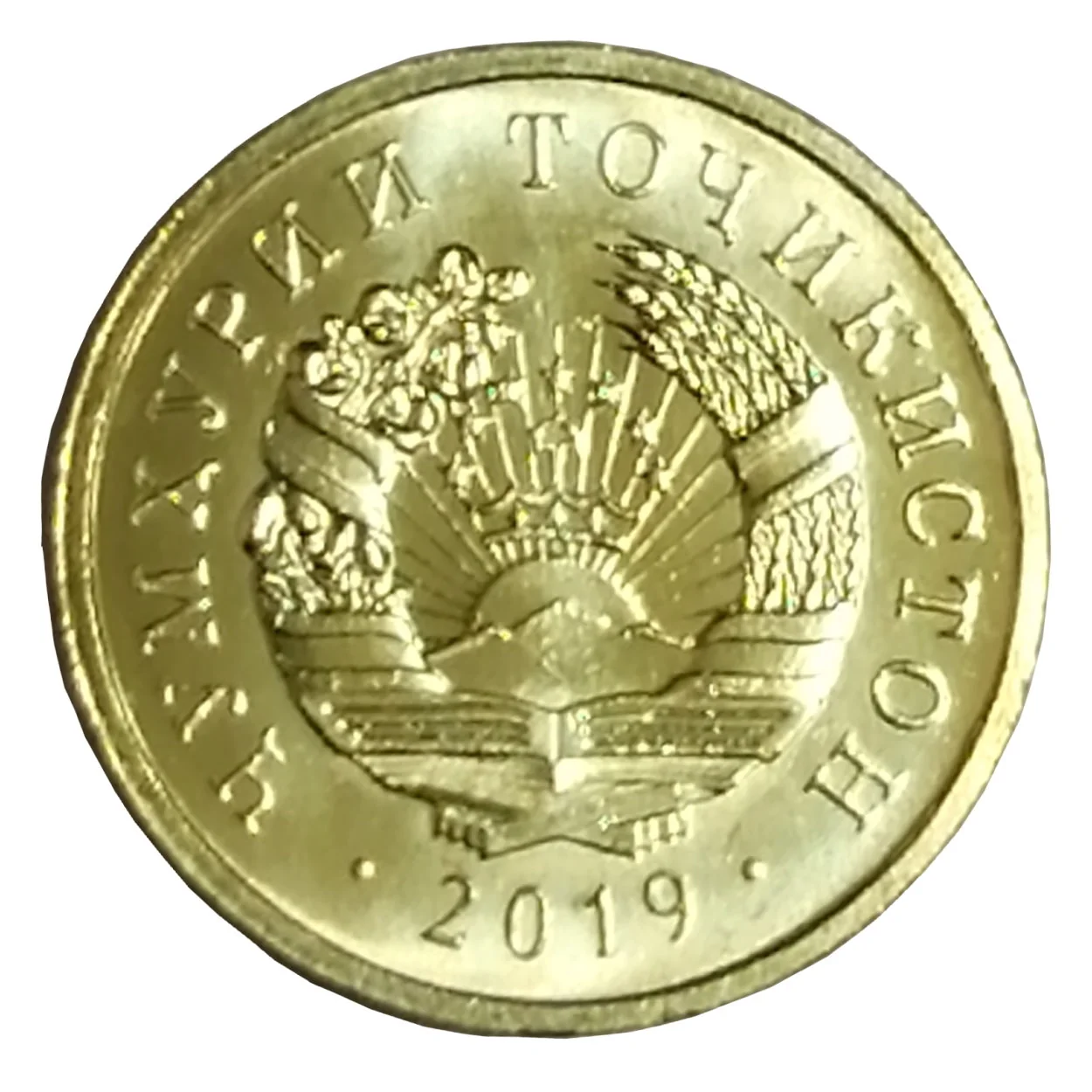

Obverse
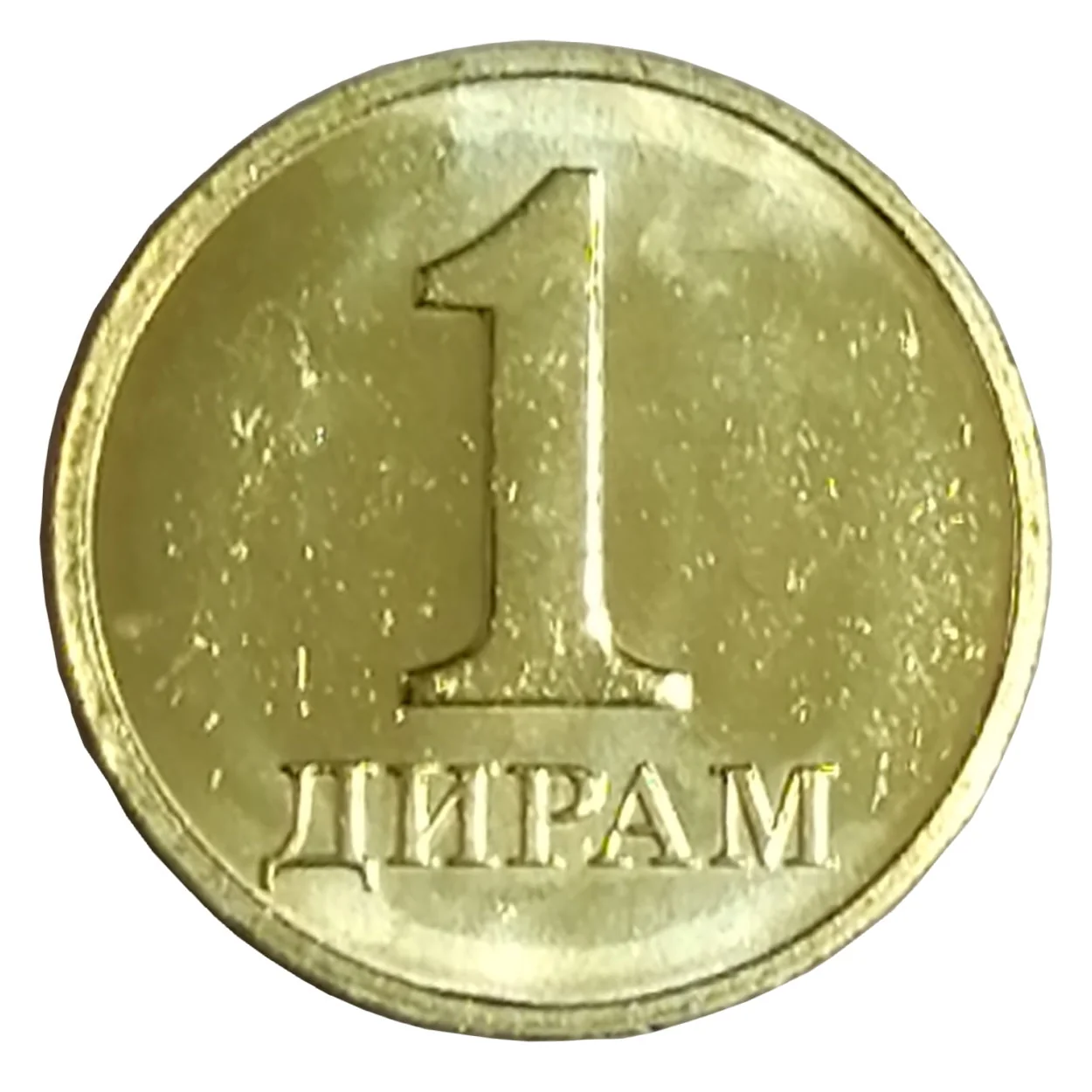
Reverse
Edge
Plain
Mints
| Name | Mark |
|---|---|
| Kazakhstan Mint | — |
Mintings
| Year | Mint Mark | Mintage | Quality | Collection |
|---|---|---|---|---|
| 2019 | — | — |
Historical background
In 2019, Tajikistan's currency, the somoni, faced significant pressure, continuing a trend of depreciation driven by a combination of external dependencies and domestic economic vulnerabilities. The country's economy remained heavily reliant on remittances, which constituted a substantial portion of GDP and were primarily sent from migrant workers in Russia. Consequently, the somoni's stability was closely tied to the Russian ruble, which experienced its own volatility. Furthermore, a slowdown in key export commodities like aluminum and cotton, coupled with a growing import bill, led to a persistent trade deficit, draining foreign currency reserves and weakening the somoni's position.
The National Bank of Tajikistan (NBT) employed a managed float exchange rate regime but intervened frequently in 2019 to smooth out excessive volatility and slow the depreciation. Despite these interventions, the somoni still lost value against the US dollar over the year. This depreciation increased the cost of servicing Tajikistan's substantial external public debt, which was largely denominated in foreign currencies, thereby straining the national budget. Inflationary pressures also emerged as the weaker currency made imported goods, including essential foodstuffs and medicines, more expensive for the population.
The government's response in 2019 included efforts to attract foreign investment and promote exports to reduce the trade imbalance, but structural reforms progressed slowly. Authorities also maintained strict capital controls to limit the outflow of foreign currency, a practice that, while stabilizing in the short term, created distortions in the official financial market and fostered a disparity with the informal exchange rate. Overall, the currency situation in 2019 highlighted Tajikistan's ongoing economic fragility and its acute sensitivity to external shocks, particularly fluctuations in the Russian economy and remittance flows.
The National Bank of Tajikistan (NBT) employed a managed float exchange rate regime but intervened frequently in 2019 to smooth out excessive volatility and slow the depreciation. Despite these interventions, the somoni still lost value against the US dollar over the year. This depreciation increased the cost of servicing Tajikistan's substantial external public debt, which was largely denominated in foreign currencies, thereby straining the national budget. Inflationary pressures also emerged as the weaker currency made imported goods, including essential foodstuffs and medicines, more expensive for the population.
The government's response in 2019 included efforts to attract foreign investment and promote exports to reduce the trade imbalance, but structural reforms progressed slowly. Authorities also maintained strict capital controls to limit the outflow of foreign currency, a practice that, while stabilizing in the short term, created distortions in the official financial market and fostered a disparity with the informal exchange rate. Overall, the currency situation in 2019 highlighted Tajikistan's ongoing economic fragility and its acute sensitivity to external shocks, particularly fluctuations in the Russian economy and remittance flows.

🌱 Fairly Common