

1000 shillings (Independence) – Kenya
Add to wishlist
Kenya
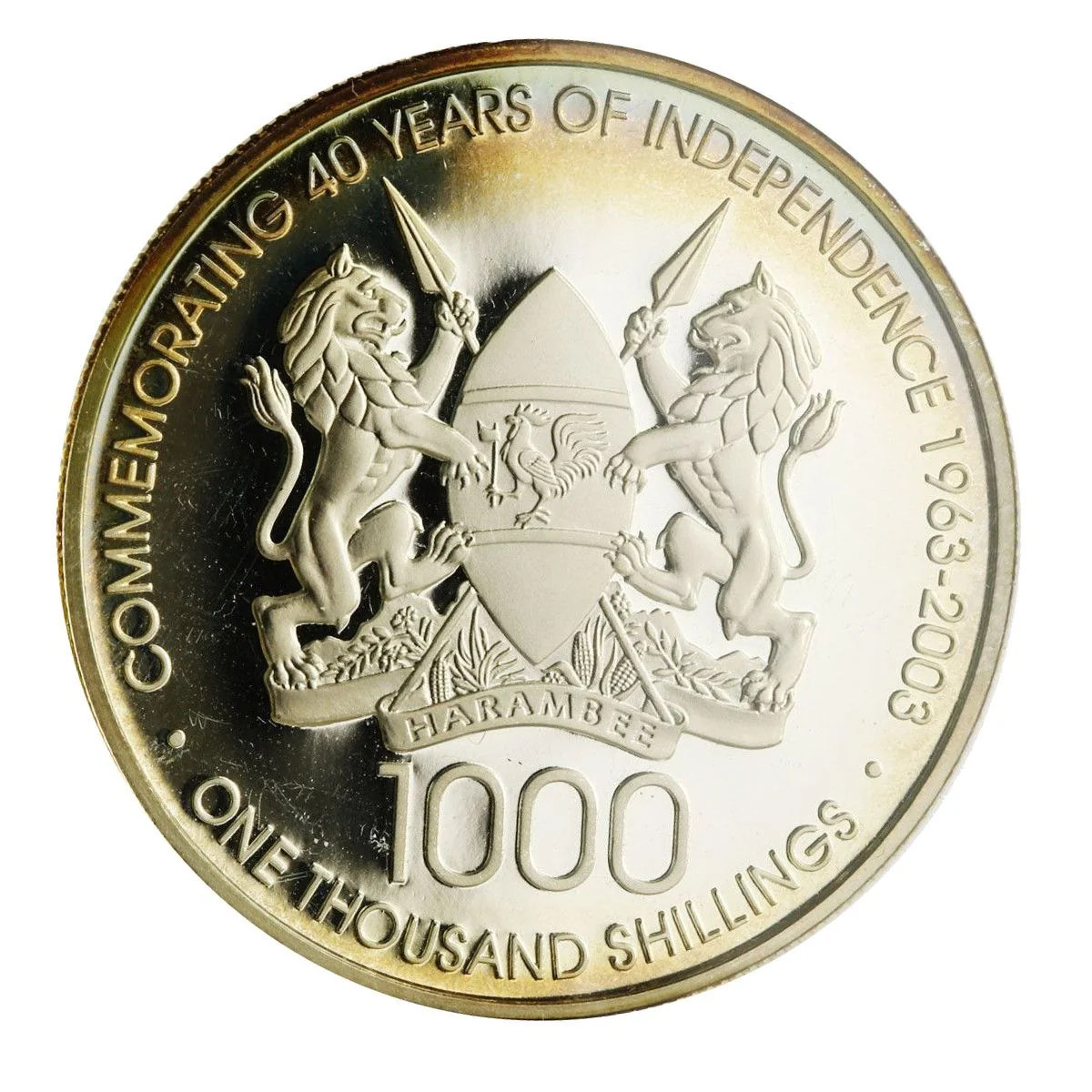
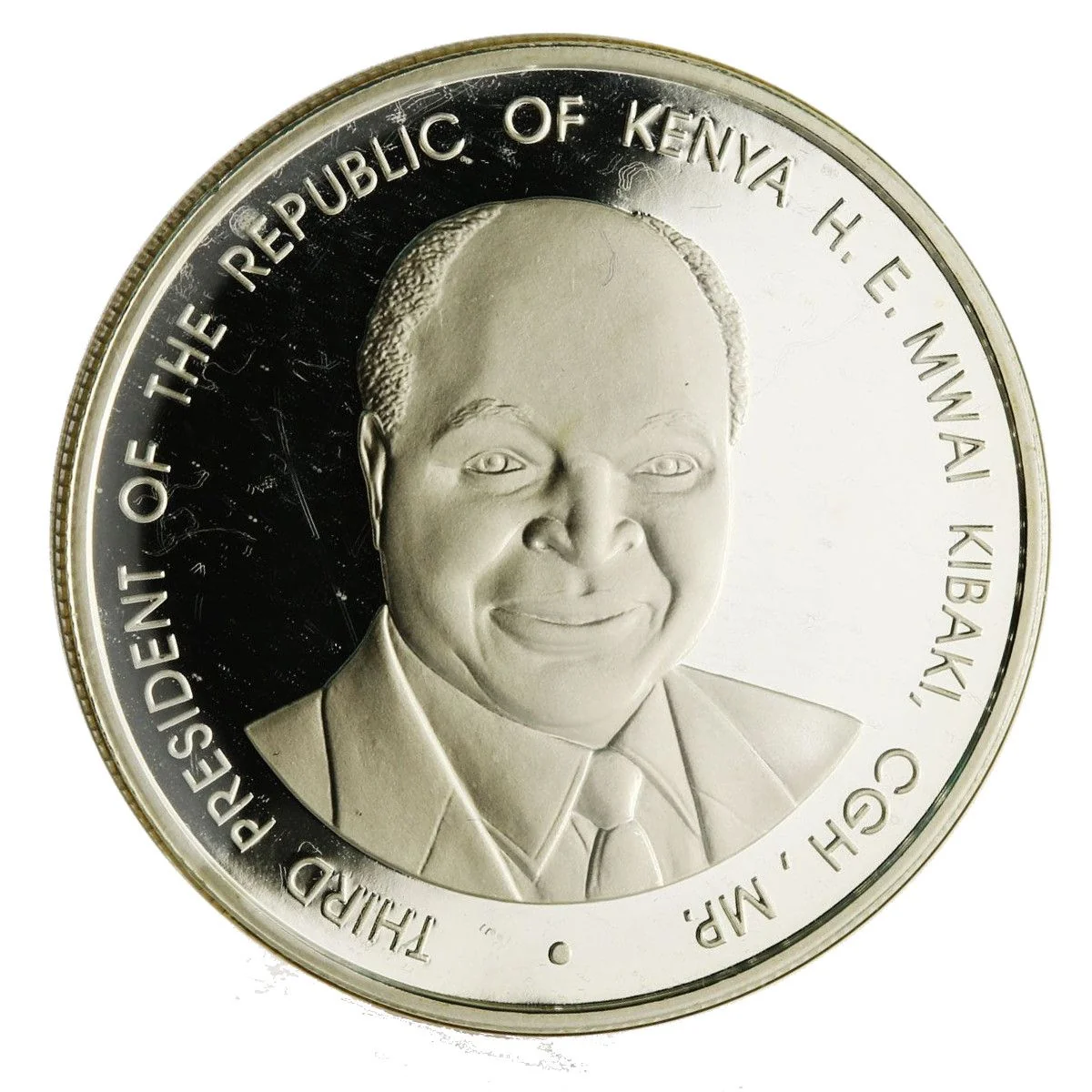
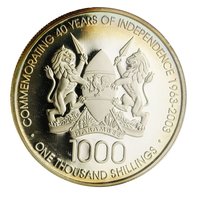
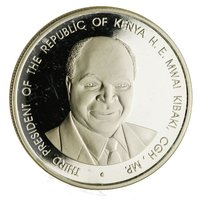
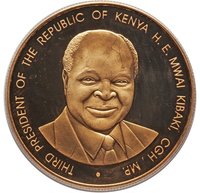
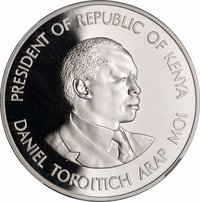
Obverse
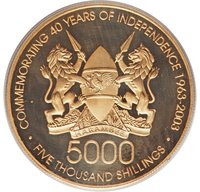
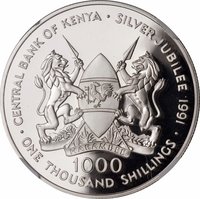
Reverse
Description:
Bust of President Mwai Kibaki, frontal view.
Inscription:
THIRD PRESIDENT OF THE REPUBLIC OF KENYA H.E. MWAI KIBAKI, CGH, MP. ·
Script: Latin
Edge
Reeded
Categories
| Event> Independence |
| Person> Politician |
| Symbols> Coat of Arms |
Mints
| Name | Mark |
|---|---|
| Royal Mint | — |
Mintings
| Year | Mint Mark | Mintage | Quality | Collection |
|---|---|---|---|---|
| 2003 | — | — | Proof |
Historical background
In 2003, Kenya's currency situation was characterized by relative stability and cautious optimism under the newly elected government of President Mwai Kibaki. The Kenyan shilling (KES) traded within a managed float regime, with the Central Bank of Kenya (CBK) intervening to smooth out excessive volatility. After a period of significant depreciation in the 1990s, the shilling had found a tentative equilibrium, averaging approximately 76 KES to 1 US Dollar throughout the year. This stability was underpinned by improved foreign exchange reserves, which had been bolstered by resumed lending from the International Monetary Fund (IMF) and World Bank following the end of the Daniel arap Moi era.
The economic backdrop was one of recovery from decades of stagnation and mismanagement. The Kibaki administration, which took office in late 2002, embarked on a reform agenda focused on fighting corruption and revitalizing the economy. Key factors influencing the currency included rising diaspora remittances, which became a growing source of foreign exchange, and a recovering tourism sector. However, the shilling remained vulnerable to external shocks and domestic fiscal pressures, including a large public debt burden and a still-fragile banking system.
Overall, 2003 marked a transitional year where the foundations for economic growth were being laid. The currency's stability was seen as a prerequisite for attracting foreign investment and fostering confidence. While challenges such as a widening trade deficit persisted, the deliberate monetary policy and the renewed engagement with international financial institutions provided a guardrail against severe depreciation, setting the stage for the economic expansion that would follow in the mid-2000s.
The economic backdrop was one of recovery from decades of stagnation and mismanagement. The Kibaki administration, which took office in late 2002, embarked on a reform agenda focused on fighting corruption and revitalizing the economy. Key factors influencing the currency included rising diaspora remittances, which became a growing source of foreign exchange, and a recovering tourism sector. However, the shilling remained vulnerable to external shocks and domestic fiscal pressures, including a large public debt burden and a still-fragile banking system.
Overall, 2003 marked a transitional year where the foundations for economic growth were being laid. The currency's stability was seen as a prerequisite for attracting foreign investment and fostering confidence. While challenges such as a widening trade deficit persisted, the deliberate monetary policy and the renewed engagement with international financial institutions provided a guardrail against severe depreciation, setting the stage for the economic expansion that would follow in the mid-2000s.
✨ Legendary