

200 escudos – Cape Verde
Add to wishlist
Circulating commemorative coins
Commemoration: Historical and Friendship Ties between USA and Cabo Verde
Cape Verde

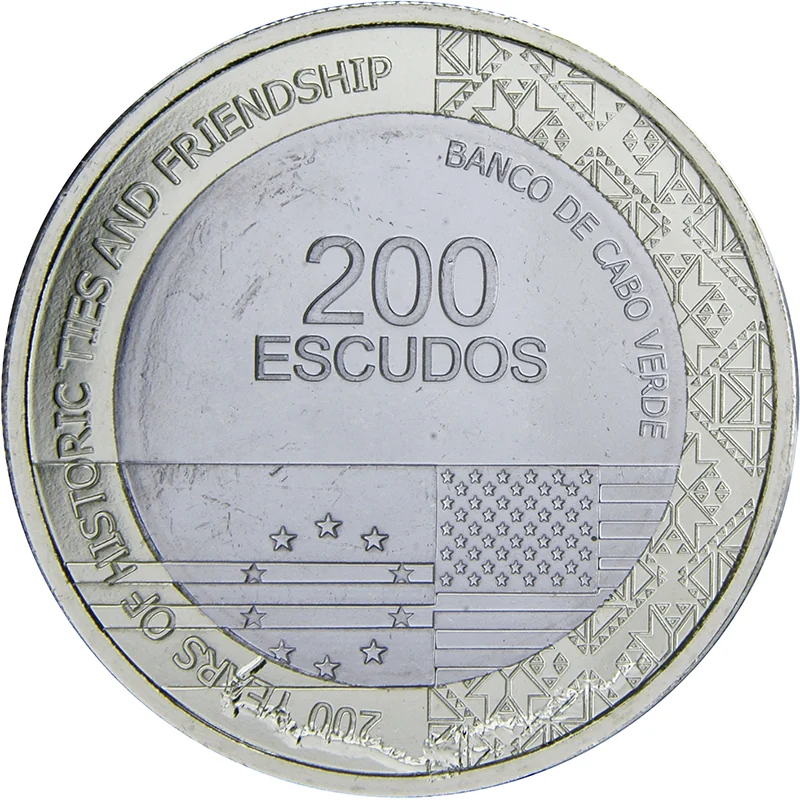
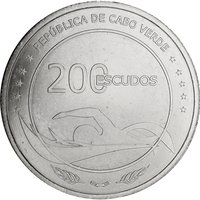
Obverse
Inscription:
200 YEARS OF HISTORIC TIES AND FRIENDSHIP
BANCO DE CABO VERDE
200 ESCUDOS
BANCO DE CABO VERDE
200 ESCUDOS
Translation:
200 YEARS OF HISTORIC TIES AND FRIENDSHIP
BANK OF CAPE VERDE
200 ESCUDOS
BANK OF CAPE VERDE
200 ESCUDOS
Script: Latin
Languages: Portuguese, English
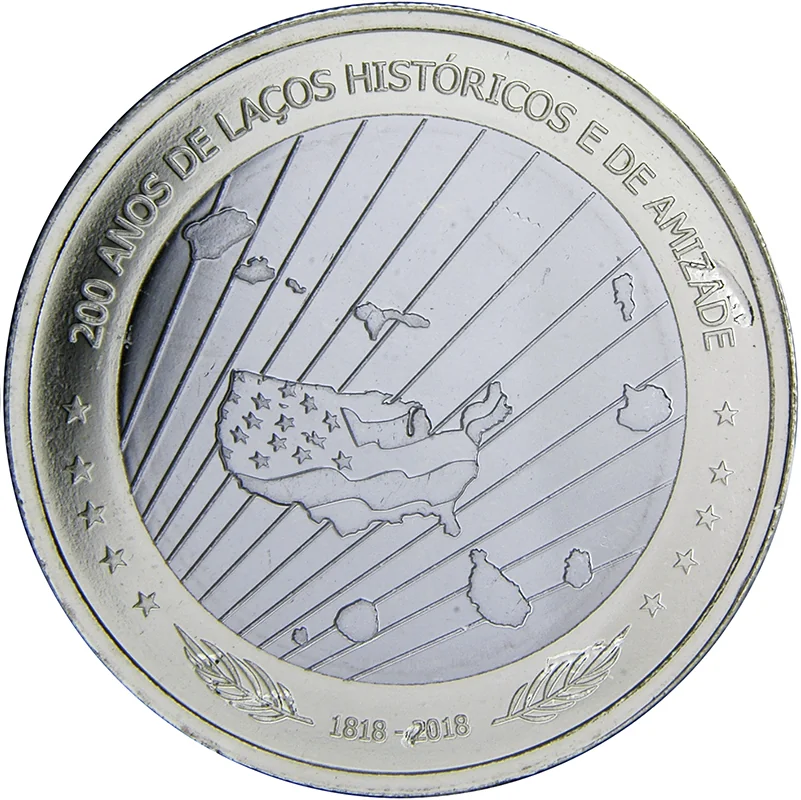
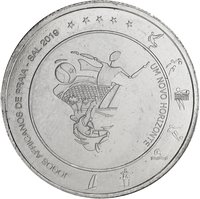
Reverse
Inscription:
200 ANOS DE LAÇOS HISTÓRICOS E DE AMIZADE
1818-2018
1818-2018
Translation:
200 Years of Historical and Friendship Ties
Script: Latin
Language: Portuguese
Edge
Mintings
| Year | Mint Mark | Mintage | Quality | Collection |
|---|---|---|---|---|
| 2018 | — | — |
Historical background
In 2018, Cape Verde's currency situation remained defined by its long-standing peg to the euro, a policy in place since 1999. The Cape Verdean escudo (CVE) was formally fixed at 110.265 CVE to 1 euro, a rate maintained through a cooperation agreement with Portugal. This arrangement provided significant macroeconomic stability, anchoring inflation and fostering confidence for foreign direct investment, particularly in the tourism and infrastructure sectors, which are vital to the archipelago's economy. The peg was managed by the Bank of Cape Verde, which held sufficient foreign exchange reserves to defend the fixed rate, a key factor in the country's historical economic resilience.
However, this stability came with inherent constraints. The fixed exchange rate limited the central bank's ability to use monetary policy as an independent tool to respond to domestic economic shocks. With its currency tied to the euro, Cape Verde effectively imported the monetary policy of the European Central Bank, which was not tailored to its specific cyclical needs. Furthermore, the strength of the euro peg, while beneficial for import price stability, also posed challenges for export competitiveness outside the eurozone, putting pressure on other key sectors like fisheries and light manufacturing.
Overall, the 2018 currency framework reflected a strategic trade-off. The government and central bank prioritized the proven benefits of stability and investor confidence—crucial for a small, tourism-dependent island nation with a high reliance on imports—over monetary autonomy. This period was one of consolidation, with authorities focusing on maintaining fiscal discipline and building reserves to support the peg, rather than contemplating any shift in exchange rate regime. The system's success was contingent on continued prudent economic management and robust inflows from tourism, remittances, and foreign investment.
However, this stability came with inherent constraints. The fixed exchange rate limited the central bank's ability to use monetary policy as an independent tool to respond to domestic economic shocks. With its currency tied to the euro, Cape Verde effectively imported the monetary policy of the European Central Bank, which was not tailored to its specific cyclical needs. Furthermore, the strength of the euro peg, while beneficial for import price stability, also posed challenges for export competitiveness outside the eurozone, putting pressure on other key sectors like fisheries and light manufacturing.
Overall, the 2018 currency framework reflected a strategic trade-off. The government and central bank prioritized the proven benefits of stability and investor confidence—crucial for a small, tourism-dependent island nation with a high reliance on imports—over monetary autonomy. This period was one of consolidation, with authorities focusing on maintaining fiscal discipline and building reserves to support the peg, rather than contemplating any shift in exchange rate regime. The system's success was contingent on continued prudent economic management and robust inflows from tourism, remittances, and foreign investment.

🌟 Limited