

200 esciudos – Cape Verde
Add to wishlist
Circulating commemorative coins
Commemoration: 2019 African Beach Games
Cape Verde
Context
Material
Diameter: 28 mm
Weight: 12 g
Shape: Round
Composition: Copper-nickel
Technique: Milled
Alignment: Coin alignment
flip
References
KM: #
Numista: #180052
Value
Exchange value: 200 CVE
Obverse
Description:
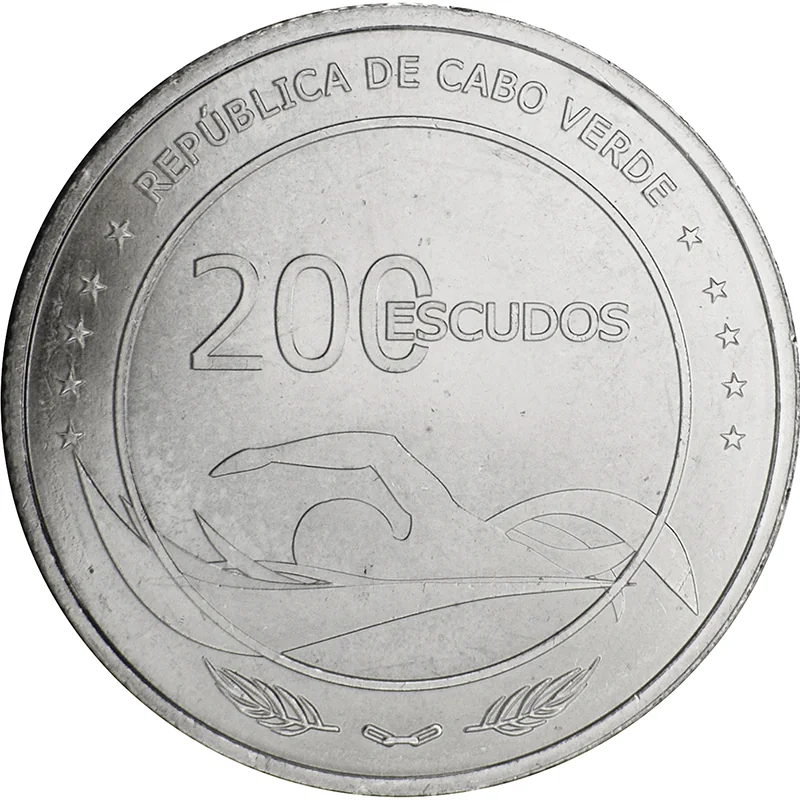
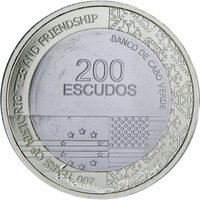
Stylized swimmer
Inscription:
REPÚBLICA DE CABO VERDE
200 ESCUDOS
200 ESCUDOS
Translation:
Republic of Cape Verde
200 Escudos
200 Escudos
Script: Latin
Language: Portuguese
Reverse
Description:
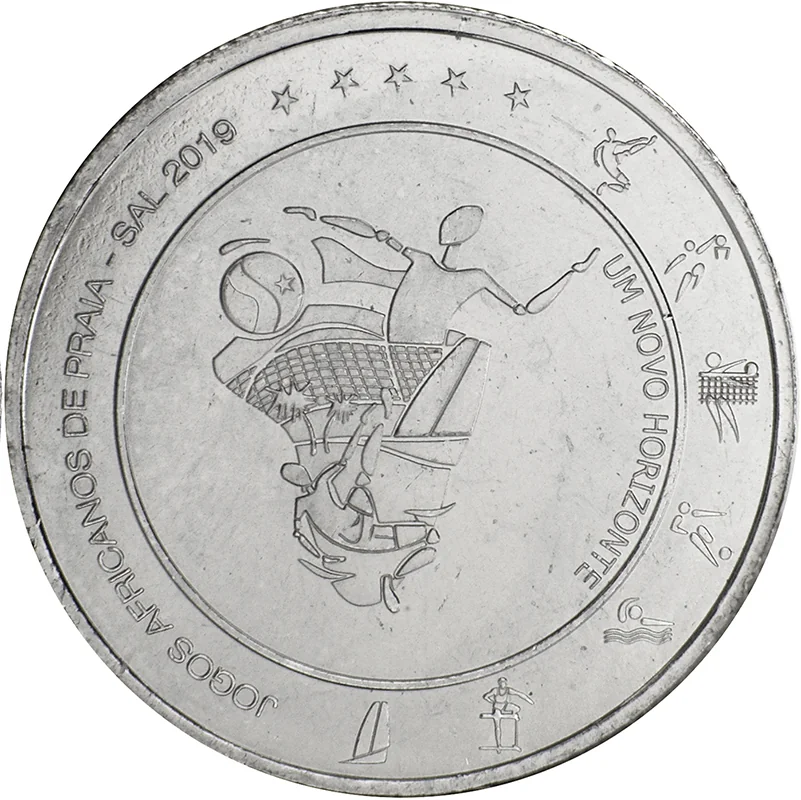
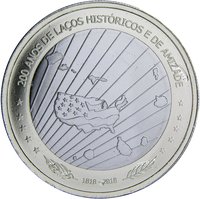
2019 African Beach Games logo
Inscription:
JOGOS AFRICANOS DE PRAIA-SAL 2019
UM NOVO HORIZONTE
UM NOVO HORIZONTE
Translation:
AFRICAN BEACH GAMES-SAL 2019
A NEW HORIZON
A NEW HORIZON
Script: Latin
Language: Portuguese
Edge
Reeded
Mints
| Name | Mark |
|---|---|
| Imprensa Nacional - Casa da Moeda | — |
Mintings
| Year | Mint Mark | Mintage | Quality | Collection |
|---|---|---|---|---|
| 2019 | — | 5,000 |
Historical background
In 2019, Cape Verde's currency situation was defined by its long-standing and stable peg to the euro. The country's official currency, the Cape Verdean escudo (CVE), was fixed at a rate of 110.265 CVE to 1 euro, a regime managed by the Bank of Cape Verde (BCV) and supported by a standing agreement with Portugal. This fixed exchange rate, in place since 1998, provided crucial stability for the small, tourism-dependent and import-reliant island economy. It anchored prices, reduced transaction costs for trade and remittances (key foreign exchange earners), and fostered investor confidence by mitigating currency risk.
The stability of the peg, however, came with inherent challenges and policy constraints. The BCV's primary monetary policy objective was to maintain the fixed parity, which limited its ability to use interest rates or money supply to address domestic economic conditions. The country's persistent trade deficit and reliance on external financial flows, including tourism receipts, foreign direct investment, and diaspora remittances, meant that foreign reserve levels were a critical indicator of economic health. In 2019, reserves were adequate but required careful management, especially as public debt, a significant portion of which was denominated in foreign currency, remained high at over 120% of GDP.
Overall, the currency situation in 2019 reflected a trade-off. The fixed peg was a cornerstone of macroeconomic stability, but it made the economy vulnerable to external shocks from the Eurozone and dependent on continued inflows of foreign exchange. Economic discussions during the year therefore focused less on the exchange rate itself and more on the underlying structural issues: boosting competitiveness, diversifying the economy, and maintaining fiscal discipline to ensure the continued sustainability of the peg and the country's external position.
The stability of the peg, however, came with inherent challenges and policy constraints. The BCV's primary monetary policy objective was to maintain the fixed parity, which limited its ability to use interest rates or money supply to address domestic economic conditions. The country's persistent trade deficit and reliance on external financial flows, including tourism receipts, foreign direct investment, and diaspora remittances, meant that foreign reserve levels were a critical indicator of economic health. In 2019, reserves were adequate but required careful management, especially as public debt, a significant portion of which was denominated in foreign currency, remained high at over 120% of GDP.
Overall, the currency situation in 2019 reflected a trade-off. The fixed peg was a cornerstone of macroeconomic stability, but it made the economy vulnerable to external shocks from the Eurozone and dependent on continued inflows of foreign exchange. Economic discussions during the year therefore focused less on the exchange rate itself and more on the underlying structural issues: boosting competitiveness, diversifying the economy, and maintaining fiscal discipline to ensure the continued sustainability of the peg and the country's external position.
⭐ Somewhat Rare