

50 piastres – Egypt
Add to wishlist
Circulating commemorative coins
Commemoration: Diversion of the Nile
Series: Egypt-Diversion of the Nile
Egypt
Context
Year: 1964
Islamic (Hijri) Year:: 1384
Issuer: Egypt
Period:
(1958—1971)
Currency:
(since 1916)
Demonetized: Yes
Total mintage: 252,000
Material
References
KM: #
Numista: #18002
Value
Exchange value: 0.50 EGP
Bullion value: $35.65
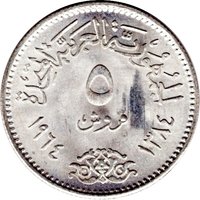
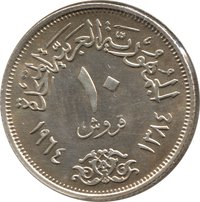
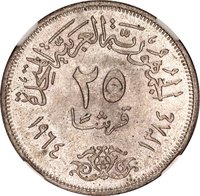
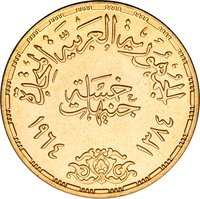
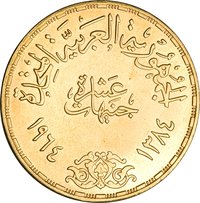
Obverse
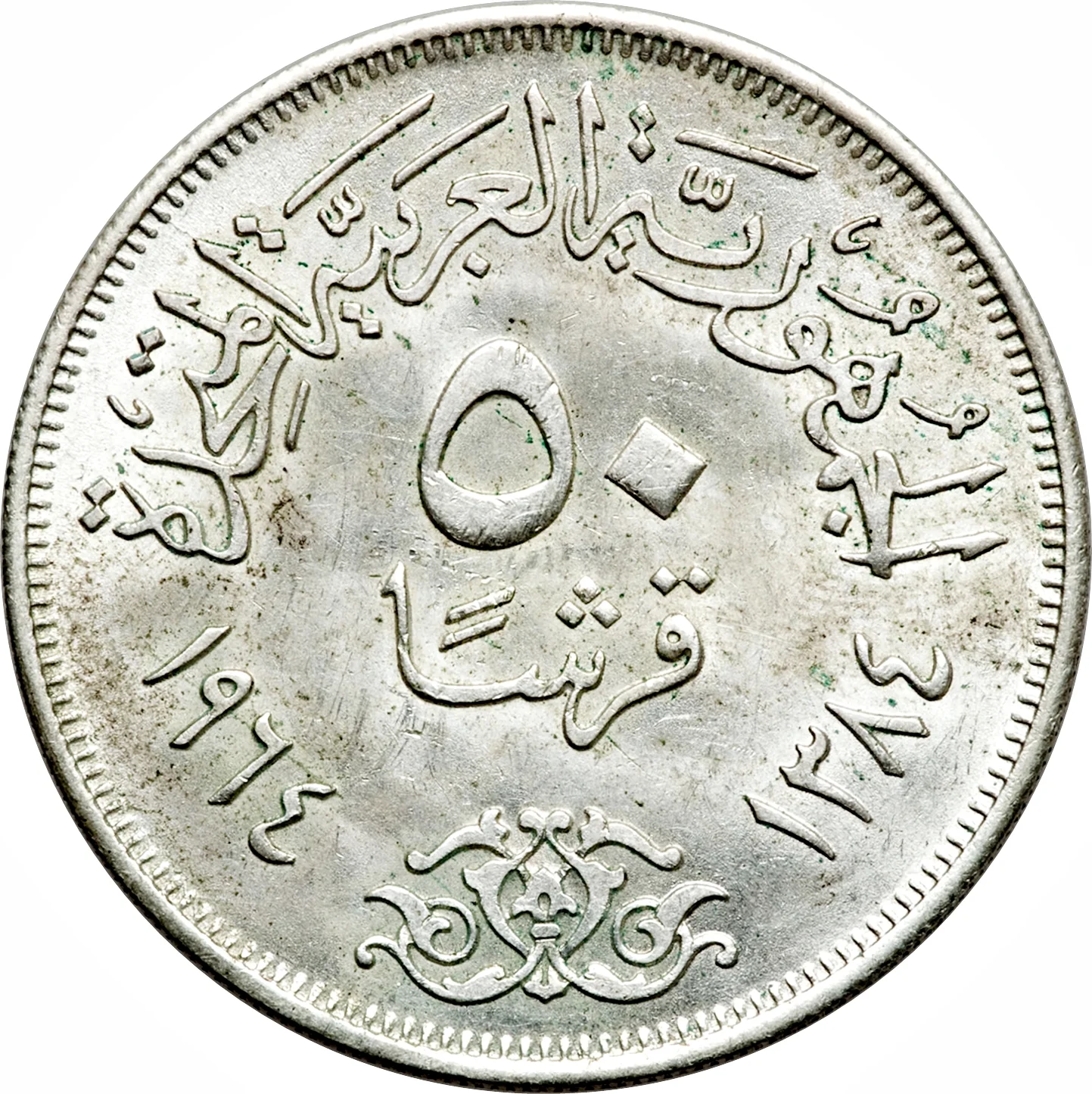
Description:
Denominations split dates.
Inscription:
الجمهورية العربية المتحدة
٥٠
قرشا
١٣٨٤ ١٩٦٤
٥٠
قرشا
١٣٨٤ ١٩٦٤
Translation:
United Arab Republic
50
Qirsh
1384 1964
50
Qirsh
1384 1964
Script: Arabic
Language: Arabic
Designer: Muhammad Abdul-Kader
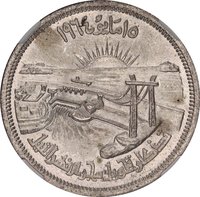
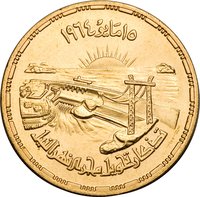
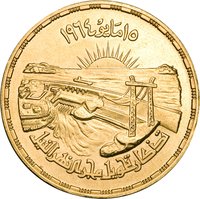
Reverse
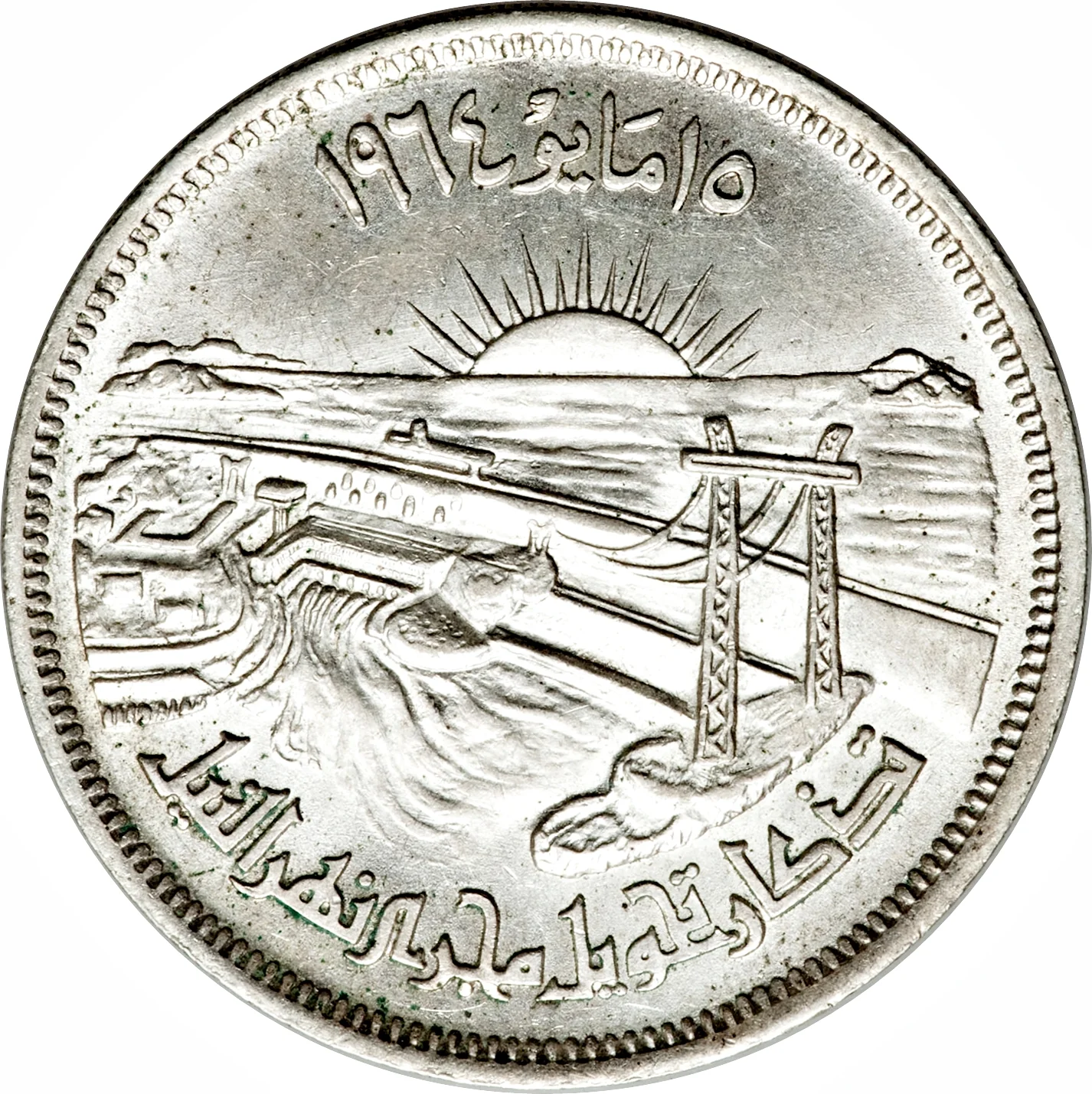
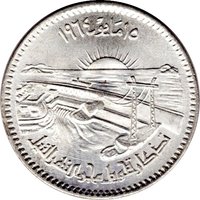
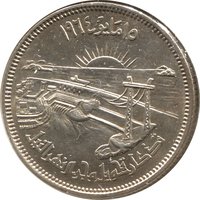
Description:
Nile Basin scene
Inscription:
١٥ مايو ١٩٦٤
تذكار تحويل مجرى النهر النيل
تذكار تحويل مجرى النهر النيل
Translation:
Commemoration of the Diversion of the Nile River
15 May 1964
15 May 1964
Script: Arabic
Language: Arabic
Designer: Ibrahim El Helw
Edge
Milled
Mints
| Name | Mark |
|---|---|
| Egyptian Mint Authority | — |
Mintings
| Year | Mint Mark | Mintage | Quality | Collection |
|---|---|---|---|---|
| 1964 | — | 2,000 | Proof | |
| 1964 | — | 250,000 |
Historical background
In 1964, Egypt's currency situation was fundamentally shaped by the economic policies of Gamal Abdel Nasser's Arab Socialist government. The Egyptian pound (EGP) operated under a fixed exchange rate system, officially pegged to the British pound sterling and, by extension, to the US dollar through the Bretton Woods system. This official parity, however, masked a complex reality of exchange controls and a thriving black market. The government maintained a system of multiple exchange rates to manage foreign exchange scarcity, with preferential rates for essential imports like food and medicine, and less favourable rates for luxury goods and other transactions.
This rigid framework was under growing strain due to the structural weaknesses of Egypt's state-led economy. Ambitious industrialization and welfare programs, coupled with significant military expenditures, led to persistent budget deficits and rising inflation. While not yet in crisis, the overvalued official exchange rate discouraged exports (aside from cotton) and encouraged imports, worsening the trade deficit. Foreign exchange reserves were carefully rationed to service debt and fund national projects, reflecting an economy increasingly isolated from global capital flows and reliant on administrative controls rather than market mechanisms.
The currency regime of 1964 thus represented a period of managed stability before the more severe economic challenges that would follow later in the decade, particularly after the 1967 Six-Day War. It was a system designed for control and socialist planning, prioritizing self-sufficiency and social equity over convertibility or integration with international markets. The inherent pressures of this model—foreign exchange shortages, inflationary financing, and a burdensome subsidy system—were already evident, setting the stage for the devaluations and economic liberalizations that would begin in the 1970s.
This rigid framework was under growing strain due to the structural weaknesses of Egypt's state-led economy. Ambitious industrialization and welfare programs, coupled with significant military expenditures, led to persistent budget deficits and rising inflation. While not yet in crisis, the overvalued official exchange rate discouraged exports (aside from cotton) and encouraged imports, worsening the trade deficit. Foreign exchange reserves were carefully rationed to service debt and fund national projects, reflecting an economy increasingly isolated from global capital flows and reliant on administrative controls rather than market mechanisms.
The currency regime of 1964 thus represented a period of managed stability before the more severe economic challenges that would follow later in the decade, particularly after the 1967 Six-Day War. It was a system designed for control and socialist planning, prioritizing self-sufficiency and social equity over convertibility or integration with international markets. The inherent pressures of this model—foreign exchange shortages, inflationary financing, and a burdensome subsidy system—were already evident, setting the stage for the devaluations and economic liberalizations that would begin in the 1970s.
Series: Egypt-Diversion of the Nile
🌱 Fairly Common