

Obverse
Description:
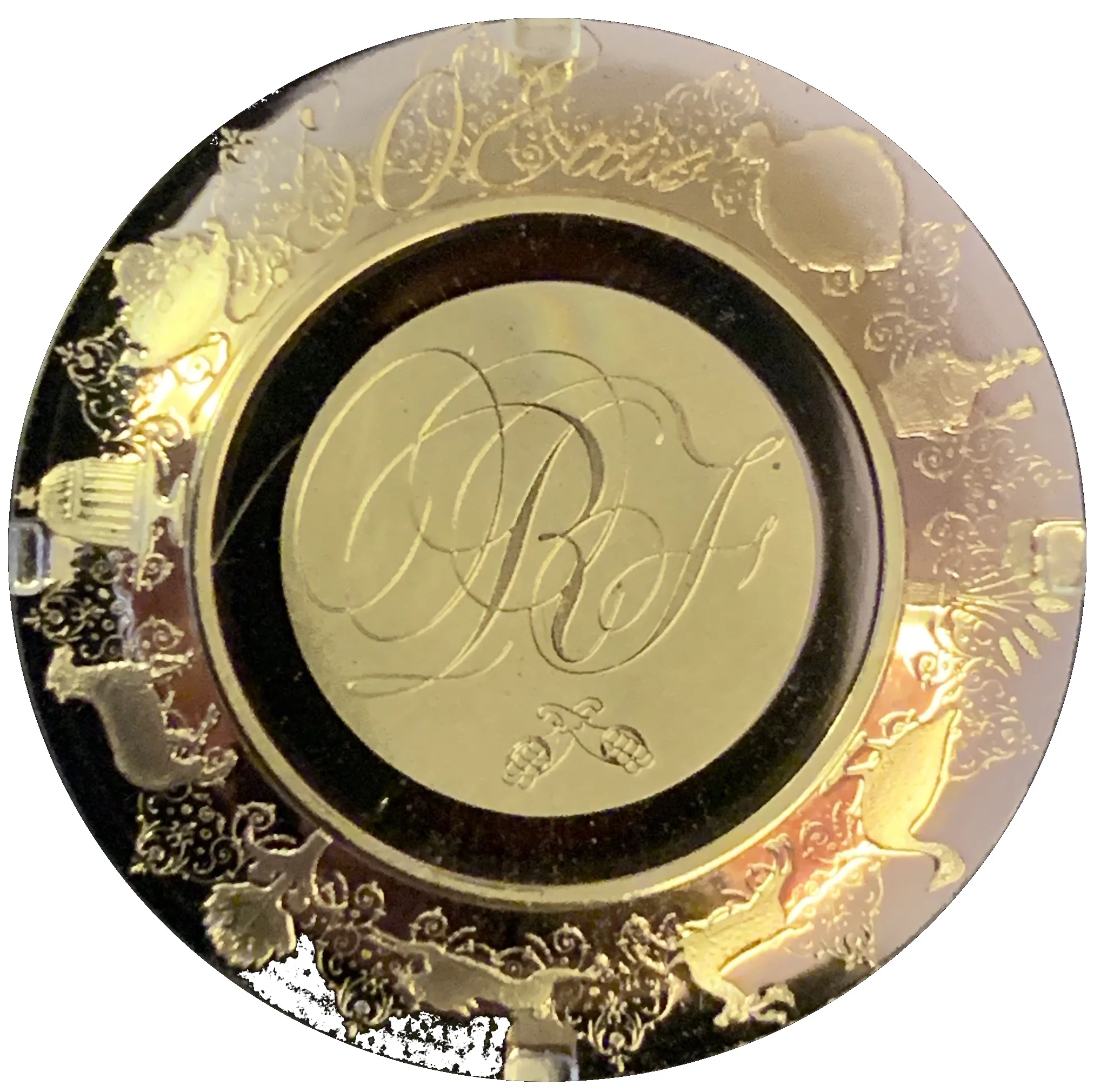
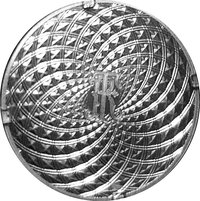
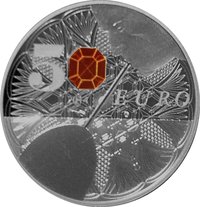
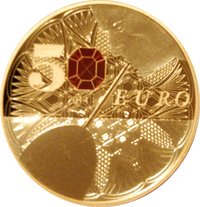
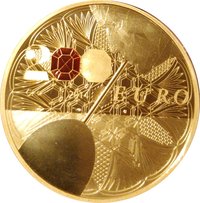
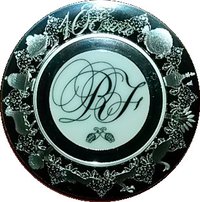
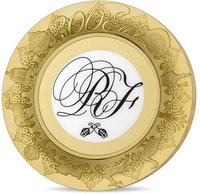
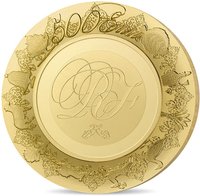
The face value is centered among decorative elements depicting a sequential meal of game, fish, and vegetables, alongside the "RF" motif and a cornucopia.
Inscription:
50 Euro
RF
RF
Reverse
Description:
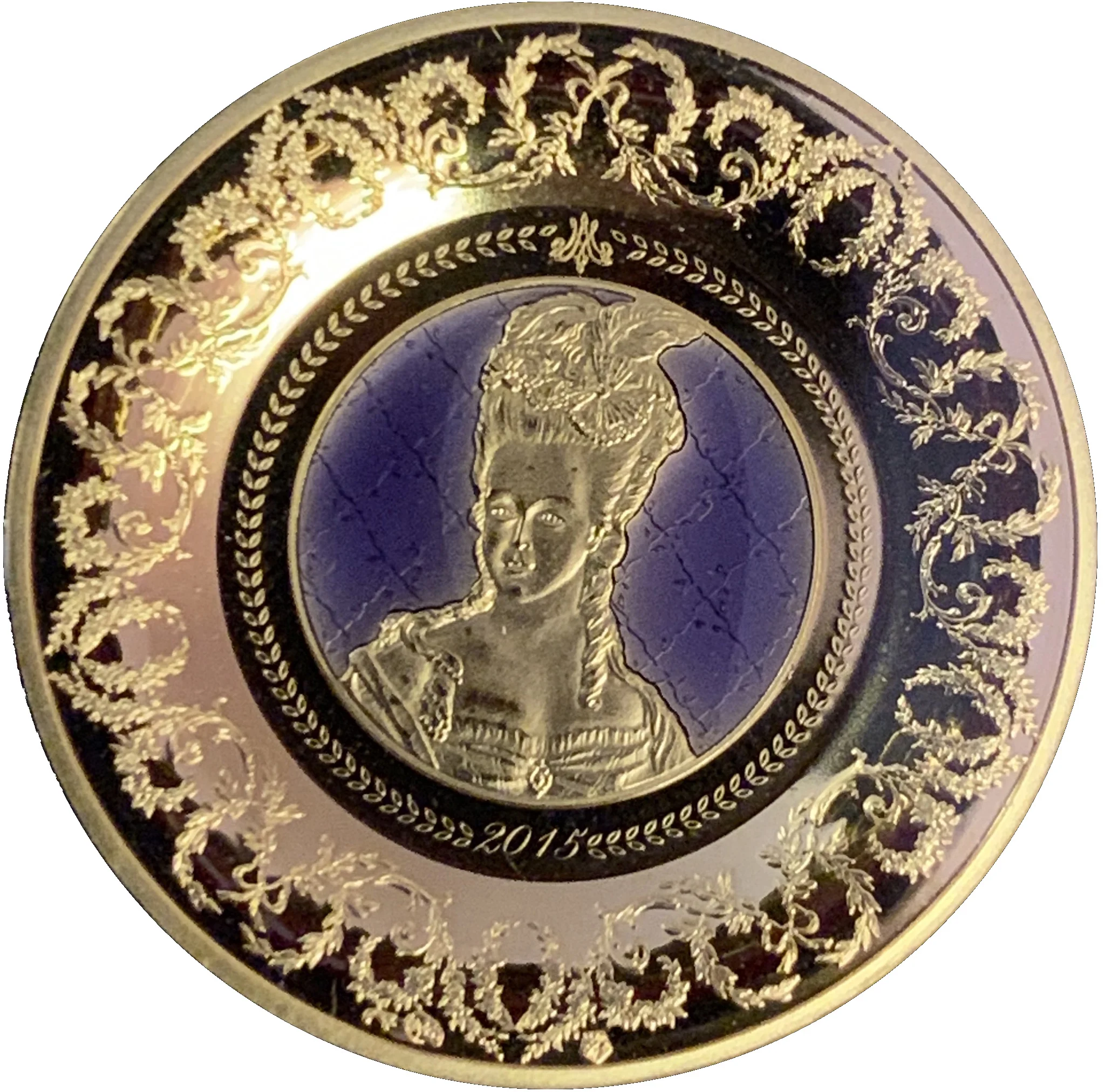
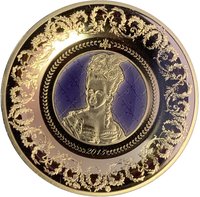
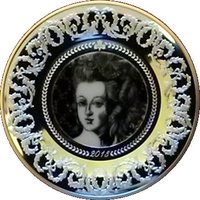
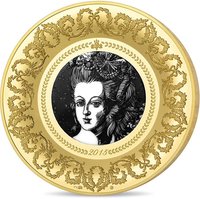
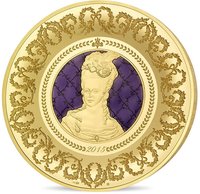
The inner center features a blue resin deposit, evoking Sèvres porcelain, with a portrait of Marie-Antoinette.
Inscription:
MA
2015
2015
Edge
Categories
| Industry |
| Symbol> Cornucopia |
Mints
| Name | Mark |
|---|---|
| Monnaie de Paris | — |
Mintings
| Year | Mint Mark | Mintage | Quality | Collection |
|---|---|---|---|---|
| 2015 | — | 1,000 | Proof |
Historical background
In 2015, France, as a core member of the Eurozone, operated under the euro (€), a currency managed by the European Central Bank (ECB). This meant France had relinquished direct control over its monetary policy, including interest rates and money supply, to the Frankfurt-based institution. The year was dominated by the ECB's unprecedented quantitative easing (QE) program, announced in January and launched in March, which aimed to combat deflationary risks and stimulate the stagnant Eurozone economy by purchasing over €1 trillion in assets. For France, this meant continued ultra-low interest rates and efforts to increase liquidity, providing a supportive monetary environment amidst weak domestic growth.
Domestically, the currency situation was intertwined with France's sluggish economic performance and debates over fiscal policy. While the weak euro boosted French exports somewhat, the country grappled with high unemployment (hovering around 10%) and public debt exceeding 95% of GDP. The Socialist government of President François Hollande faced pressure to reduce deficits within the EU's Stability and Growth Pact rules, leading to austerity measures that constrained spending. This created a tension between the ECB's accommodative monetary stance and the restrictive fiscal policy at the national level, a common theme in Eurozone politics.
Furthermore, 2015 saw the euro itself under pressure from the Greek debt crisis, which peaked in the summer with fears of a "Grexit" (Greek exit from the Eurozone). Although France was not at the epicenter, it was a key player in negotiations, strongly advocating for keeping Greece in the single currency. The crisis underscored the existential risks of the monetary union and highlighted the challenges of a one-size-fits-all currency for economies as diverse as Germany and France. By year's end, the euro had depreciated significantly against the US dollar, partly due to ECB QE and divergent monetary policies with the US Federal Reserve, offering some competitive relief to French exporters but also reflecting broader economic concerns.
Domestically, the currency situation was intertwined with France's sluggish economic performance and debates over fiscal policy. While the weak euro boosted French exports somewhat, the country grappled with high unemployment (hovering around 10%) and public debt exceeding 95% of GDP. The Socialist government of President François Hollande faced pressure to reduce deficits within the EU's Stability and Growth Pact rules, leading to austerity measures that constrained spending. This created a tension between the ECB's accommodative monetary stance and the restrictive fiscal policy at the national level, a common theme in Eurozone politics.
Furthermore, 2015 saw the euro itself under pressure from the Greek debt crisis, which peaked in the summer with fears of a "Grexit" (Greek exit from the Eurozone). Although France was not at the epicenter, it was a key player in negotiations, strongly advocating for keeping Greece in the single currency. The crisis underscored the existential risks of the monetary union and highlighted the challenges of a one-size-fits-all currency for economies as diverse as Germany and France. By year's end, the euro had depreciated significantly against the US dollar, partly due to ECB QE and divergent monetary policies with the US Federal Reserve, offering some competitive relief to French exporters but also reflecting broader economic concerns.
Series: French Excellence


✨ Legendary