

15 dollars – Australia
Add to wishlist
Australia
Context
Material
Diameter: 16.1 mm
Weight: 3.14 g
Gold Weight:: 3.14 g
Thickness: 1.5 mm
Shape: Round
Composition: 99.99% Gold
Standard: Gold tenth ounce
Magnetic: No
Technique: Milled
Alignment: Medal alignment
flip
References
KM: #
Numista: #179612
Value
Exchange value: 15 AUD
Bullion value: $488.81
Inflation-adjusted value: 25.82 AUD
Obverse
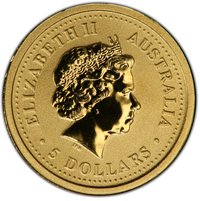
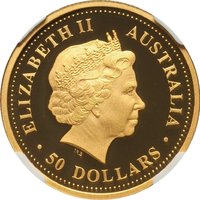
Description:
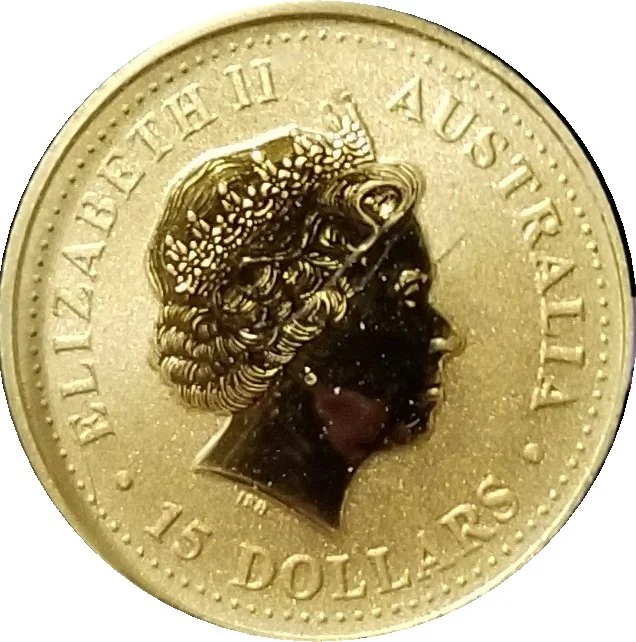
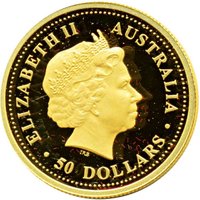
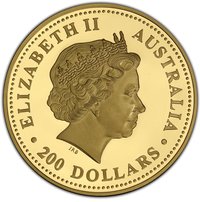
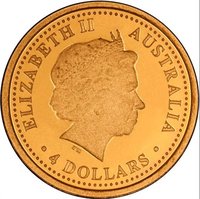
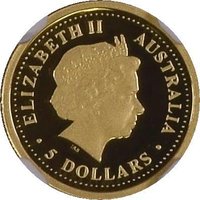
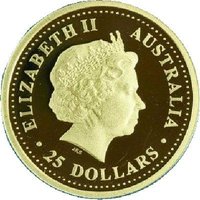
Queen Elizabeth IV, facing right, wearing the Girls of Great Britain and Ireland Tiara.
Inscription:
ELIZABETH II
AUSTRALIA
15 DOLLARS
IRB
AUSTRALIA
15 DOLLARS
IRB
Script: Latin
Designer: Ian Rank-Broadley
Reverse
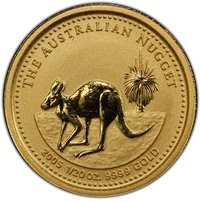
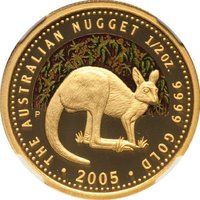
Description:
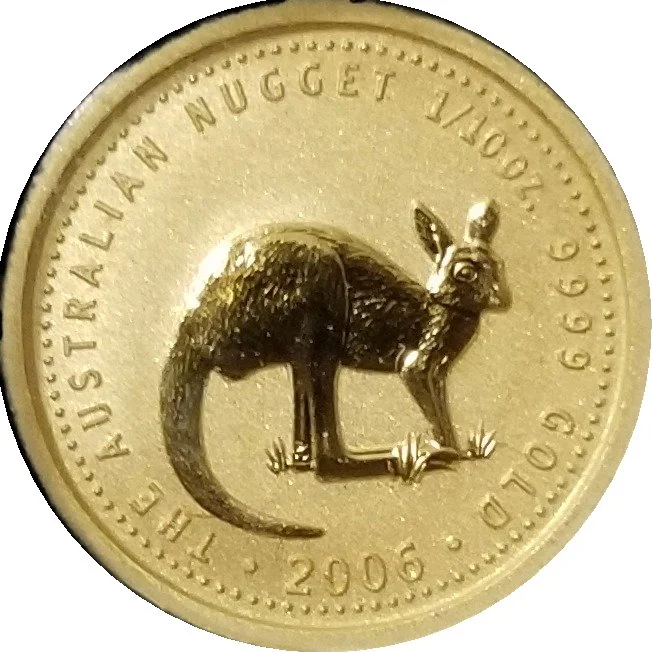
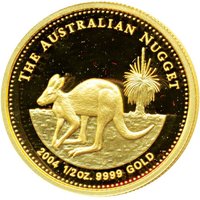
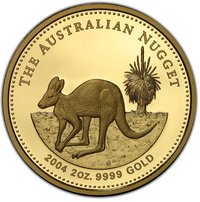
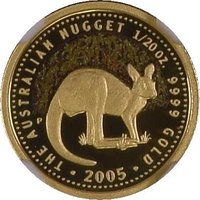
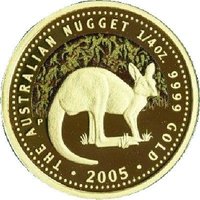
Kangaroo crouched in grass.
Inscription:
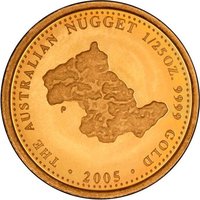
THE AUSTRALIAN NUGGETT 1/10 oz. 9999 GOLD
2006
RV
2006
RV
Script: Latin
Designer: Ryan Vanderwiel
Edge
Reeded
Mints
| Name | Mark |
|---|---|
| Perth Mint | P |
Mintings
| Year | Mint Mark | Mintage | Quality | Collection |
|---|---|---|---|---|
| 2005 | P | 1,000 | Proof | |
| 2006 | — | 28,453 | BU |
Historical background
In 2005, Australia's currency landscape was characterised by a robust and stable economic environment, with the Australian dollar (AUD) continuing its strong recovery from its historic lows at the turn of the century. The AUD/USD exchange rate, a key benchmark, traded within a relatively high range, averaging around US$0.76 for the year and even breaching the US$0.80 mark in late 2005. This strength was fundamentally driven by the ongoing commodities boom, particularly soaring demand from China for Australia's iron ore, coal, and other natural resources. High commodity prices led to strong export earnings, significant current account surpluses, and sustained foreign investment inflows, all of which buoyed the currency.
Domestically, the Reserve Bank of Australia (RBA) maintained a cautious monetary policy stance. With the economy experiencing solid growth and underlying inflation hovering near the top of the RBA's 2-3% target band, the official cash rate was held at 5.5% for the entire year after a previous tightening cycle. This relatively high interest rate, especially compared to major economies like the United States, made Australian assets attractive to international investors seeking yield, further supporting demand for the Aussie dollar. The strong currency helped contain imported inflation but also placed pressure on export-competing and import-competing sectors outside the booming resources industry.
Looking globally, the AUD's performance was also shaped by a weakening US dollar, as markets grew concerned about the United States' widening twin deficits. The Australian dollar's status as a commodity-linked and growth-sensitive currency solidified during this period, with its fortunes becoming increasingly correlated with Chinese industrial demand and global risk sentiment. By the end of 2005, the currency's sustained strength was a clear reflection of Australia's successful navigation of the post-dot-com bubble era and its strategic positioning within the rapidly expanding Asian economy, setting the stage for its eventual ascent to parity with the US dollar later in the decade.
Domestically, the Reserve Bank of Australia (RBA) maintained a cautious monetary policy stance. With the economy experiencing solid growth and underlying inflation hovering near the top of the RBA's 2-3% target band, the official cash rate was held at 5.5% for the entire year after a previous tightening cycle. This relatively high interest rate, especially compared to major economies like the United States, made Australian assets attractive to international investors seeking yield, further supporting demand for the Aussie dollar. The strong currency helped contain imported inflation but also placed pressure on export-competing and import-competing sectors outside the booming resources industry.
Looking globally, the AUD's performance was also shaped by a weakening US dollar, as markets grew concerned about the United States' widening twin deficits. The Australian dollar's status as a commodity-linked and growth-sensitive currency solidified during this period, with its fortunes becoming increasingly correlated with Chinese industrial demand and global risk sentiment. By the end of 2005, the currency's sustained strength was a clear reflection of Australia's successful navigation of the post-dot-com bubble era and its strategic positioning within the rapidly expanding Asian economy, setting the stage for its eventual ascent to parity with the US dollar later in the decade.
Series: The Australian Nugget
✨ Legendary