

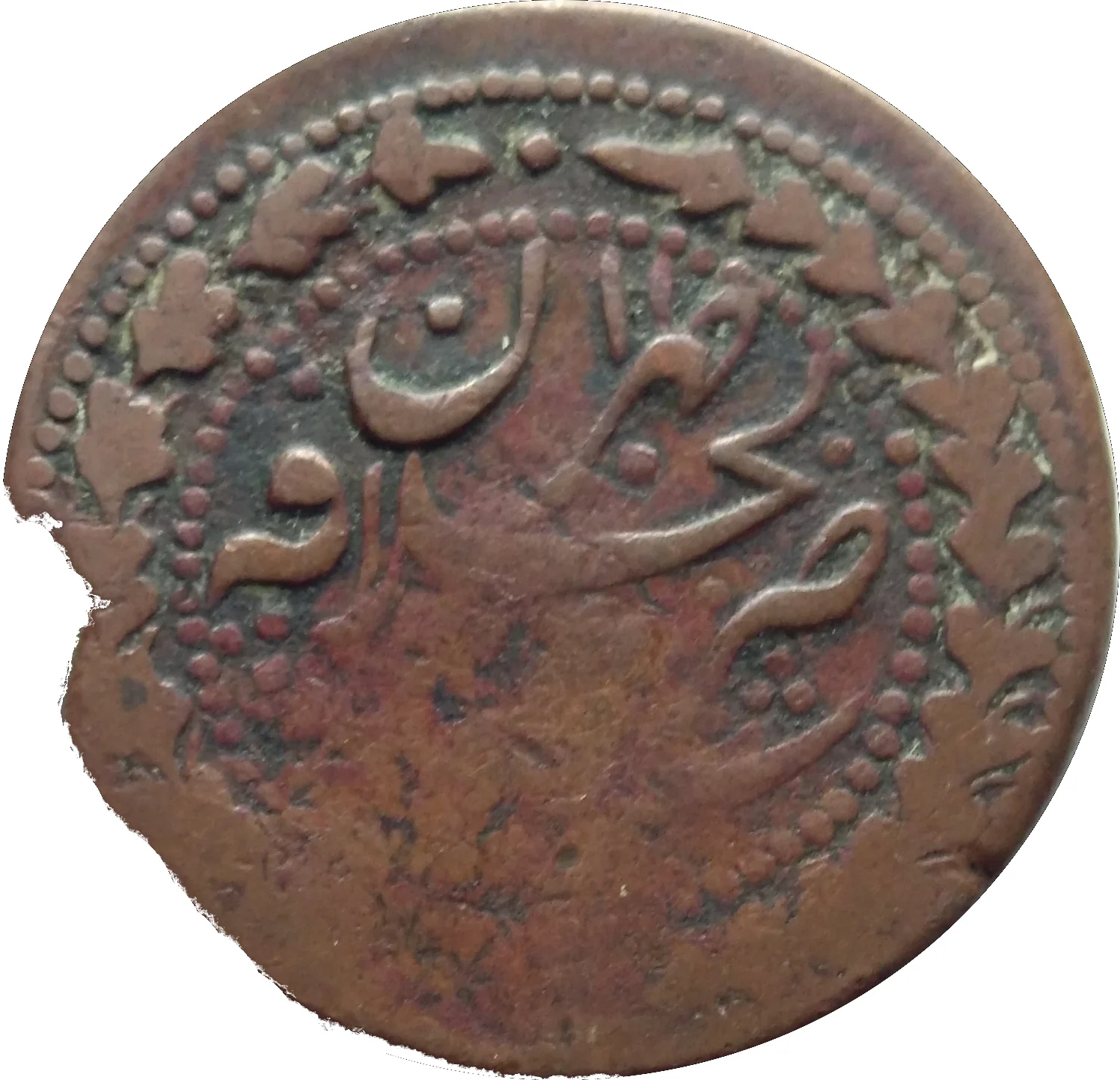
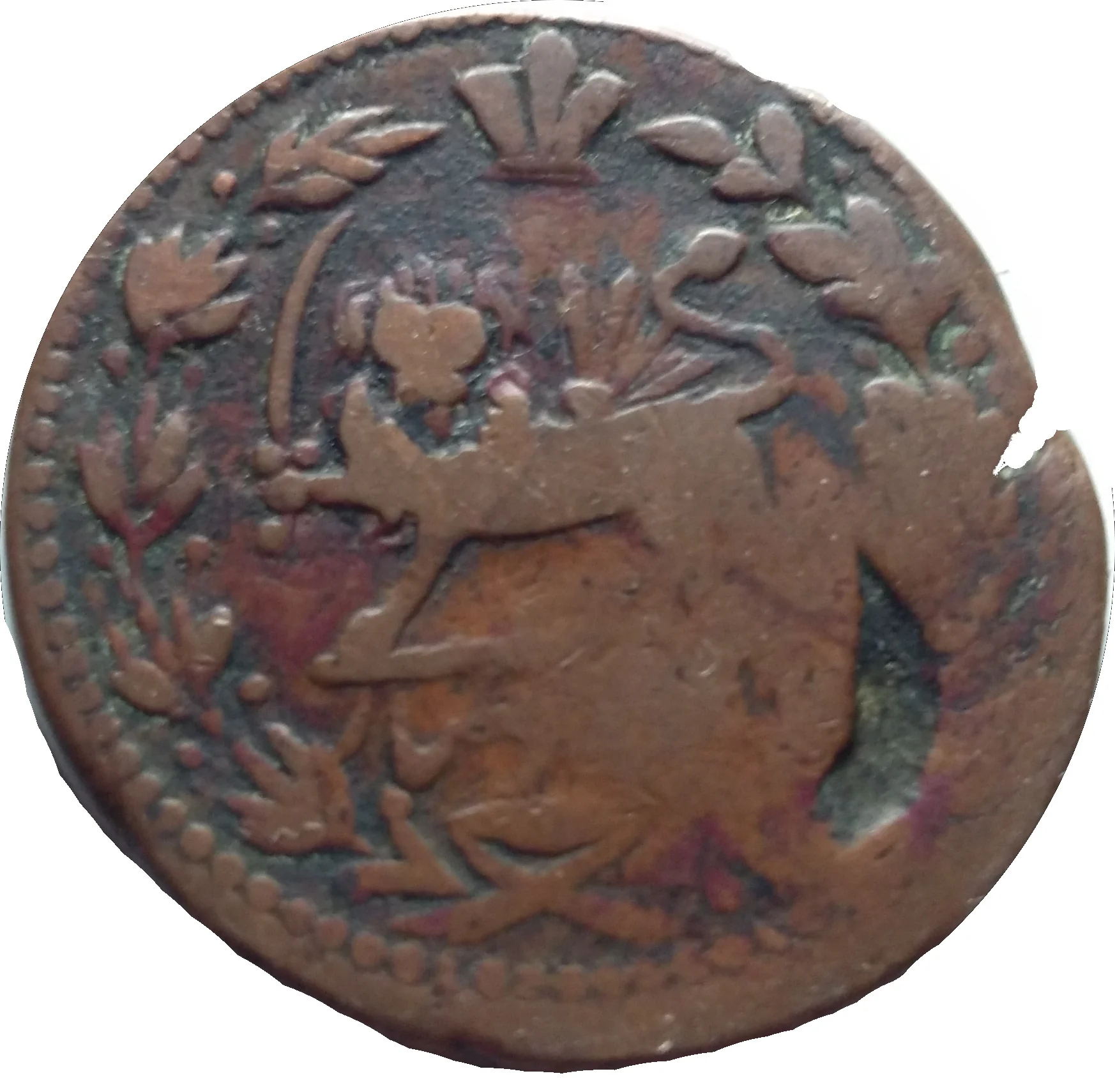
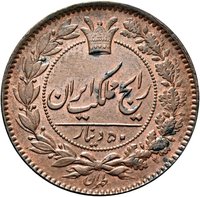
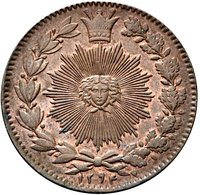
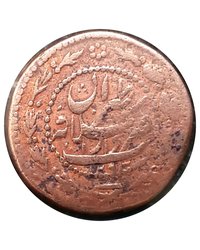
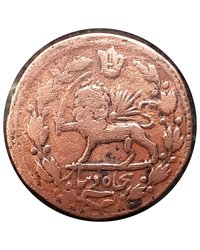
50 dinars – Iran
Add to wishlist
Iran
Context
Material
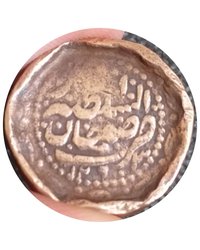
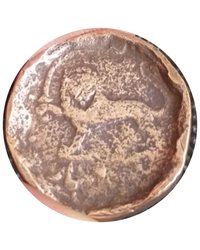
Diameter: 24 mm
Weight: 8.62 g
Shape: Irregular round
Composition: Copper
Magnetic: No
Technique: Milled
Alignment: Coin alignment
flip
References
KM: #
Numista: #179234
Mints
| Name | Mark |
|---|---|
| Tehran | — |
Mintings
| Year | Mint Mark | Mintage | Quality | Collection |
|---|---|---|---|---|
| 1876 | — | — | ||
| 1877 | — | — |
Historical background
In 1876, Iran’s currency system was in a state of profound disarray, a legacy of centuries of debasement and weak central control. The monetary landscape was a complex and chaotic patchwork. The primary unit was the silver qiran (also spelled kran), but its value and silver content had been steadily eroded by successive Qajar rulers to finance state expenses. Alongside this, the copper shahi and dinar coins circulated for small transactions, while the gold toman (worth 10 qirans) was used for larger accounts and trade. Crucially, there was no standardized national coinage; various provincial mints produced coins of inconsistent weight and purity, and foreign currencies, particularly the Russian ruble and British pound sterling, circulated widely, especially in port cities and trade centers.
This instability was exacerbated by severe economic pressures. The Qajar court, facing empty coffers due to extravagant spending, military campaigns, and costly concessions to foreign powers, increasingly resorted to selling official positions and granting monopolies to foreign interests. A significant drain of silver from the country was occurring due to a chronic trade deficit, as imports of manufactured goods from Europe and Russia outpaced exports of silk, carpets, and agricultural products. This specie drain further devalued the existing currency in circulation and fueled inflation, causing hardship for the general population and merchants alike.
Recognizing the crisis, the central government under Naser al-Din Shah Qajar had begun tentative efforts at reform. In the years leading up to 1876, discussions with European powers about establishing a national bank and a unified currency were underway. These efforts would culminate in the 1889 granting of a concession to Baron Julius de Reuter to found the Imperial Bank of Persia, which was given the exclusive right to issue banknotes. Thus, 1876 represents a pivotal moment on the eve of major, though externally influenced, monetary change, encapsulating the end of an archaic system buckling under the weight of integration into the global economy and the fiscal weaknesses of the Qajar state.
This instability was exacerbated by severe economic pressures. The Qajar court, facing empty coffers due to extravagant spending, military campaigns, and costly concessions to foreign powers, increasingly resorted to selling official positions and granting monopolies to foreign interests. A significant drain of silver from the country was occurring due to a chronic trade deficit, as imports of manufactured goods from Europe and Russia outpaced exports of silk, carpets, and agricultural products. This specie drain further devalued the existing currency in circulation and fueled inflation, causing hardship for the general population and merchants alike.
Recognizing the crisis, the central government under Naser al-Din Shah Qajar had begun tentative efforts at reform. In the years leading up to 1876, discussions with European powers about establishing a national bank and a unified currency were underway. These efforts would culminate in the 1889 granting of a concession to Baron Julius de Reuter to found the Imperial Bank of Persia, which was given the exclusive right to issue banknotes. Thus, 1876 represents a pivotal moment on the eve of major, though externally influenced, monetary change, encapsulating the end of an archaic system buckling under the weight of integration into the global economy and the fiscal weaknesses of the Qajar state.
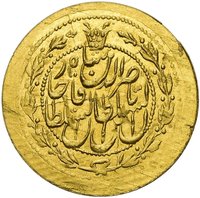
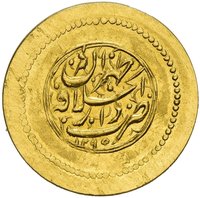
Series: 1876 Iran circulation coins
💎 Extremely Rare