

5 poisha – Bangladesh
Add to wishlist
Bangladesh
Context
Years: 1974–1979
Issuer: Bangladesh
Period:
(since 1971)
Currency:
(since 1972)
Total mintage: 14,000,000
Material
Weight: 1.4 g
Thickness: 1.87 mm
Shape: Square with rounded corners
Magnetic: No
Technique: Milled
Alignment: Medal alignment
flip
References
KM: #
Numista: #1790
Value
Exchange value: 0.05 BDT
Obverse
Description:
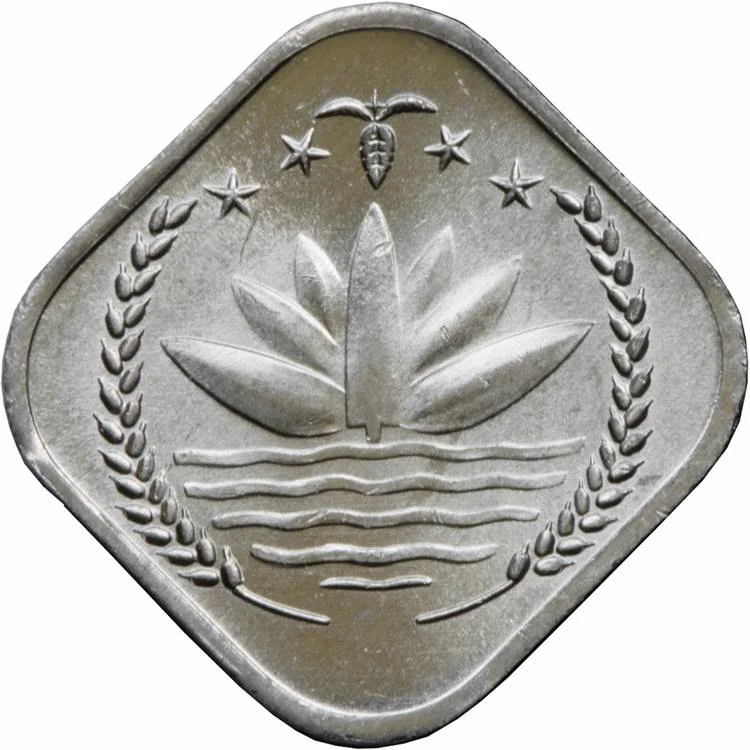
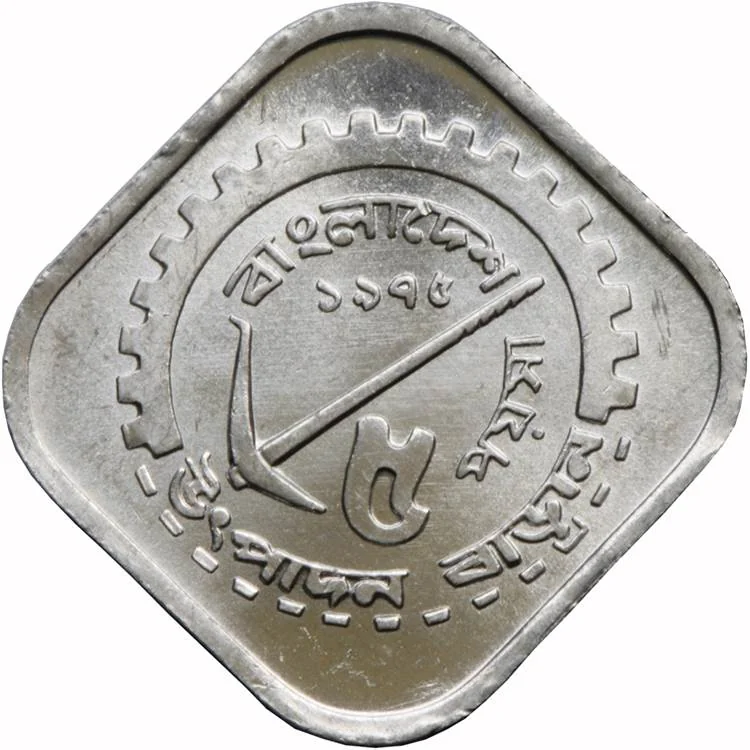
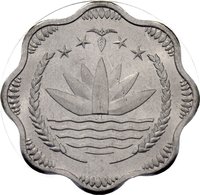
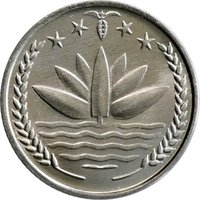
Bangladesh's national emblem features a water lily framed by rice sheaves, topped with a tea leaf clover and four stars symbolizing the 1972 constitutional principles: nationalism, secularism, socialism, and democracy.
Reverse
Edge
Plain
Categories
| Agriculture |
| Organization> FAO |
| Plants> Flower |
| Symbols> Coat of Arms |
Mints
| Name | Mark |
|---|---|
| Berlin | — |
Mintings
| Year | Mint Mark | Mintage | Quality | Collection |
|---|---|---|---|---|
| 1974 | — | 5,000,000 | ||
| 1975 | — | 3,000,000 | ||
| 1976 | — | 3,000,000 | ||
| 1977 | — | 3,000,000 | ||
| 1978 | — | — | ||
| 1979 | — | — |
Historical background
In 1974, Bangladesh faced a severe currency crisis rooted in the devastating aftermath of the 1971 Liberation War and compounded by global economic shocks. The war had crippled infrastructure, disrupted administration, and left the new nation with minimal foreign reserves. The government, led by Sheikh Mujibur Rahman, was printing currency extensively to fund reconstruction and a growing budget deficit, leading to rampant inflation. This situation was dramatically worsened by the 1973 global oil crisis, which inflated import costs, and a catastrophic famine in 1974 that shattered agricultural production and further strained the economy. The value of the Bangladeshi taka plummeted, and a large black market for foreign exchange, especially US dollars, flourished where rates were multiples of the official peg.
The government's policy response was a stark devaluation. In January 1975, it moved to unify the exchange rate by devaluing the taka by approximately 56%, setting a new rate closer to the black-market reality. This was a painful but necessary correction mandated by international lenders and aimed at curbing the unsustainable black-market premium and stabilizing the external account. However, for the population in 1974, the immediate effect was a further erosion of purchasing power, as the cost of essential imported goods and food skyrocketed, exacerbating the hardship of the famine.
Thus, the currency situation of 1974 was not an isolated monetary event but a symptom of profound national trauma. It reflected the intersection of post-war fragility, policy missteps in financing recovery, and external global pressures. The crisis underscored the immense challenges of building a functioning economic system from scratch and set the stage for the major economic policy shifts, including nationalization and subsequent moves toward liberalization, that would characterize Bangladesh's early years.
The government's policy response was a stark devaluation. In January 1975, it moved to unify the exchange rate by devaluing the taka by approximately 56%, setting a new rate closer to the black-market reality. This was a painful but necessary correction mandated by international lenders and aimed at curbing the unsustainable black-market premium and stabilizing the external account. However, for the population in 1974, the immediate effect was a further erosion of purchasing power, as the cost of essential imported goods and food skyrocketed, exacerbating the hardship of the famine.
Thus, the currency situation of 1974 was not an isolated monetary event but a symptom of profound national trauma. It reflected the intersection of post-war fragility, policy missteps in financing recovery, and external global pressures. The crisis underscored the immense challenges of building a functioning economic system from scratch and set the stage for the major economic policy shifts, including nationalization and subsequent moves toward liberalization, that would characterize Bangladesh's early years.
🌱 Very Common