

2 Quarts – Gibraltar
United Kingdom
Context
Years: 1841–1861
Country: United Kingdom 
Issuer: Gibraltar 
Ruler: Victoria
Currency:
(1802—1861)
Demonetized: Yes
Total mintage: 48,000
Material
References
KM: #Click to copy to clipboard3
Numista: #17866
Obverse
Description:
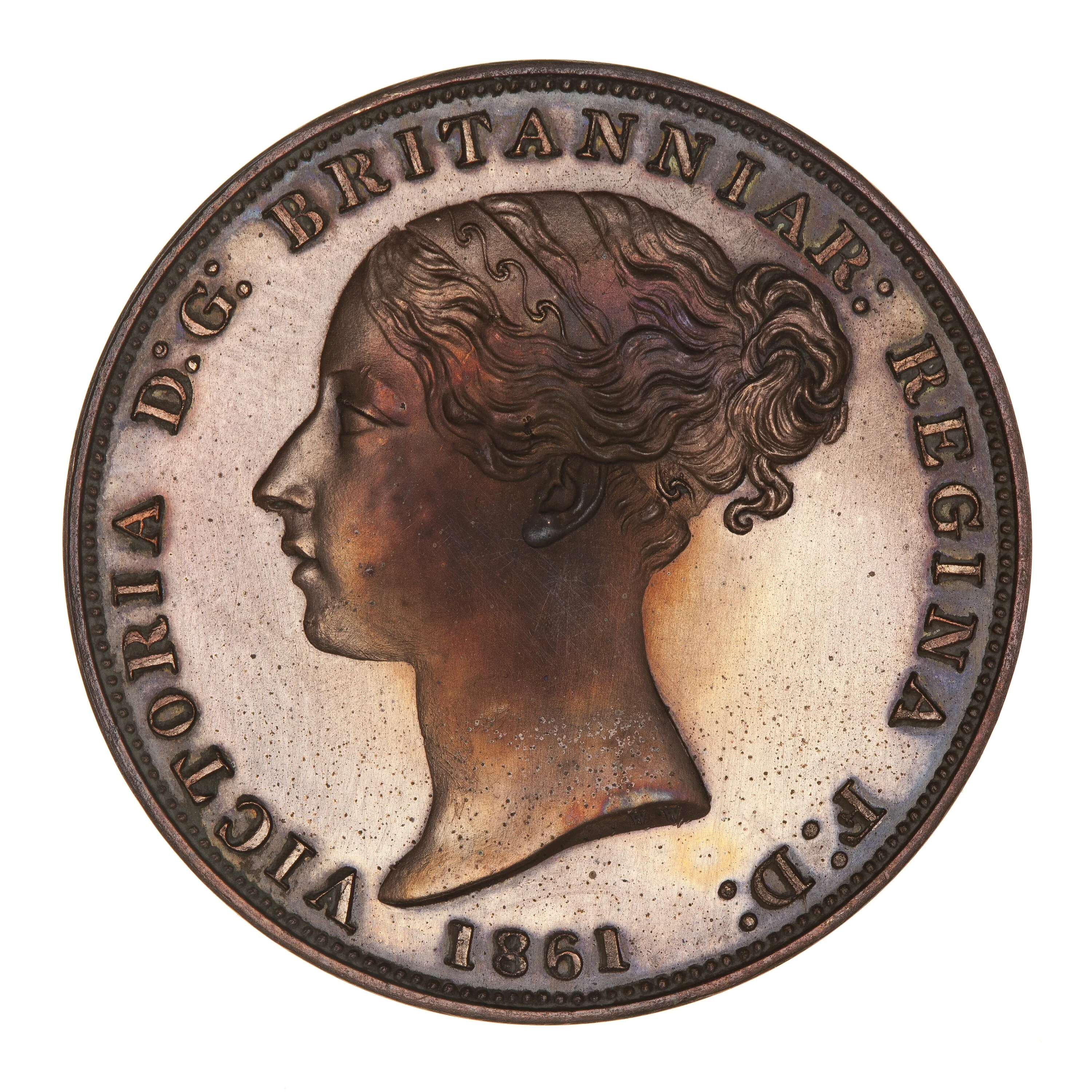
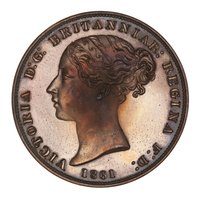
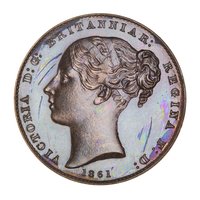
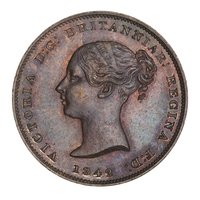
Portrait of Queen Victoria with date.
Inscription:
VICTORIA D:G: BRITANNIAR: REGINA F:D:
1842
1842
Translation:
Victoria by the Grace of God, Queen of the Britains, Defender of the Faith:
1842
1842
Script: Latin
Language: Latin
Designer and engraver: William Wyon
Reverse
Description:
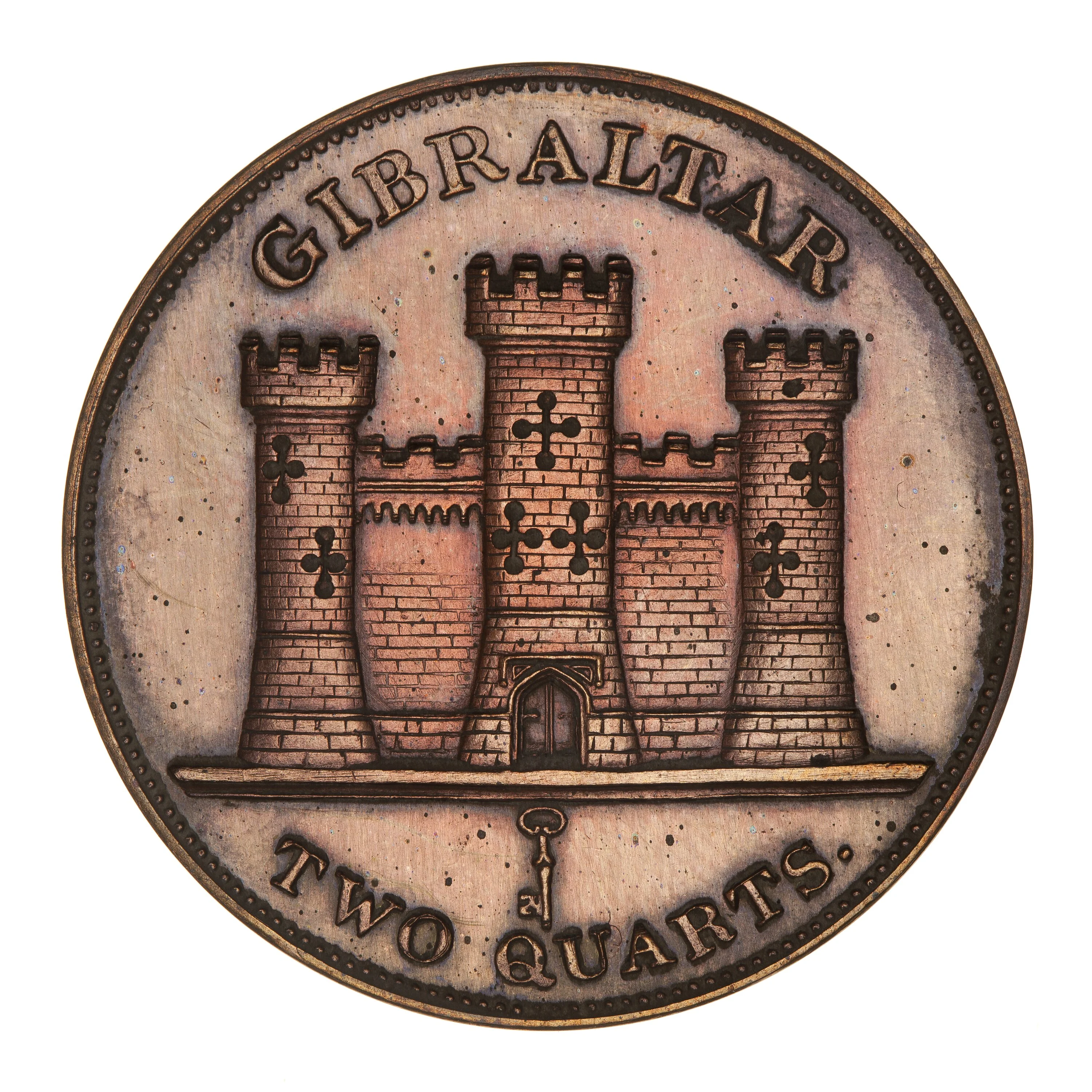
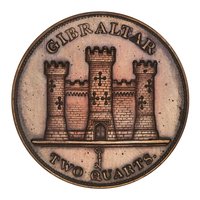
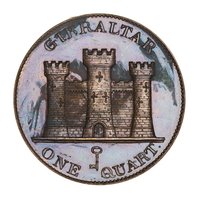
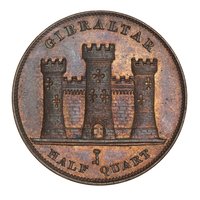
Key and castle from Gibraltar's coat of arms.
Inscription:
GIBRALTAR
TWO QUARTS.
TWO QUARTS.
Script: Latin
Edge
Plain
Categories
| Building> Castle or fortification |
Mints
| Name | Mark |
|---|---|
| Royal Mint (Tower Hill) | — |
Mintings
| Year | Mint Mark | Mintage | Quality | Collection |
|---|---|---|---|---|
| 1841 | — | — | Proof | |
| 1842 | — | — | Proof | |
| 1842 | — | 48,000 | ||
| 1860 | — | — | Proof | |
| 1861 | — | — | Proof |
Historical background
In 1841, Gibraltar's currency situation was a complex and practical reflection of its unique status as a British fortress-colony with a vibrant international port. Officially, the British pound sterling was the legal tender, but in daily commerce, a diverse array of coins circulated freely. These included Spanish reales and pesetas, Portuguese moedas, and even French francs and Arabic coins, a legacy of Gibraltar's role in Mediterranean trade. This monetary bazaar was driven by necessity, as the garrison and civilian population engaged heavily with neighbouring Spain and visiting merchant ships, requiring readily accepted foreign specie for transactions.
The British authorities, while asserting sovereignty, adopted a pragmatic approach. They recognised that insisting on sterling alone would stifle the local economy. Consequently, transactions within the garrison and official government business were conducted in pounds, shillings, and pence, while the bustling markets and taverns operated on a de facto multi-currency system. Values were often calculated in a traditional Spanish unit, the "Gibraltar pound" of 960 maravedís, which acted as a local accounting measure to facilitate exchange between the various physical coins in use.
This period preceded any formal colonial currency issue for Gibraltar. The situation was inherently unstable, leading to frequent disputes over exchange rates and the quality of worn or clipped coins. The year 1841 thus represents a point within a longer era of monetary hybridity, one that would eventually lead to the introduction of a distinctive Gibraltar sterling coinage in 1842. This first issue, featuring the colony's name and coat of arms, was an early step to standardise the currency while still maintaining parity with the British pound, aiming to bring order to the commercial life of the Rock.
The British authorities, while asserting sovereignty, adopted a pragmatic approach. They recognised that insisting on sterling alone would stifle the local economy. Consequently, transactions within the garrison and official government business were conducted in pounds, shillings, and pence, while the bustling markets and taverns operated on a de facto multi-currency system. Values were often calculated in a traditional Spanish unit, the "Gibraltar pound" of 960 maravedís, which acted as a local accounting measure to facilitate exchange between the various physical coins in use.
This period preceded any formal colonial currency issue for Gibraltar. The situation was inherently unstable, leading to frequent disputes over exchange rates and the quality of worn or clipped coins. The year 1841 thus represents a point within a longer era of monetary hybridity, one that would eventually lead to the introduction of a distinctive Gibraltar sterling coinage in 1842. This first issue, featuring the colony's name and coat of arms, was an early step to standardise the currency while still maintaining parity with the British pound, aiming to bring order to the commercial life of the Rock.
🌟 Limited