


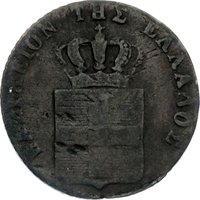
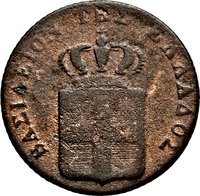
Obverse
Description:
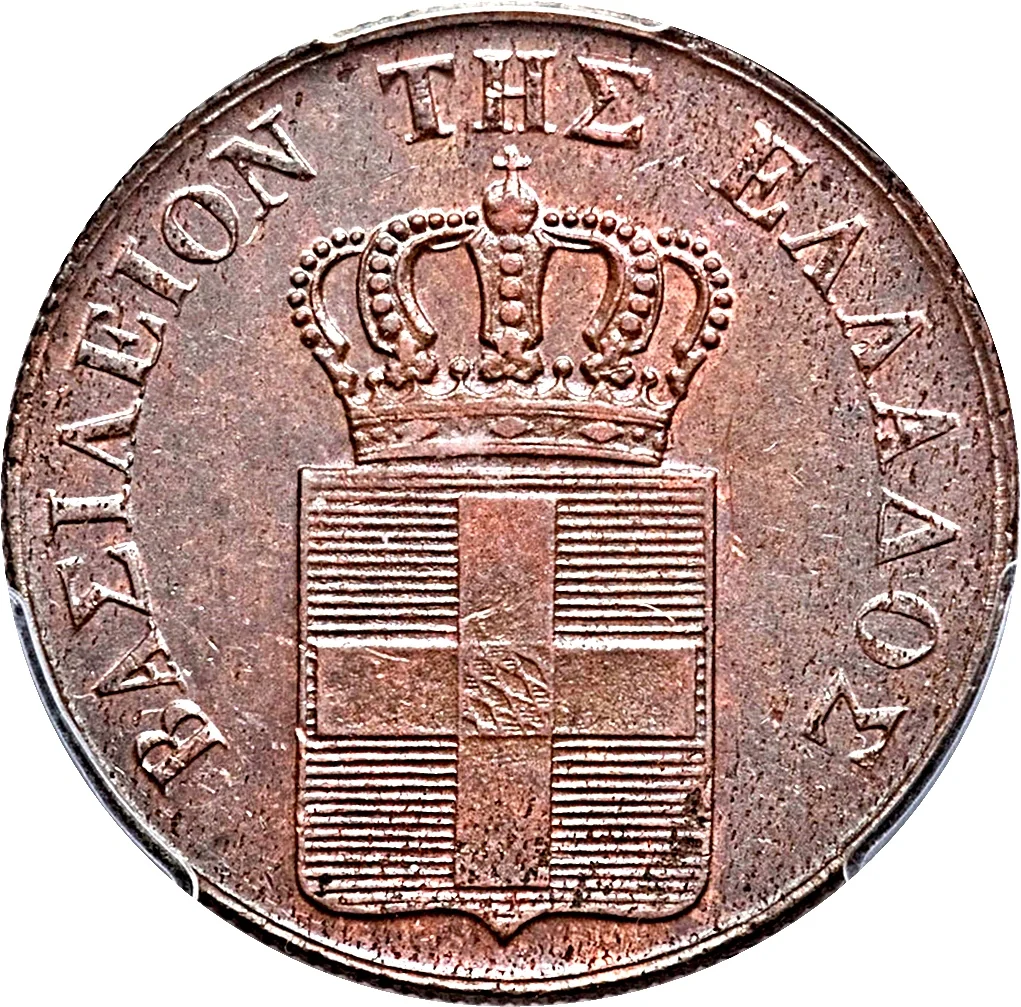
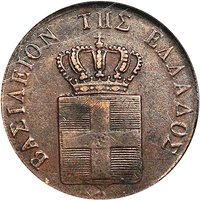
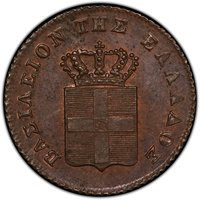
Cross shield, crowned.
Inscription:
ΒΑΣΙΛΕΙΟΝ ΤΗΣ ΕΛΛΑΔΟΣ
Translation:
KINGDOM OF GREECE
Script: Greek
Language: Greek
Engravers: Carl Friedrich Voigt, Konrad Lange
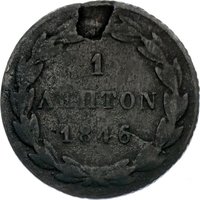
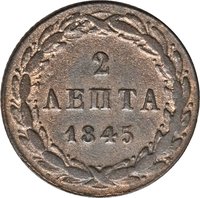
Reverse
Description:
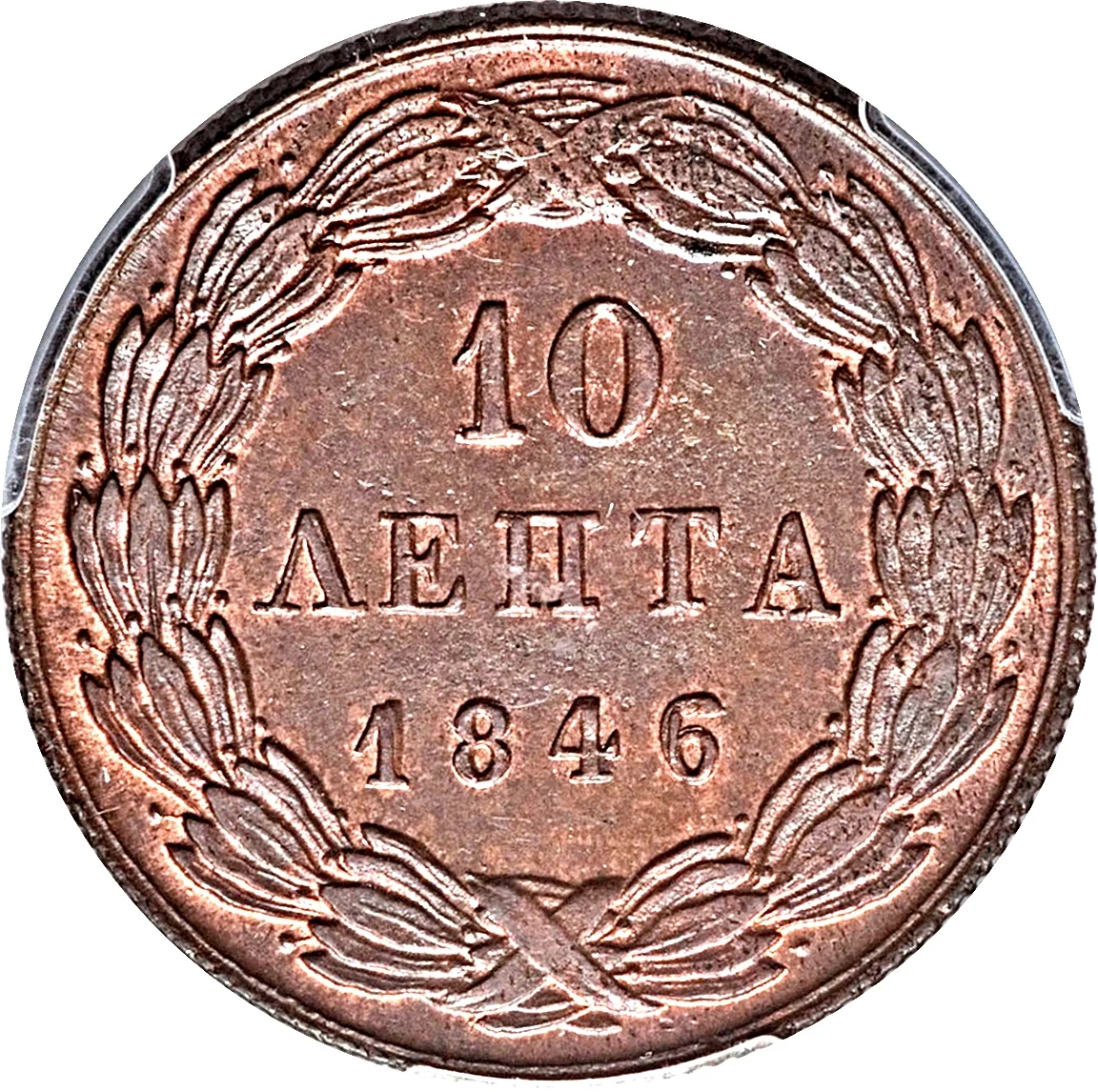
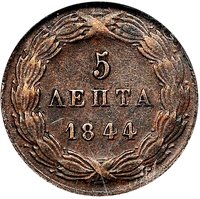
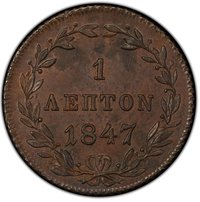
Denomination and date encircled by wreath.
Inscription:
10 ΛΕΠΤΑ 1846
Translation:
Ten Lepta 1846
Script: Greek
Language: Greek
Engravers: Carl Friedrich Voigt, Konrad Lange
Edge
Reeded
Mints
| Name | Mark |
|---|---|
| Athens Mint | — |
Mintings
| Year | Mint Mark | Mintage | Quality | Collection |
|---|---|---|---|---|
| 1844 | — | — | ||
| 1845 | — | 985,000 | ||
| 1846 | — | 1,275,000 |
Historical background
In 1844, Greece was navigating the complex aftermath of its War of Independence (1821-1832) and the establishment of a monarchy under King Otto. The currency situation was emblematic of the new state's struggle to assert economic sovereignty and stability. A chaotic mix of currencies circulated, including the Ottoman kuruş, the Spanish silver dollar or "pillar dollar," the French franc, the British pound, and various other European and Levantine coins. This monetary plurality reflected Greece's recent Ottoman past, its international trade connections, and the involvement of foreign powers in its founding, creating a system that was confusing and hindered domestic commerce and state finance.
The need for a unified national currency was urgent, both as a practical tool for economic development and as a symbol of modern statehood. Consequently, the young Greek state introduced the phoenix (Φοίνιξ) in 1828, named for the mythical bird symbolizing rebirth. However, the phoenix, tied to the silver standard, suffered from severe devaluation due to a lack of precious metal reserves and limited public confidence. By 1844, it was clear the phoenix had failed as a stable monetary unit, circulating alongside the older foreign currencies and failing to provide the needed financial foundation.
Therefore, 1844 was a pivotal year of transition. By royal decree on February 8, 1844, Greece formally adopted the drachma (Δραχμή) as its new national currency, replacing the phoenix at a rate of 1 drachma = 1 phoenix. This reform, implemented under the governance of Prime Minister Ioannis Kolettis, aimed to stabilize the monetary system by firmly placing the drachma on the silver standard, aligning it with the French franc and the Latin Monetary Union principles. This move marked a decisive step toward consolidating Greece's economic independence and integrating its economy with the broader European financial system.
The need for a unified national currency was urgent, both as a practical tool for economic development and as a symbol of modern statehood. Consequently, the young Greek state introduced the phoenix (Φοίνιξ) in 1828, named for the mythical bird symbolizing rebirth. However, the phoenix, tied to the silver standard, suffered from severe devaluation due to a lack of precious metal reserves and limited public confidence. By 1844, it was clear the phoenix had failed as a stable monetary unit, circulating alongside the older foreign currencies and failing to provide the needed financial foundation.
Therefore, 1844 was a pivotal year of transition. By royal decree on February 8, 1844, Greece formally adopted the drachma (Δραχμή) as its new national currency, replacing the phoenix at a rate of 1 drachma = 1 phoenix. This reform, implemented under the governance of Prime Minister Ioannis Kolettis, aimed to stabilize the monetary system by firmly placing the drachma on the silver standard, aligning it with the French franc and the Latin Monetary Union principles. This move marked a decisive step toward consolidating Greece's economic independence and integrating its economy with the broader European financial system.
Series: 1844 Greece circulation coins
🌟 Limited