

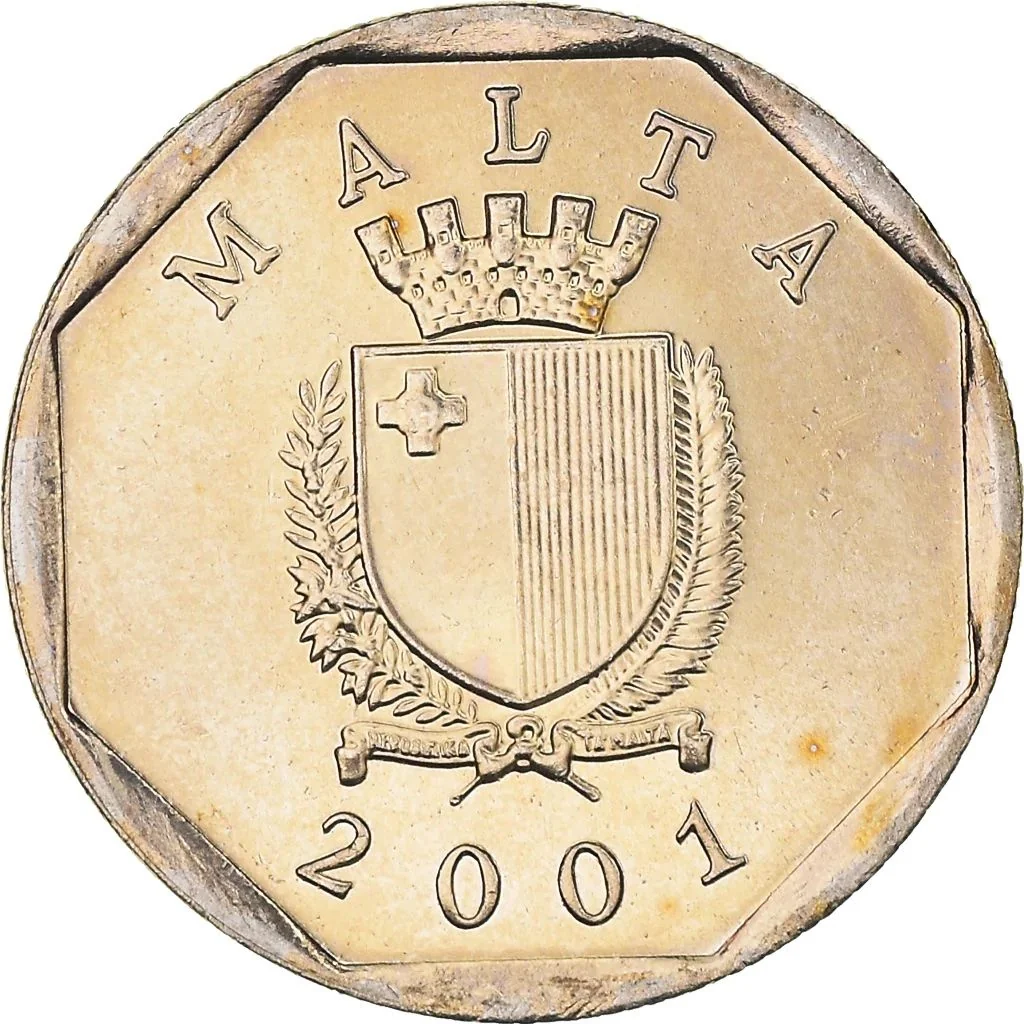
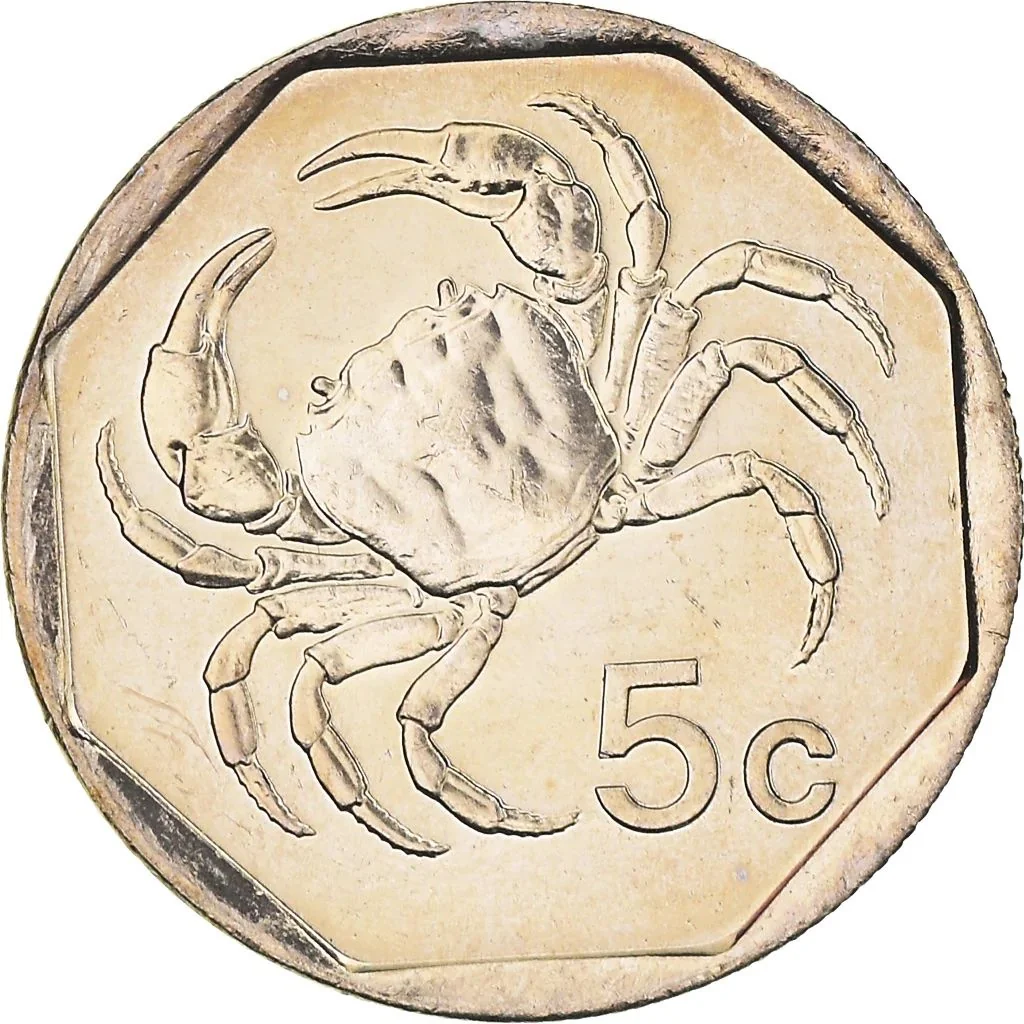
5 cents – Malta
Add to wishlist
Malta
Context
Years: 1991–2007
Issuer: Malta
Period:
(since 1974)
Currency:
(1972—2007)
Demonetization: 1 February 2010
Material
Diameter: 20 mm
Weight: 3.51 g
Thickness: 1.6 mm
Shape: Round
Composition: Copper-nickel
Technique: Milled
Alignment: Medal alignment
flip
References
KM: #
Numista: #1780
Value
Exchange value: 0.05 MTL
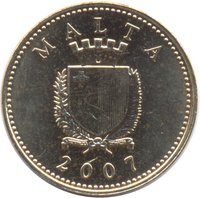
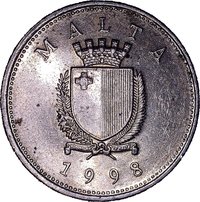
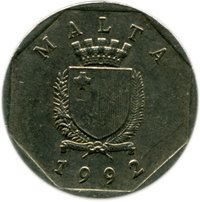
Obverse
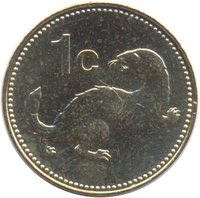
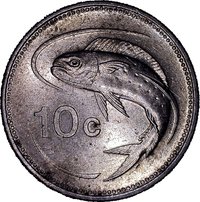
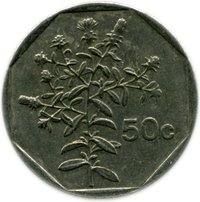
Reverse
Edge
Reeded
Categories
| Animal> Crustacean |
Mints
| Name | Mark |
|---|---|
| Malta Mint | — |
| Royal Mint | — |
Mintings
| Year | Mint Mark | Mintage | Quality | Collection |
|---|---|---|---|---|
| 1991 | — | — | ||
| 1995 | — | — | ||
| 1998 | — | — | ||
| 2001 | — | — | ||
| 2005 | — | — | In sets | |
| 2006 | — | — | In sets | |
| 2007 | — | — | In sets |
Historical background
In 1991, Malta's currency situation was defined by its long-standing and stable peg to a basket of currencies, primarily weighted towards the British Pound Sterling, the US Dollar, and the Deutsche Mark. This system, managed by the Central Bank of Malta, had been in place since the early 1970s and provided a crucial anchor for the small, open island economy. It ensured predictable exchange rates for Malta's vital import and export sectors, particularly tourism and manufacturing, while helping to control inflationary pressures. The Maltese lira (₤m) was considered a strong and stable currency, though it was subject to occasional controlled devaluations, such as a minor adjustment in 1990, to maintain export competitiveness.
The period was one of economic transition, as the Maltese government, led by the Nationalist Party, was actively pursuing policies to liberalise the economy and prepare for future European integration. This included gradual moves towards financial deregulation. However, in 1991, the currency remained non-convertible for residents, with strict exchange controls still in place. Maltese citizens and businesses faced limitations on transferring funds abroad or holding foreign currency accounts, a legacy of the more protectionist policies of the previous decades.
Looking forward, the currency framework of 1991 was on the cusp of significant change. The government's strategic goal of applying for European Community membership (which it would do in 1990, with formal application in 1992) would eventually necessitate aligning with European monetary systems. The stable but controlled peg of 1991 represented the final phase of a managed national currency before the long journey towards adopting the euro, which would culminate in 2008 after a period of first pegging to a euro-dominated basket and then to the euro itself within the Exchange Rate Mechanism (ERM II).
The period was one of economic transition, as the Maltese government, led by the Nationalist Party, was actively pursuing policies to liberalise the economy and prepare for future European integration. This included gradual moves towards financial deregulation. However, in 1991, the currency remained non-convertible for residents, with strict exchange controls still in place. Maltese citizens and businesses faced limitations on transferring funds abroad or holding foreign currency accounts, a legacy of the more protectionist policies of the previous decades.
Looking forward, the currency framework of 1991 was on the cusp of significant change. The government's strategic goal of applying for European Community membership (which it would do in 1990, with formal application in 1992) would eventually necessitate aligning with European monetary systems. The stable but controlled peg of 1991 represented the final phase of a managed national currency before the long journey towards adopting the euro, which would culminate in 2008 after a period of first pegging to a euro-dominated basket and then to the euro itself within the Exchange Rate Mechanism (ERM II).
Series: 1991 Malta circulation coins
🌱 Very Common