

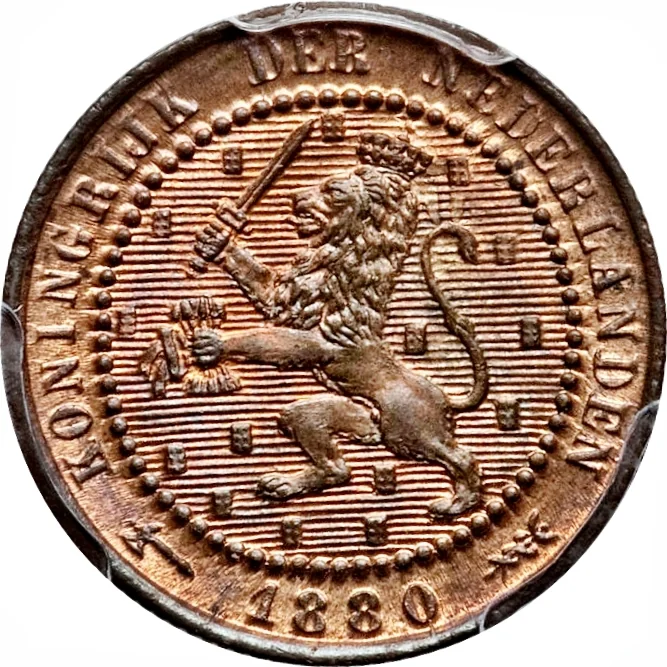
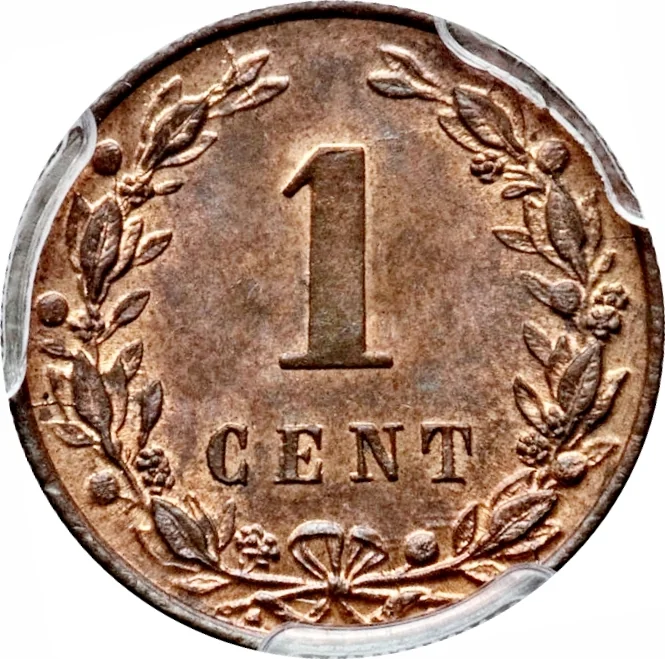
1 cent – Netherlands
Add to wishlist
Netherlands
Context
Years: 1877–1900
Issuer: Netherlands
Ruler: Wilhelmina
Currency:
(1817—2001)
Demonetized: Yes
Total mintage: 140,500,000
Material
References
KM: #
Numista: #1070
Value
Exchange value: 0.01 NLG
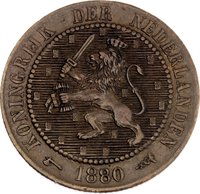
Obverse
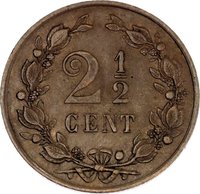
Reverse
Edge
Reeded
Mints
| Name | Mark |
|---|---|
| Royal Dutch Mint | — |
Mintings
| Year | Mint Mark | Mintage | Quality | Collection |
|---|---|---|---|---|
| 1877 | — | 6,100,000 | ||
| 1878 | — | 53,900,000 | ||
| 1880 | — | 20,000,000 | ||
| 1881 | — | 10,000,000 | ||
| 1882 | — | 5,000,000 | ||
| 1883 | — | 15,000,000 | ||
| 1884 | — | 10,000,000 | ||
| 1892 | — | 5,000,000 | ||
| 1896 | — | 3,000,000 | ||
| 1897 | — | 2,500,000 | ||
| 1898 | — | 5,000,000 | ||
| 1899 | — | 5,000,000 | ||
| 1900 | — | — |
Historical background
In 1877, the Netherlands operated under a bimetallic system, legally defined by the Coin Act of 1847. This law established both gold and silver as the basis for the national currency, the guilder (gulden), with a fixed exchange ratio between the two metals. Coins of both gold and silver were minted and considered legal tender, creating a system where the currency's value was theoretically backed by state-held reserves of precious metals. However, this system was under significant international strain due to the fluctuating market values of gold and silver, a challenge common to all bimetallic economies of the era.
The period was marked by a global shift towards a gold standard, driven by discoveries of new gold deposits and Germany's adoption of gold in 1873. This caused the market price of silver to fall relative to gold, disrupting the official mint ratio. Consequently, the cheaper metal (silver) tended to flood circulation, while the more valuable metal (gold) was often hoarded or exported—a phenomenon known as Gresham's Law. For the Netherlands, this meant a practical move towards a de facto silver standard, as gold ten-guilder coins increasingly disappeared from daily circulation, even though they remained legal tender.
This unstable monetary environment sparked intense debate within Dutch political and financial circles. Proponents of the gold standard, including many bankers and international traders, argued for modernization and alignment with major economic powers like Britain and Germany to ensure stable exchange rates and foster trade. Conversely, defenders of silver, often with ties to colonial interests in the Dutch East Indies (where silver was crucial), resisted a swift change. Thus, 1877 found the Netherlands at a monetary crossroads, grappling with the practical failures of bimetallism and mounting pressure to join the emerging international gold standard, a transition it would formally complete in 1875 with the passing of the necessary legislation.
The period was marked by a global shift towards a gold standard, driven by discoveries of new gold deposits and Germany's adoption of gold in 1873. This caused the market price of silver to fall relative to gold, disrupting the official mint ratio. Consequently, the cheaper metal (silver) tended to flood circulation, while the more valuable metal (gold) was often hoarded or exported—a phenomenon known as Gresham's Law. For the Netherlands, this meant a practical move towards a de facto silver standard, as gold ten-guilder coins increasingly disappeared from daily circulation, even though they remained legal tender.
This unstable monetary environment sparked intense debate within Dutch political and financial circles. Proponents of the gold standard, including many bankers and international traders, argued for modernization and alignment with major economic powers like Britain and Germany to ensure stable exchange rates and foster trade. Conversely, defenders of silver, often with ties to colonial interests in the Dutch East Indies (where silver was crucial), resisted a swift change. Thus, 1877 found the Netherlands at a monetary crossroads, grappling with the practical failures of bimetallism and mounting pressure to join the emerging international gold standard, a transition it would formally complete in 1875 with the passing of the necessary legislation.
🌱 Very Common