

40 francs – France
Add to wishlist
France
Context
Years: 1831–1839
Issuer: France
Ruler: Louis Philippe I
Currency:
(1795—1959)
Demonetization: 25 June 1928
Total mintage: 713,013
Material
References
KM: #
Numista: #17713
Value
Bullion value: $1807.52
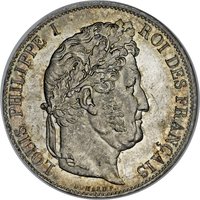
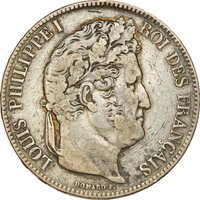
Obverse
Description:
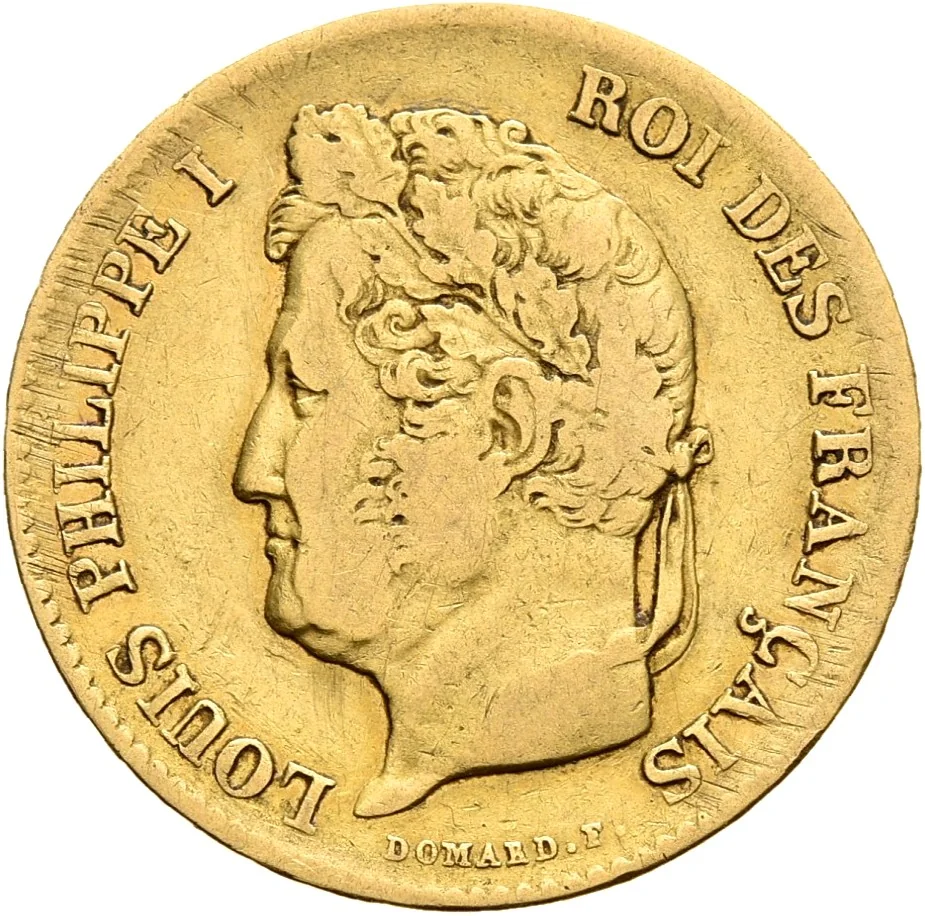
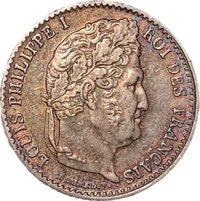
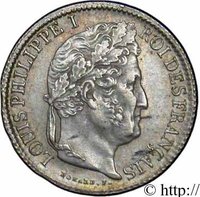
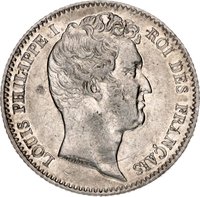
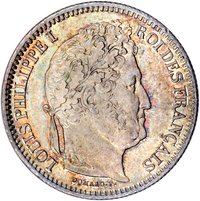
Louis Philippe facing left.
Inscription:
LOUIS-PHILIPPE I ROI DES FRANÇAIS
Translation:
LOUIS-PHILIPPE I KING OF THE FRENCH
Script: Latin
Language: French
Engraver: Joseph-François Domard
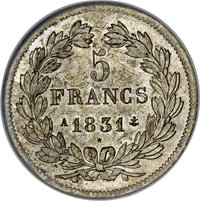
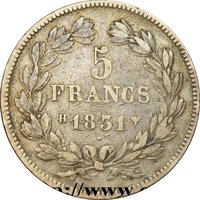
Reverse
Description:
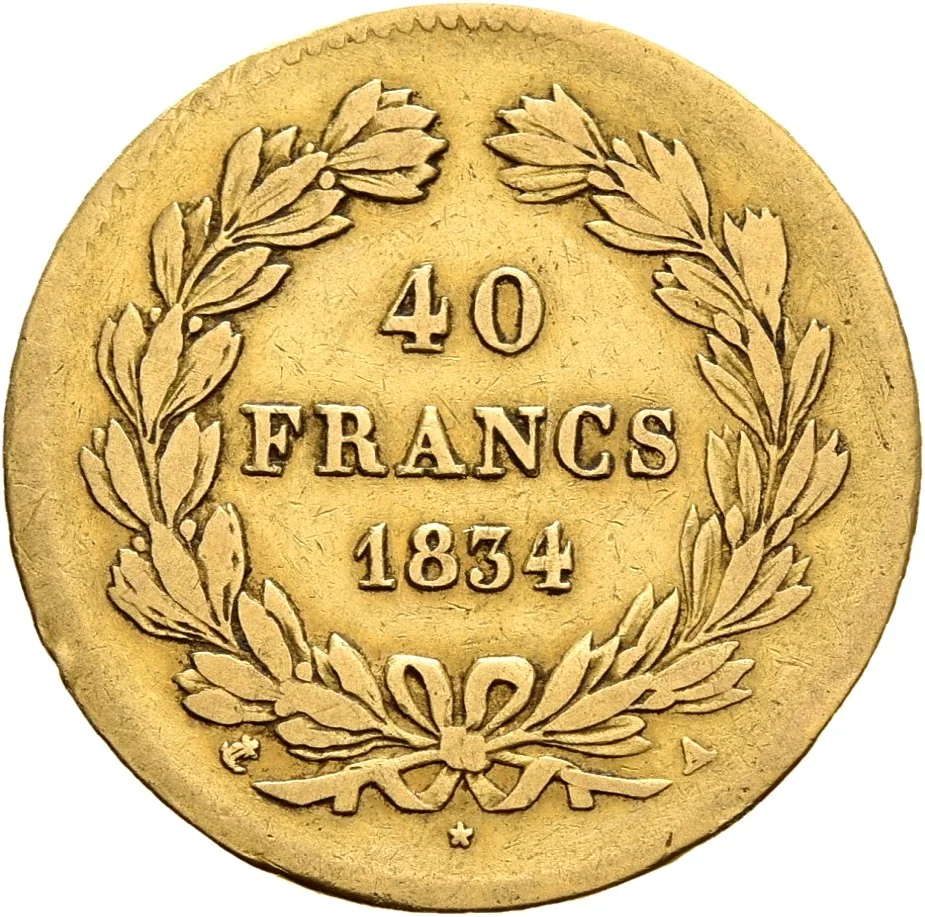
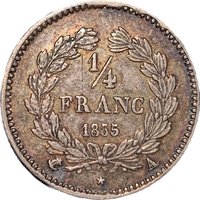
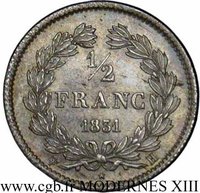
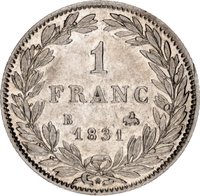
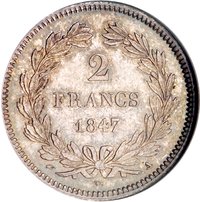
Laurel-wreathed denomination
Inscription:
40
FRANCS
1831
A
FRANCS
1831
A
Script: Latin
Engraver: Joseph-François Domard
Edge
Embossed edge
Legend:
*DIEU PROTEGE LA FRANCE
Mints
| Name | Mark |
|---|---|
| Monnaie de Paris | A |
| Rouen | B |
| Bayonne | L |
Mintings
Historical background
In 1831, France was navigating a complex and transitional monetary landscape under the July Monarchy of King Louis-Philippe. The nation operated on a bimetallic system, established by the Franc Germinal law of 1803, which defined the franc in terms of fixed weights of both gold and silver (1 franc = 4.5 grams of fine silver, or 0.290 grams of gold). This system aimed to provide stability, but it was increasingly strained by market fluctuations in the relative value of the two metals, often causing one to disappear from circulation as it was hoarded or exported based on which metal was overvalued at the mint.
The period following the 1830 Revolution was one of economic uncertainty, and the currency reflected this. While the official coinage was sound, the circulation was cluttered with a variety of older, worn coins from the ancien régime and the Revolutionary era, as well as foreign coins, leading to practical complications in everyday commerce. Furthermore, the state faced a significant shortage of small-denomination coins for daily wages and transactions, a problem that hampered the working classes and local trade. This scarcity was partly addressed by the continued tolerance of private token issues from chambers of commerce and manufacturers.
Politically, the currency was a symbol of the regime's desired stability and bourgeois values, contrasting with the paper money assignats of the Revolution that had led to disastrous inflation. Consequently, there was a deep-seated public and governmental aversion to paper currency. Banknotes issued by the Bank of France existed but were primarily used by merchants and in large-scale transactions, not by the general populace who distrusted them. Thus, France in 1831 was caught between a theoretically robust bimetallic standard and the practical monetary challenges of a society still deeply reliant on, yet lacking sufficient, tangible metallic coinage.
The period following the 1830 Revolution was one of economic uncertainty, and the currency reflected this. While the official coinage was sound, the circulation was cluttered with a variety of older, worn coins from the ancien régime and the Revolutionary era, as well as foreign coins, leading to practical complications in everyday commerce. Furthermore, the state faced a significant shortage of small-denomination coins for daily wages and transactions, a problem that hampered the working classes and local trade. This scarcity was partly addressed by the continued tolerance of private token issues from chambers of commerce and manufacturers.
Politically, the currency was a symbol of the regime's desired stability and bourgeois values, contrasting with the paper money assignats of the Revolution that had led to disastrous inflation. Consequently, there was a deep-seated public and governmental aversion to paper currency. Banknotes issued by the Bank of France existed but were primarily used by merchants and in large-scale transactions, not by the general populace who distrusted them. Thus, France in 1831 was caught between a theoretically robust bimetallic standard and the practical monetary challenges of a society still deeply reliant on, yet lacking sufficient, tangible metallic coinage.
Series: 1831 France circulation coins
🌟 Uncommon