

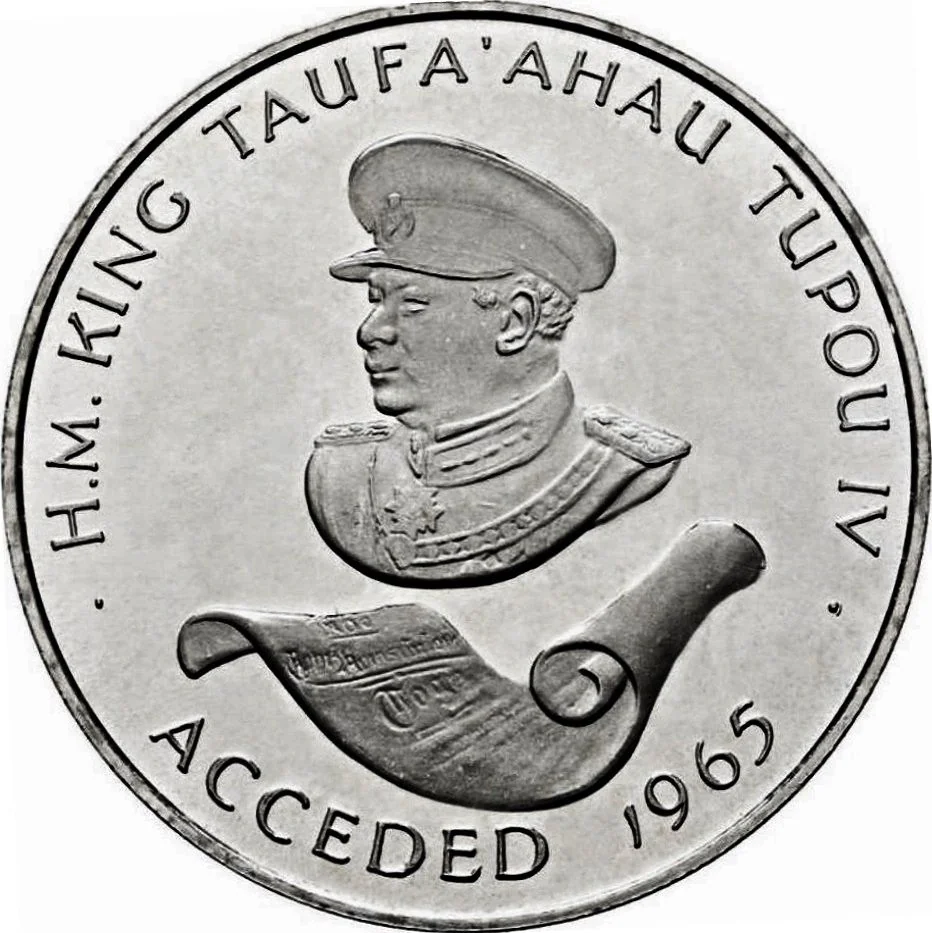
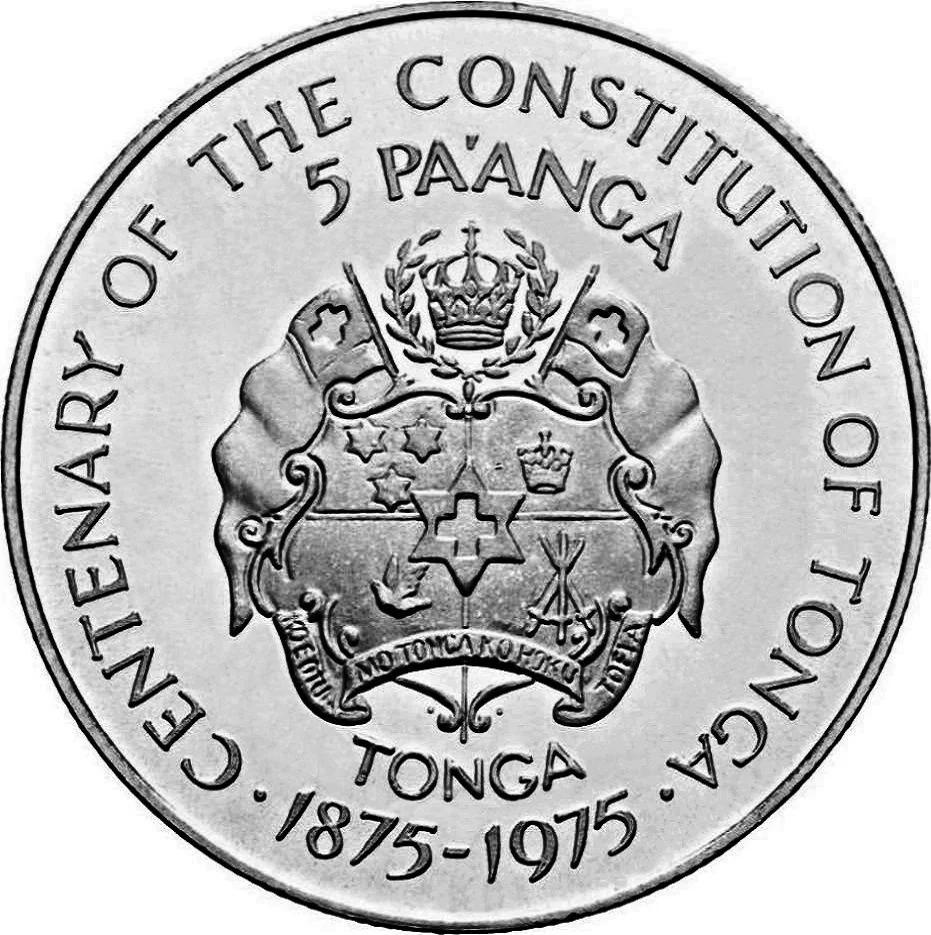
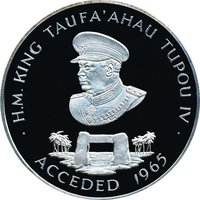
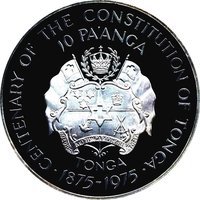
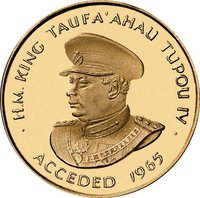
5 paʻanga (King Taufa'ahau Tupou IV accession) – Tonga
Add to wishlist
Non-circulating coins
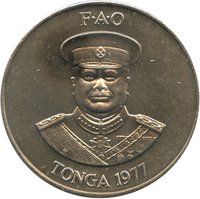
Commemoration: 10th Anniversary of accession of King Taufa'Ahau Tupou IV
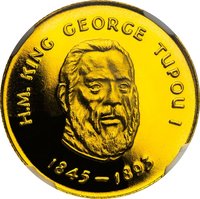
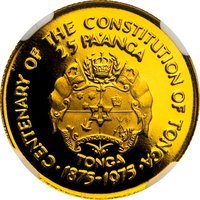
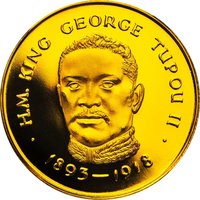
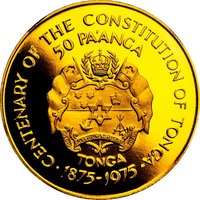
Series: Constitution Centennial
Tonga
Context
Material
Diameter: 38.8 mm
Weight: 31 g
Silver Weight:: 30.97 g
Shape: Round
Composition: 99.9% Silver
Standard: Silver ounce
Magnetic: No
Technique: Milled
References
KM: #
Numista: #176947
Value
Exchange value: 5 TOP
Bullion value: $79.23
Obverse
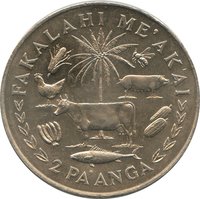
Reverse
Edge
Reeded
Categories
| Person> Monarch |
| Symbols> Coat of Arms |
Mints
| Name | Mark |
|---|---|
| Royal Dutch Mint | — |
Mintings
| Year | Mint Mark | Mintage | Quality | Collection |
|---|---|---|---|---|
| 1975 | — | 2,118 | ||
| 1975 | — | 418 | Proof |
Historical background
In 1975, the Kingdom of Tonga operated under a unique and complex currency system, a legacy of its historical ties as a British-protected state. The official legal tender was the Tongan pound (T£), which was pegged at par with the British pound sterling. This system reflected the enduring influence of the United Kingdom, despite Tonga having gained full control over its own foreign affairs in 1970. However, in practice, the Australian dollar was also widely circulated and accepted for everyday transactions, a consequence of Tonga's deep economic and migratory links with its Pacific neighbour, Australia.
This dual-currency environment created practical challenges. The fixed parity with the British pound, which itself was fluctuating significantly on international markets in the mid-1970s, did not necessarily align with Tonga's primary trade and remittance flows from Australia and New Zealand. Furthermore, the use of two major foreign currencies alongside the local issue led to occasional confusion and inefficiency in commerce. The situation highlighted a broader national question about economic sovereignty and the need for a more independent and streamlined monetary framework suited to Tonga's specific regional relationships.
The currency situation of 1975 was, therefore, a transitional phase. It set the stage for a significant monetary reform that would arrive just two years later. In 1977, seeking to modernize its financial system and assert greater economic independence, Tonga decimalized its currency. It introduced the Pa'anga (TOP), divided into 100 seniti, and severed the direct peg to the British pound. The new pa'anga was initially pegged to the Australian dollar, a pragmatic recognition of where Tonga's real economic linkages lay, thereby resolving the dual-currency complexities of the early 1970s.
This dual-currency environment created practical challenges. The fixed parity with the British pound, which itself was fluctuating significantly on international markets in the mid-1970s, did not necessarily align with Tonga's primary trade and remittance flows from Australia and New Zealand. Furthermore, the use of two major foreign currencies alongside the local issue led to occasional confusion and inefficiency in commerce. The situation highlighted a broader national question about economic sovereignty and the need for a more independent and streamlined monetary framework suited to Tonga's specific regional relationships.
The currency situation of 1975 was, therefore, a transitional phase. It set the stage for a significant monetary reform that would arrive just two years later. In 1977, seeking to modernize its financial system and assert greater economic independence, Tonga decimalized its currency. It introduced the Pa'anga (TOP), divided into 100 seniti, and severed the direct peg to the British pound. The new pa'anga was initially pegged to the Australian dollar, a pragmatic recognition of where Tonga's real economic linkages lay, thereby resolving the dual-currency complexities of the early 1970s.
Series: Constitution Centennial
✨ Legendary