Logo Title
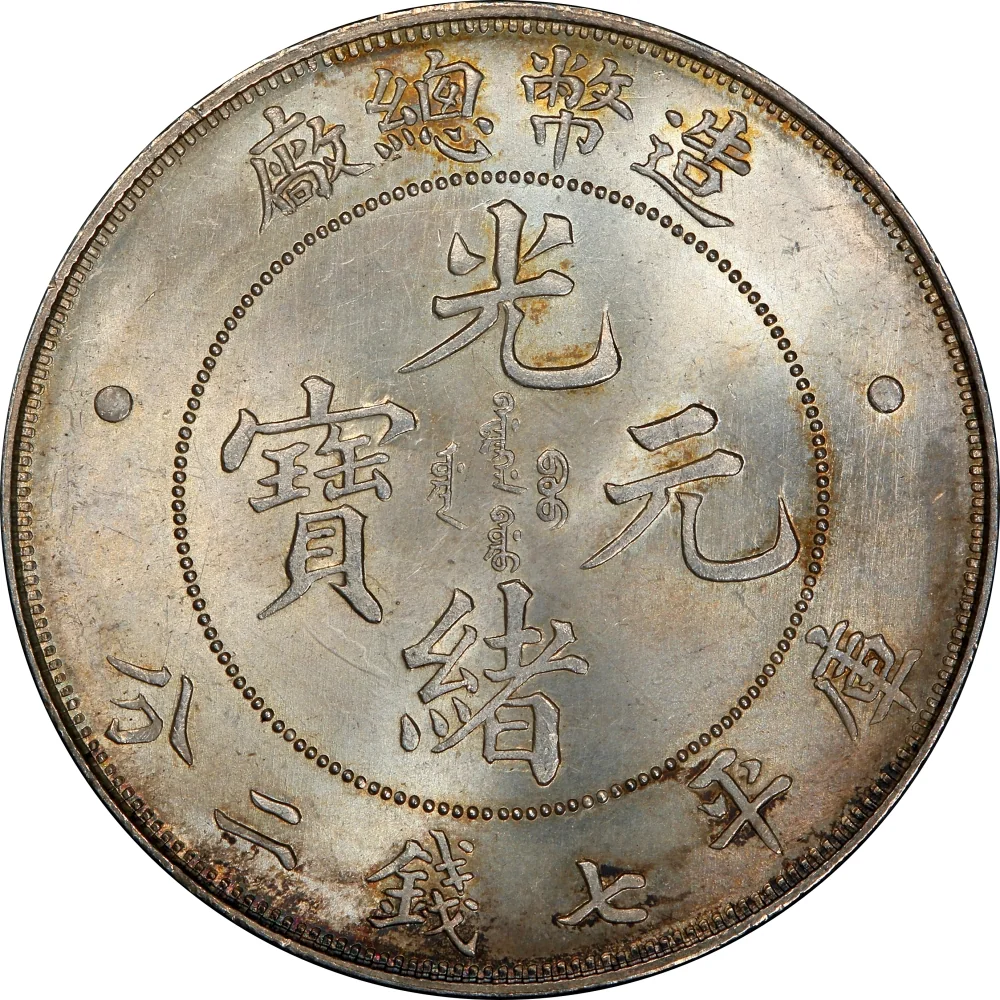
obverse
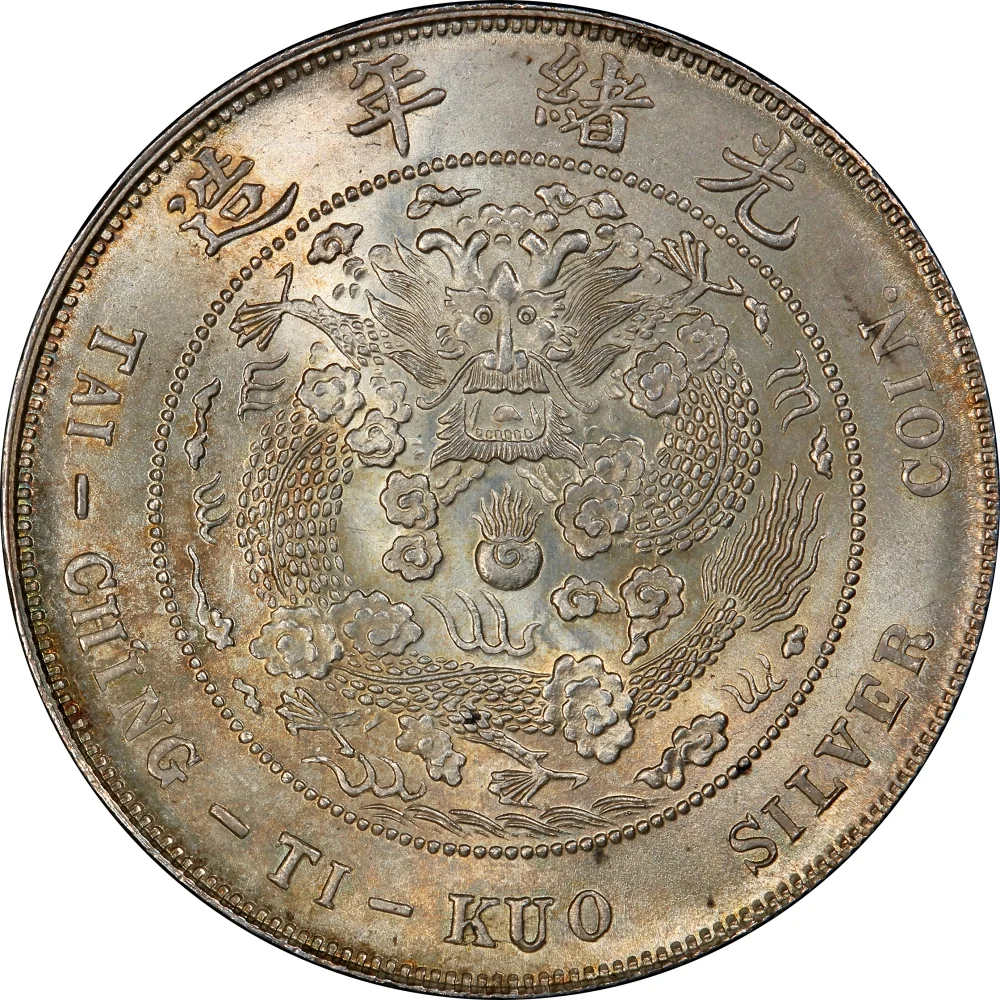
reverse
PCGS
Context
Year: 1908
Country: China Country flag
Ruler: Guangxu
Currency:
(1903—1912)
Demonetized: Yes
Material
Diameter: 39 mm
Weight: 26.9 g
Silver weight: 24.21 g
Shape: Round
Composition: 90% Silver
Magnetic: No
Technique: Milled
Alignment: Medal alignment
Obverse
OBVERSE ↑
flip
Reverse
REVERSE ↑
References
Y: #Click to copy to clipboard14
Numista: #17674
Value
Bullion value: $67.45

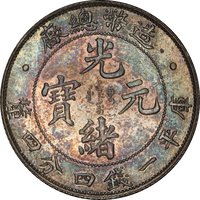
Obverse

Description:
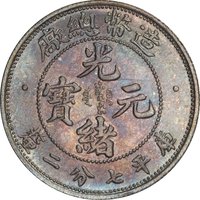
Four Chinese ideograms read vertically, right to left, with Manchu characters in the center, encircled by more ideograms.
Inscription:
廠總幣造


ᠪᠠᡩᠠᡵᠠᠩᡤᠠ

寶 ᠶᡠᠸᠠᠨ ᠪᠣᠣ 元

ᡩᠣᡵᠣ


分二錢七平庫
Translation:
Guangxu

Board of Revenue Mint

Treasury Standard

7 Mace and 2 Candareens
Languages: Manchu, Chinese

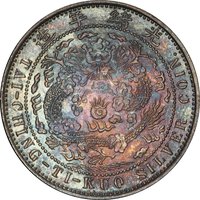
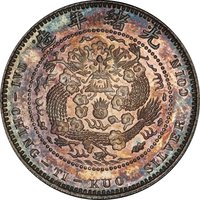
Reverse

Description:
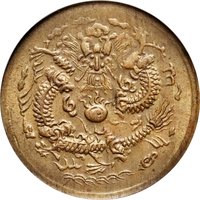
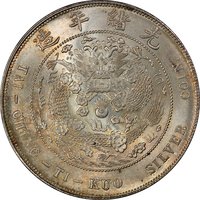
Dragon encircling a pearl, with Chinese characters above and English text below.
Inscription:
造年緒光

TAI-CHING-TI-KUO SILVER COIN.
Translation:
Great Qing Empire Silver Coin.
Language: Chinese

Edge

Mintings

YearMint MarkMintageQualityCollection
1908

Historical background

In 1908, the currency system of the Qing Empire was a chaotic and destabilizing reflection of the dynasty's broader decline. The empire lacked a unified, modern monetary standard, operating instead under a dysfunctional bimetallic system where silver taels (a unit of weight) and copper cash coins circulated simultaneously. The primary unit of account was the sycee (silver ingot), but its value and purity varied regionally, with dozens of different tael standards like the Kuping (Treasury) and Haikwan (Customs) tael creating immense complexity for trade and taxation. Meanwhile, the everyday economy relied on strings of copper cash, whose exchange rate with silver fluctuated wildly, often impoverishing peasants and laborers.

This internal disarray was exacerbated by the massive influx of foreign silver dollars, particularly Mexican and later British Trade dollars, which circulated widely in coastal provinces due to their standardized weight and reliability. Compounding the crisis was a severe drain of silver out of China to pay for opium imports and indemnities, such as the crushing Boxer Protocol payment of 1901. The imperial government, financially exhausted and with minimal central control over provincial mints, struggled to manage the money supply. Provincial authorities and even private banks issued their own silver and copper coins and paper notes of varying credibility, leading to widespread counterfeiting and loss of public trust.

Recognizing that monetary reform was essential for fiscal survival and sovereign dignity, the Qing court had begun tentative steps toward modernization. In 1905, it established the first national bank, the Da Qing Bank (later the Bank of China), with powers to issue uniform banknotes. Plans were formally drafted for a silver-standard national currency, the yuan, to replace the tael, but political instability and institutional inertia prevented their full implementation. Thus, in 1908, the empire remained caught between a crumbling traditional system and an unfinished modern one, a monetary fragmentation that mirrored its impending political collapse just three years later.

Series: 1908 Empire of China circulation coins

1 Jiao obverse
1 Jiao reverse
1 Jiao
1908
2 Jiao obverse
2 Jiao reverse
2 Jiao
1908
1 Yuan obverse
1 Yuan reverse
1 Yuan
1908
1 Cash obverse
1 Cash reverse
1 Cash
1908
💎 Very Rare