

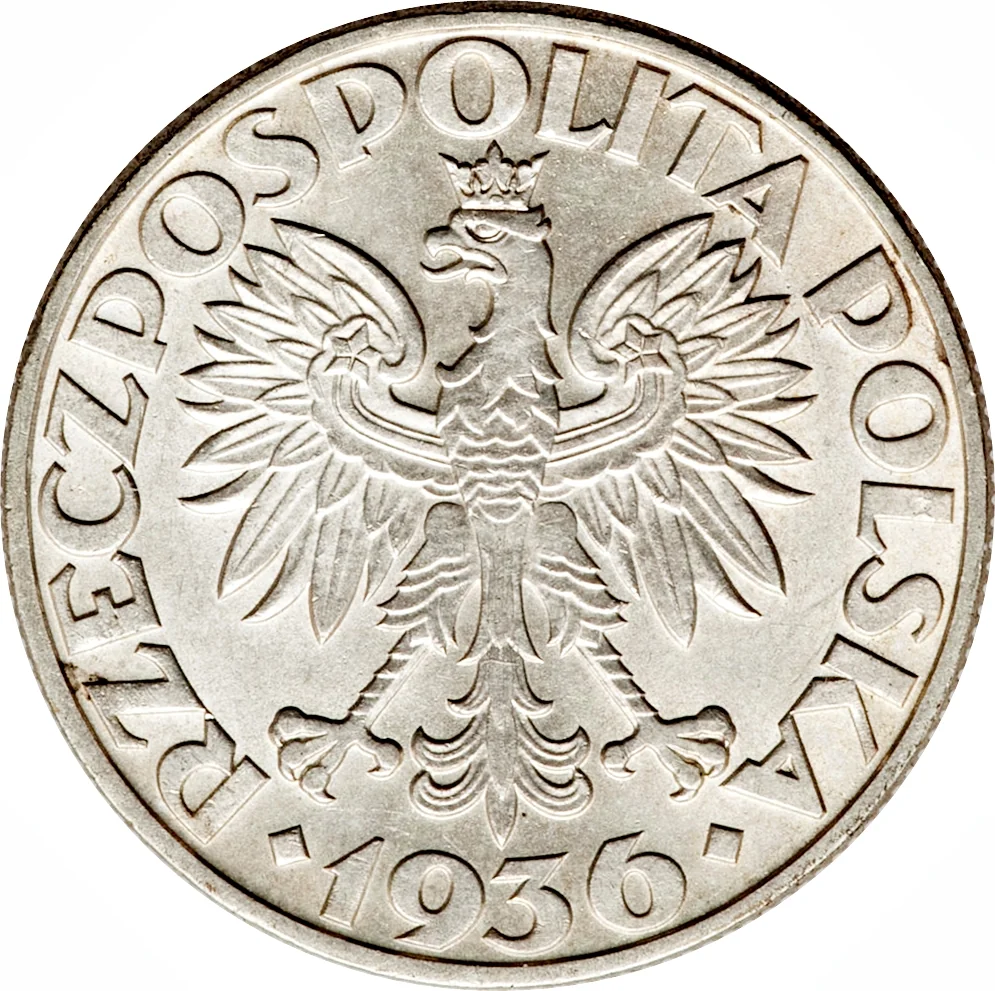
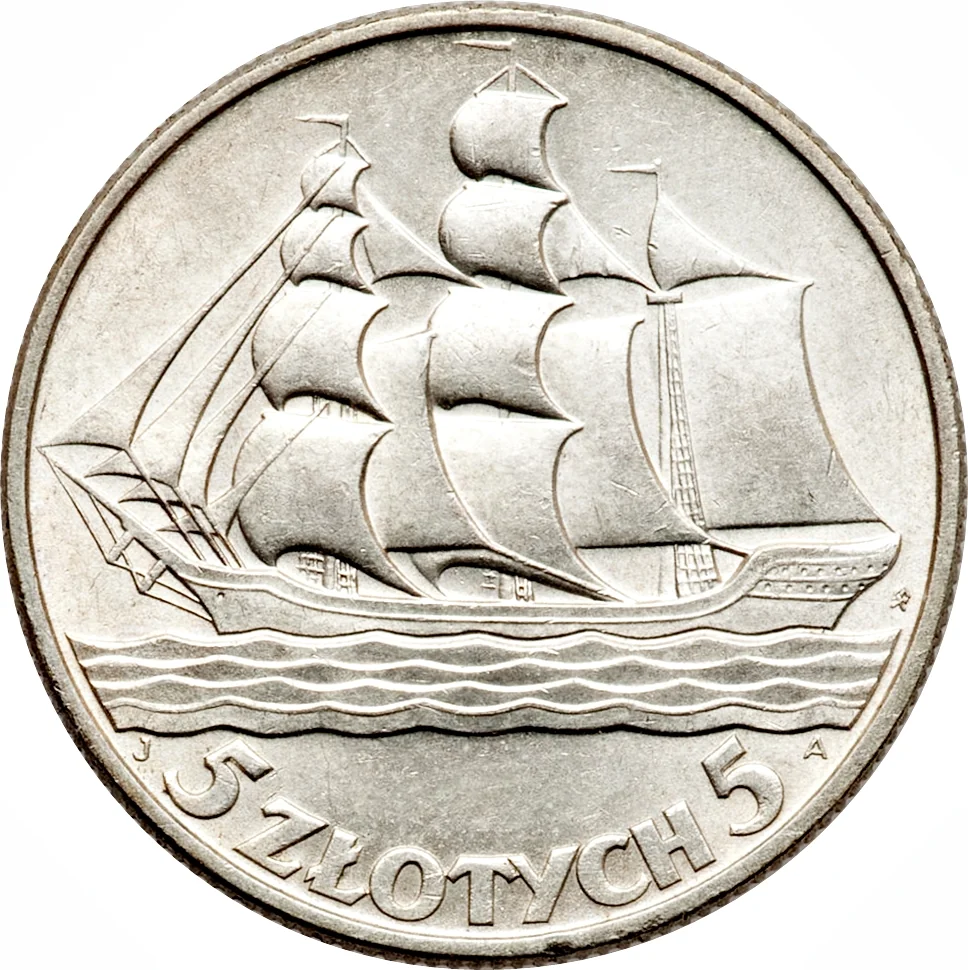
5 Zlotys (Gdynia Seaport) – Poland
Circulating commemorative coins
Commemoration: 15th Anniversary of Gdynia Seaport
Poland

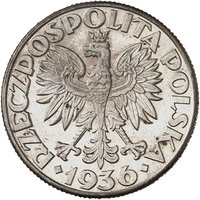
Obverse
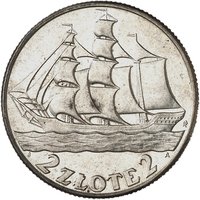
Reverse
Edge
Milled
Categories
| Transportation> Watercraft |
Mints
| Name | Mark |
|---|---|
| Mint of Poland | — |
Mintings
| Year | Mint Mark | Mintage | Quality | Collection |
|---|---|---|---|---|
| 1936 | — | 1,000,000 |
Historical background
In 1936, Poland’s currency, the złoty, was in a precarious but stabilized position following a period of severe crisis. The country had introduced a new złoty (PLZ) in 1924 under the Grabski reform, but it succumbed to hyperinflation and was replaced by a second złoty (PLN) in 1929, pegged to gold. However, the Great Depression devastated the Polish economy, causing massive capital flight, a collapse in exports, and a dramatic depletion of gold and foreign currency reserves. By early 1936, Poland was on the brink of a sovereign default, with its currency peg unsustainable.
Facing this emergency, the government, under Prime Minister Felicjan Sławoj Składkowski and Vice-Prime Minister Eugeniusz Kwiatkowski, enacted radical reforms in April 1936. The cornerstone was the establishment of the Bank Polski as a new, independent central bank, replacing the old politically influenced one. Crucially, Poland abandoned the gold standard, devalued the złoty by approximately 43%, and introduced strict foreign exchange controls. This created a managed, non-convertible currency, shielding Poland's reserves from speculative attacks and allowing for autonomous monetary policy.
These decisive measures proved successful in the short to medium term. The devaluation made Polish exports more competitive, while the exchange controls halted capital flight and allowed for the rebuilding of reserves. The stability provided a foundation for Kwiatkowski's Central Industrial Region (COP), a state-led industrialization drive aimed at modernizing the economy and strengthening national defense. Thus, by the end of 1936, the złoty was no longer in immediate danger, but its stability was now artificial, reliant on stringent controls and an increasingly state-directed economy as Europe moved toward war.
Facing this emergency, the government, under Prime Minister Felicjan Sławoj Składkowski and Vice-Prime Minister Eugeniusz Kwiatkowski, enacted radical reforms in April 1936. The cornerstone was the establishment of the Bank Polski as a new, independent central bank, replacing the old politically influenced one. Crucially, Poland abandoned the gold standard, devalued the złoty by approximately 43%, and introduced strict foreign exchange controls. This created a managed, non-convertible currency, shielding Poland's reserves from speculative attacks and allowing for autonomous monetary policy.
These decisive measures proved successful in the short to medium term. The devaluation made Polish exports more competitive, while the exchange controls halted capital flight and allowed for the rebuilding of reserves. The stability provided a foundation for Kwiatkowski's Central Industrial Region (COP), a state-led industrialization drive aimed at modernizing the economy and strengthening national defense. Thus, by the end of 1936, the złoty was no longer in immediate danger, but its stability was now artificial, reliant on stringent controls and an increasingly state-directed economy as Europe moved toward war.
🌟 Uncommon