

100 Pesetas – Spain
Spain
Context

Material
References
KM: #Click to copy to clipboard668a
Numista: #17590
Value
Exchange value: 100 ESP
Bullion value: $4839.35
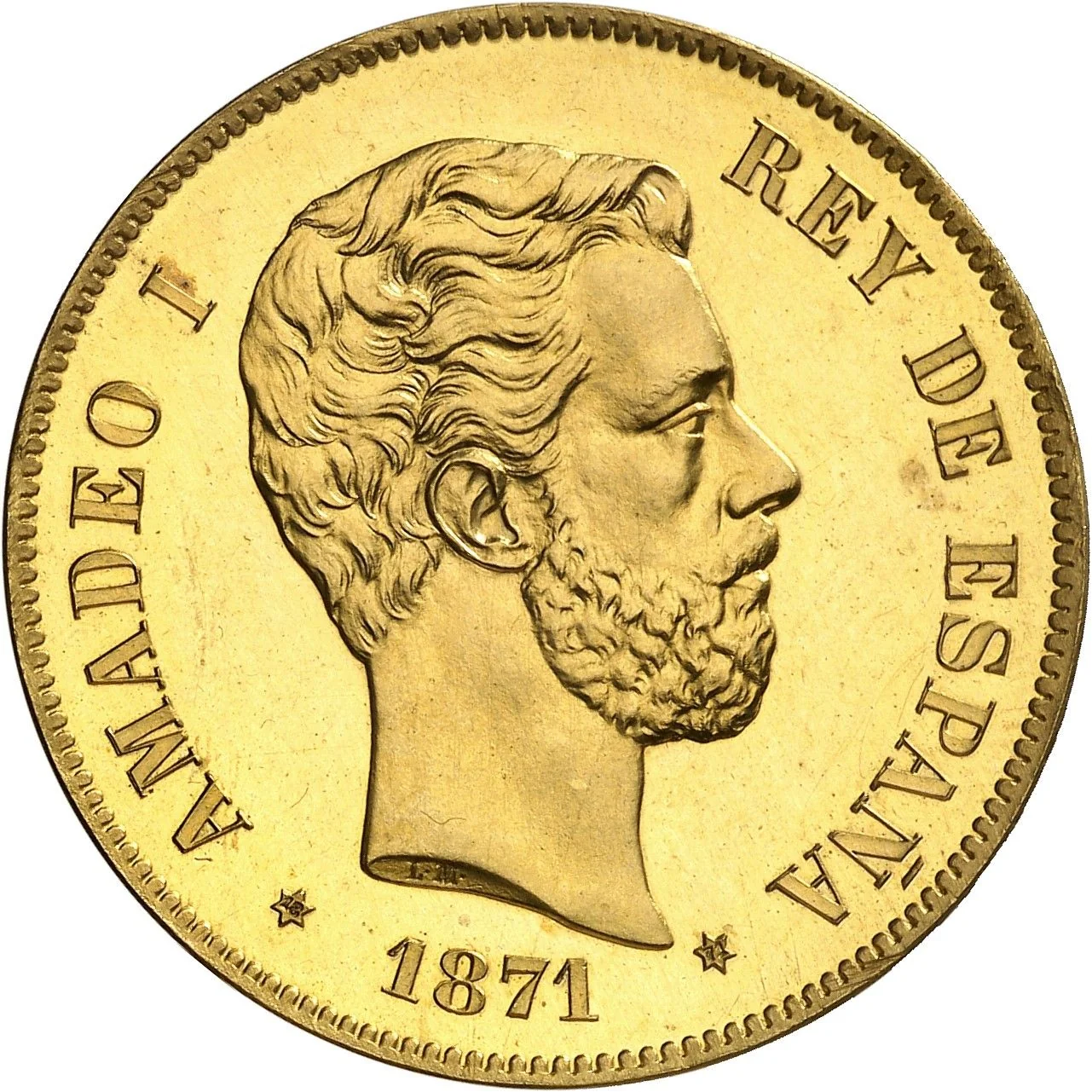
Obverse
Description:
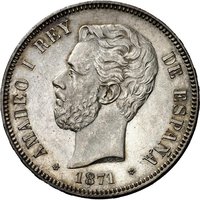
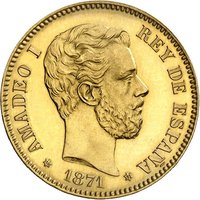
King Amadeo I, right-facing profile.
Inscription:
AMADEO I REY DE ESPAÑA
L· M·
🟌 1871 🟌
L· M·
🟌 1871 🟌
Translation:
Amadeo I King of Spain
By the Grace of God
🟌 1871 🟌
By the Grace of God
🟌 1871 🟌
Script: Latin
Engraver: Luis Marchionni y Hombrón
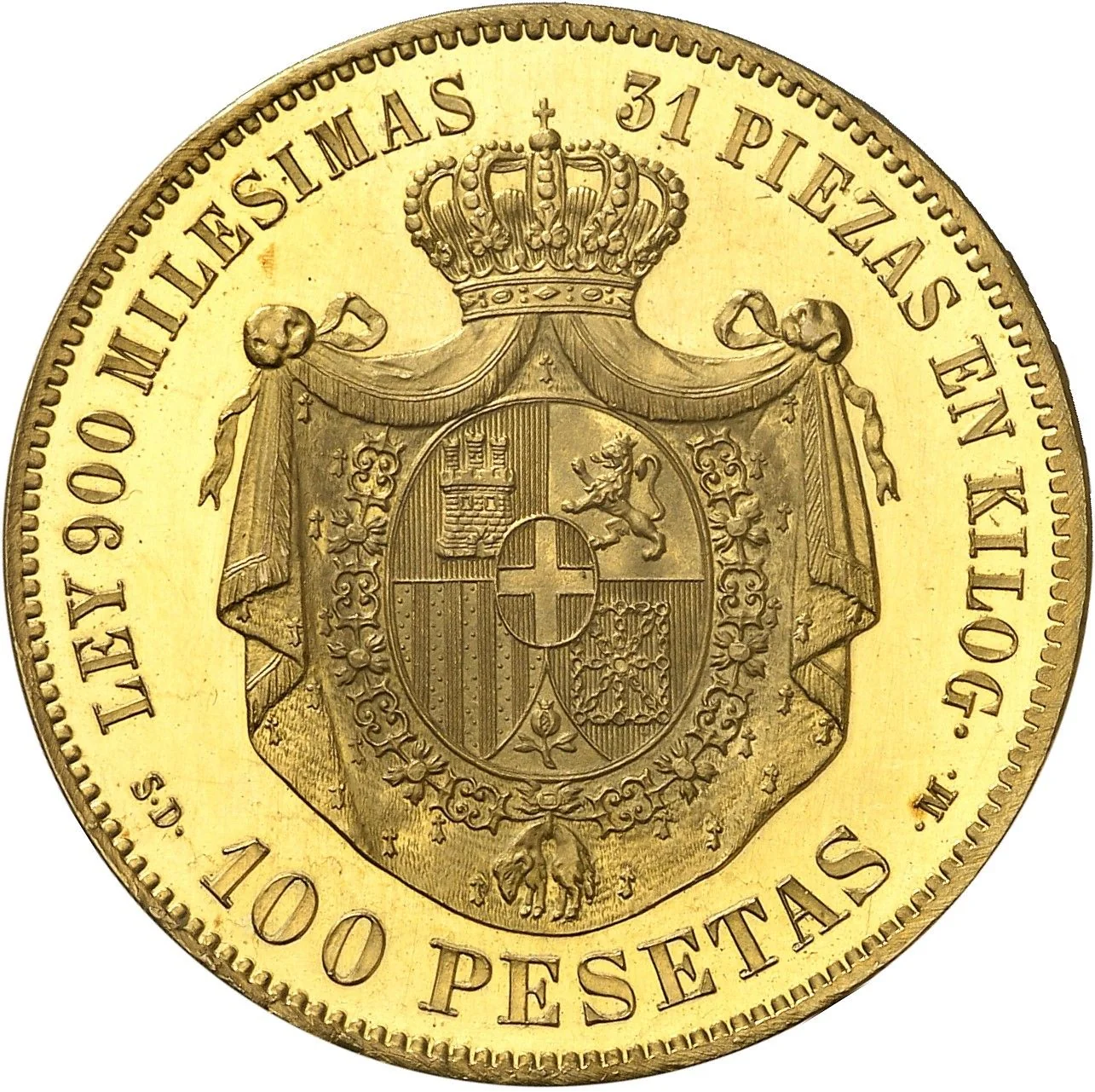
Reverse
Description:
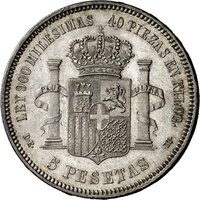
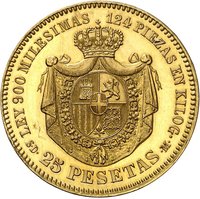
Crowned oval Spanish coat of arms with Golden Fleece collar.
Inscription:
LEY 900 MILESIMAS 31 PIEZAS EN KILOG·
S·D· 100 PESETAS ·M·
S·D· 100 PESETAS ·M·
Translation:
Law 900 thousandths, 31 pieces per kilogram,
S.D. 100 Pesetas, M.
S.D. 100 Pesetas, M.
Script: Latin
Language: Spanish
Engraver: Luis Marchionni y Hombrón
Designer: José Esteban Lozano
Edge
Categories
| Person> Monarch |
| Symbols> Coat of Arms |
Mints
| Name | Mark |
|---|---|
| Royal Mint of Madrid | (🟌) |
Mintings
| Year | Mint Mark | Mintage | Quality | Collection |
|---|---|---|---|---|
| 1871 | 🟌 | 25 |
Historical background
In 1871, Spain's currency situation was one of transition and instability, caught between its historical past and the pressures of a modernizing European economy. The country was officially on a bimetallic standard, legally valuing both silver pesetas and gold coins. However, the global phenomenon of the "limping gold standard" was acutely felt, as the market value of silver began its long decline relative to gold. This meant that while gold coins were legal tender, they increasingly vanished from circulation, hoarded or exported because they were worth more as bullion than as face-value currency, leaving silver as the dominant circulating medium.
This monetary ambiguity created significant practical and economic problems. The disparity between the fixed legal ratio of silver to gold and the fluctuating market rate disrupted foreign trade and complicated international settlements, as Spain's silver-based currency lost value against the gold-backed currencies of major trading partners like Britain and France. Internally, the system fostered uncertainty, hindered investment, and exposed the economy to the volatility of the silver market. The government's fiscal woes, burdened by debts from the recent Glorious Revolution of 1868 and the ongoing Third Carlist War, further strained confidence in the currency.
Consequently, the period was marked by intense debate among economists, politicians, and bankers about Spain's monetary future. Powerful factions, particularly those with international commercial ties, began advocating for a full transition to the gold standard to achieve stability and integrate more fully with the European financial system. Thus, 1871 represents a pivotal moment of deliberation, setting the stage for the eventual—and controversial—adoption of the gold standard with the Mint Law of 1876, which would formally demonetize silver and attempt to anchor the peseta to gold.
This monetary ambiguity created significant practical and economic problems. The disparity between the fixed legal ratio of silver to gold and the fluctuating market rate disrupted foreign trade and complicated international settlements, as Spain's silver-based currency lost value against the gold-backed currencies of major trading partners like Britain and France. Internally, the system fostered uncertainty, hindered investment, and exposed the economy to the volatility of the silver market. The government's fiscal woes, burdened by debts from the recent Glorious Revolution of 1868 and the ongoing Third Carlist War, further strained confidence in the currency.
Consequently, the period was marked by intense debate among economists, politicians, and bankers about Spain's monetary future. Powerful factions, particularly those with international commercial ties, began advocating for a full transition to the gold standard to achieve stability and integrate more fully with the European financial system. Thus, 1871 represents a pivotal moment of deliberation, setting the stage for the eventual—and controversial—adoption of the gold standard with the Mint Law of 1876, which would formally demonetize silver and attempt to anchor the peseta to gold.
💎 Extremely Rare