

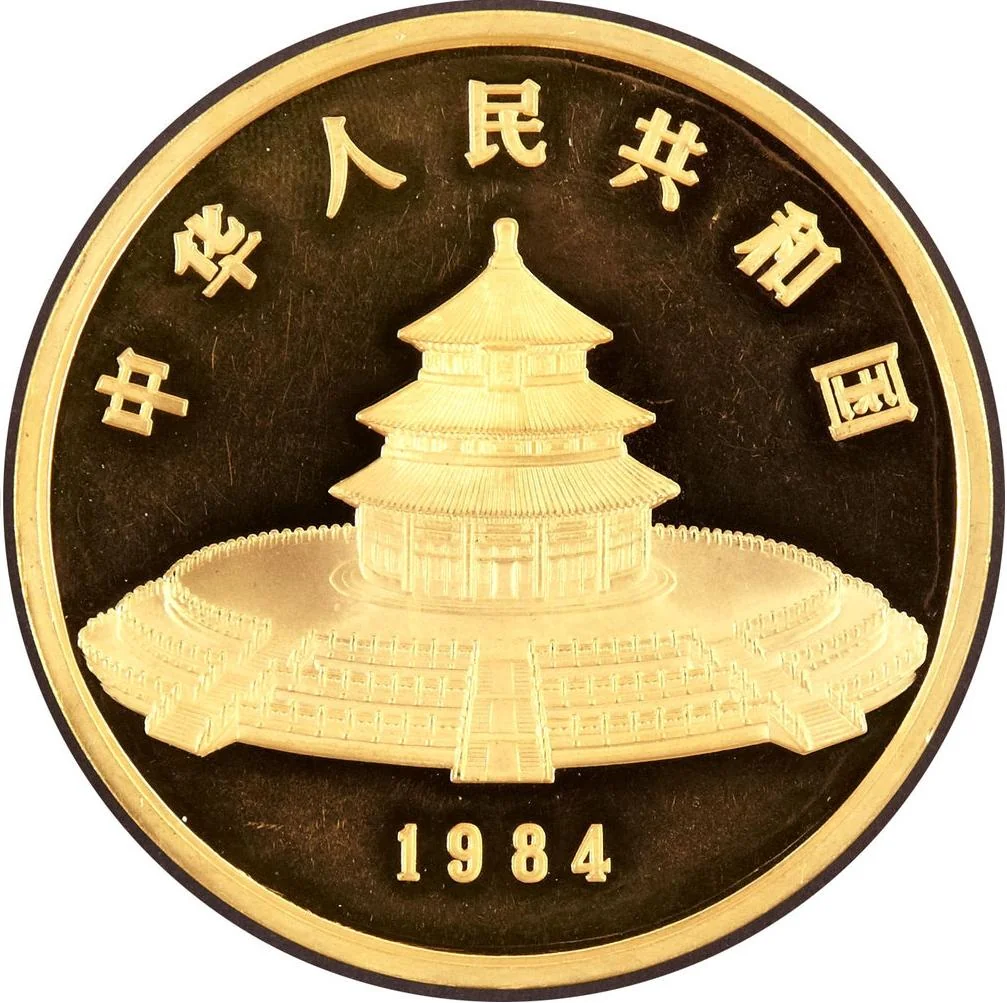
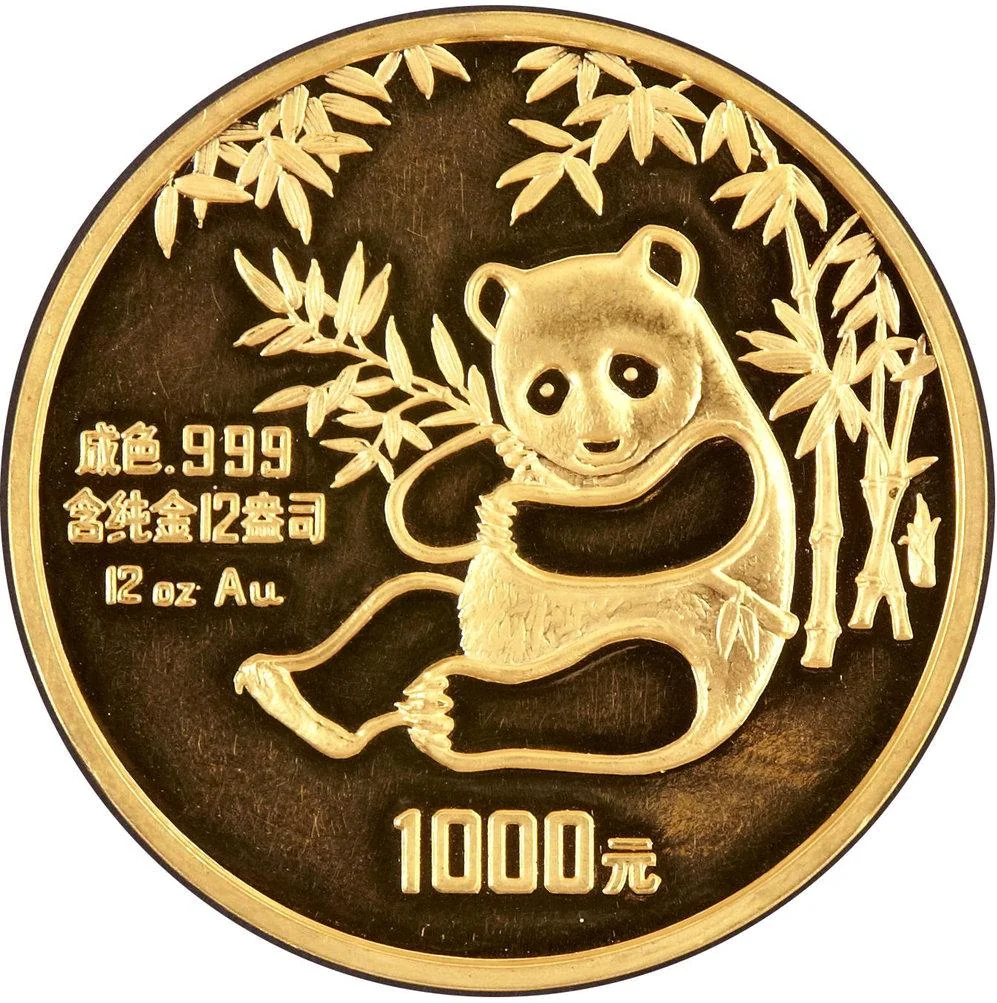
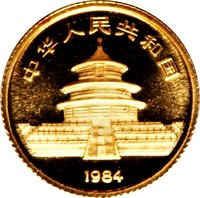
1000 yuan – People's Republic of China
Add to wishlist
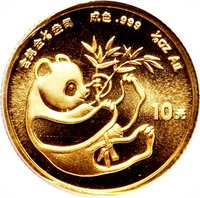
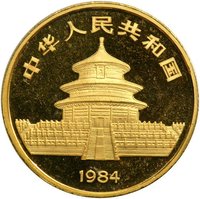
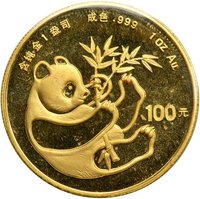
Non-circulating coins
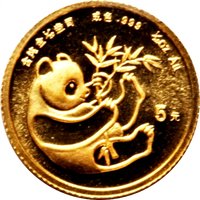
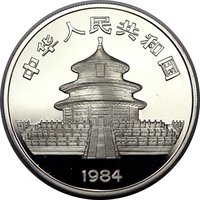
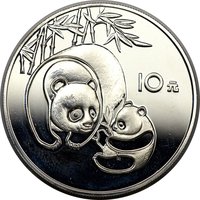
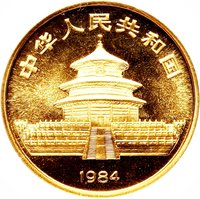
Series: Panda Bullion
China
Context
Year: 1984
Country: China
Issuer: People's Republic of China
Period:
(since 1949)
Currency:
(since 1955)
Total mintage: 250
Material
References
KM: #
Numista: #17583
Value
Exchange value: 1000 CNY
Bullion value: $56845.59
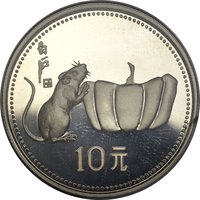
Obverse
Edge
Mintings
| Year | Mint Mark | Mintage | Quality | Collection |
|---|---|---|---|---|
| 1984 | — | 250 | Proof |
Historical background
In 1984, the People's Republic of China was navigating a critical phase of its economic reform program initiated by Deng Xiaoping. The currency, the Renminbi (RMB) or "people's currency," with its primary unit the yuan, operated under a strictly controlled, fixed exchange rate system set by the People's Bank of China. It was non-convertible on the capital account and only partially convertible for trade transactions through a complex system of foreign exchange certificates (FECs). These FECs, used alongside domestic currency, created a dual-track system where foreigners and special shops dealt in a separate, stronger currency pool, reflecting the scarcity of hard foreign reserves.
Economically, 1984 was a year of both overheating and significant liberalization. Agricultural reforms had succeeded, and focus was shifting to urban industrial reform. However, money supply growth surged as state-owned enterprises gained more autonomy but without hard budget constraints, leading to inflationary pressures that would become more pronounced in the following years. The currency's official exchange rate was artificially high, overvaluing the RMB to subsidize imports of machinery and technology vital for modernization, but this discouraged exports and created a thriving black market for foreign exchange.
The currency situation in 1984 was thus one of transition and contradiction. The system was designed to protect China's fragile financial system and conserve foreign exchange while cautiously opening to the world. The existence of FECs symbolized the divide between the planned and emerging market economies. This period set the stage for the further devaluation of the RMB in the late 1980s and the gradual, managed move towards convertibility, as policymakers grappled with balancing control, stability, and the demands of an increasingly market-oriented economy.
Economically, 1984 was a year of both overheating and significant liberalization. Agricultural reforms had succeeded, and focus was shifting to urban industrial reform. However, money supply growth surged as state-owned enterprises gained more autonomy but without hard budget constraints, leading to inflationary pressures that would become more pronounced in the following years. The currency's official exchange rate was artificially high, overvaluing the RMB to subsidize imports of machinery and technology vital for modernization, but this discouraged exports and created a thriving black market for foreign exchange.
The currency situation in 1984 was thus one of transition and contradiction. The system was designed to protect China's fragile financial system and conserve foreign exchange while cautiously opening to the world. The existence of FECs symbolized the divide between the planned and emerging market economies. This period set the stage for the further devaluation of the RMB in the late 1980s and the gradual, managed move towards convertibility, as policymakers grappled with balancing control, stability, and the demands of an increasingly market-oriented economy.
Series: Panda Bullion

✨ Legendary