



Obverse
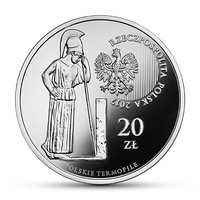
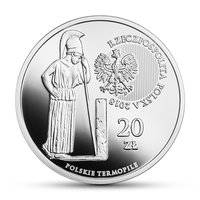
Inscription:
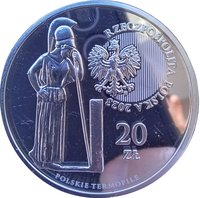
RZECPOSPOLITA POLSKA 2019
mw
20
ZŁ
POLSKIE TERMOPILE
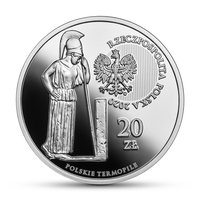
mw
20
ZŁ
POLSKIE TERMOPILE
Translation:
REPUBLIC OF POLAND 2019
20
ZLOTY
POLISH THERMOPYLAE
20
ZLOTY
POLISH THERMOPYLAE
Script: Latin
Language: Polish
Designer: Urszula Walerzak
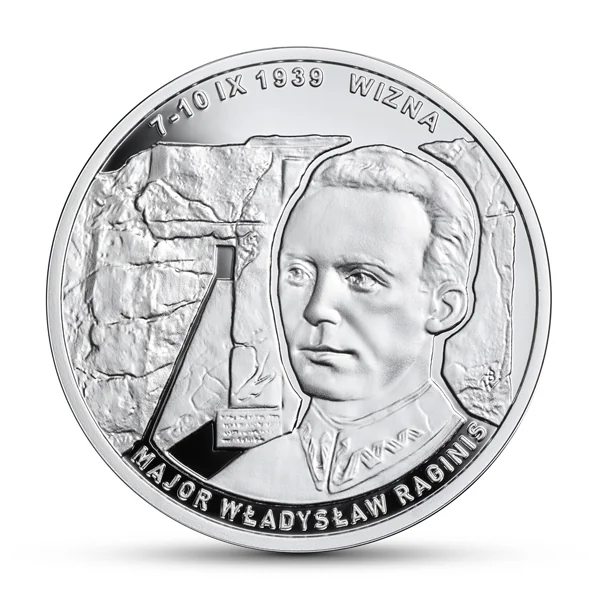
Reverse
Inscription:
7-10 IX 1939 WIZNA
MAJOR WŁADYSŁAW RAGINIS
MAJOR WŁADYSŁAW RAGINIS
Translation:
7-10 September 1939 Wizna
Major Władysław Raginis
Major Władysław Raginis
Script: Latin
Designer: Anna Wątróbska-Wdowiarska
Edge
Plain
Mints
| Name | Mark |
|---|---|
| Mint of Poland | (MW) |
Mintings
| Year | Mint Mark | Mintage | Quality | Collection |
|---|---|---|---|---|
| 2019 | MW | 15,000 | Proof |
Historical background
In 2019, the Polish currency, the złoty (PLN), operated within a managed float regime, primarily influenced by the monetary policy of the National Bank of Poland (NBP) and broader regional economic sentiment. The year was characterized by relative stability and moderate strength against major currencies like the euro and the US dollar. This stability was underpinned by Poland's solid economic fundamentals, including steady GDP growth, low unemployment, and controlled inflation, which bolstered investor confidence and supported the currency's value.
A key factor shaping the monetary landscape was the NBP's decision to maintain historically low interest rates throughout the year, with the reference rate held at a record-low 1.5%. This accommodative policy, initiated in 2015, aimed to stimulate economic growth and sustain inflation close to the target of 2.5%. Consequently, the interest rate differential with other major economies, particularly the United States, limited the złoty's potential for significant appreciation, keeping it within a predictable trading range for most of the year.
However, the currency faced periodic pressures from external uncertainties. Global trade tensions and a slowdown in the Eurozone, Poland's key trading partner, created headwinds. Furthermore, domestic political factors, including concerns over the rule of law and conflicts with the European Union, occasionally triggered volatility and speculative pressures. Despite these challenges, the NBP's occasional market interventions and its overall commitment to stability helped the złoty end 2019 as one of the better-performing currencies in the Central and Eastern European region, reflecting the resilience of the Polish economy at the time.
A key factor shaping the monetary landscape was the NBP's decision to maintain historically low interest rates throughout the year, with the reference rate held at a record-low 1.5%. This accommodative policy, initiated in 2015, aimed to stimulate economic growth and sustain inflation close to the target of 2.5%. Consequently, the interest rate differential with other major economies, particularly the United States, limited the złoty's potential for significant appreciation, keeping it within a predictable trading range for most of the year.
However, the currency faced periodic pressures from external uncertainties. Global trade tensions and a slowdown in the Eurozone, Poland's key trading partner, created headwinds. Furthermore, domestic political factors, including concerns over the rule of law and conflicts with the European Union, occasionally triggered volatility and speculative pressures. Despite these challenges, the NBP's occasional market interventions and its overall commitment to stability helped the złoty end 2019 as one of the better-performing currencies in the Central and Eastern European region, reflecting the resilience of the Polish economy at the time.
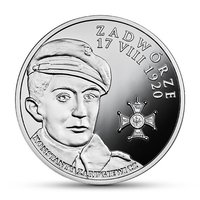
Series: The Polish Thermopylae


✨ Legendary