


50 dollars – Fiji
Add to wishlist
Fiji
Context
Material
References
KM: #
Numista: #174736
Value
Exchange value: 50 FJD
Bullion value: $155.70
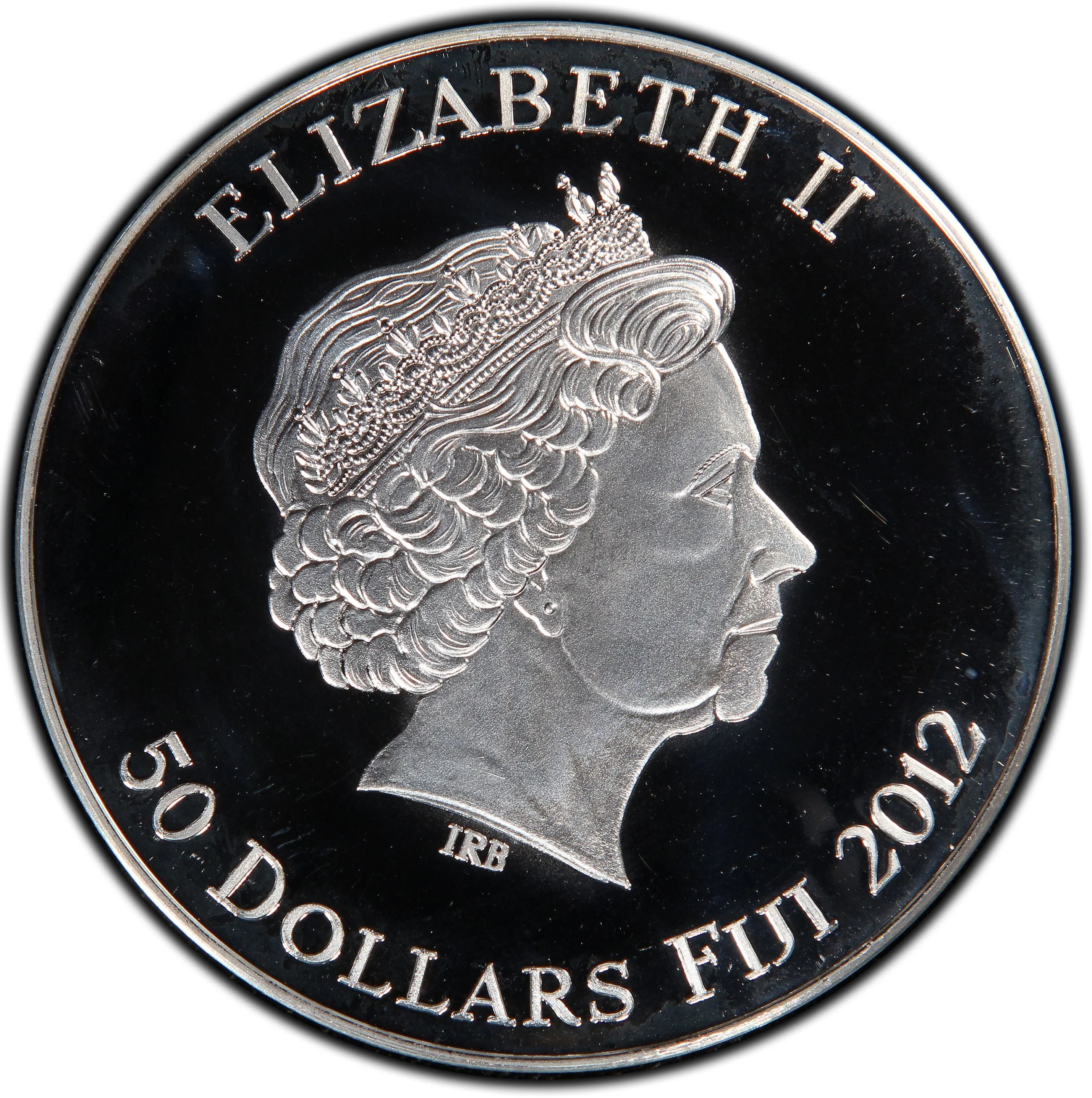
Obverse
Inscription:
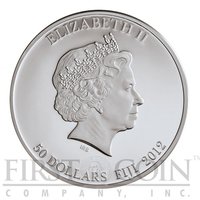
ELIZABETH II
50 DOLLARS FIJI 2012
IRB
50 DOLLARS FIJI 2012
IRB
Translation:
ELIZABETH II
50 DOLLARS FIJI 2012
IRB
50 DOLLARS FIJI 2012
IRB
Script: Latin
Designer: Ian Rank-Broadley
Reverse
Description:
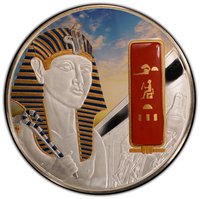
Tutankhamun's golden death mask.
Edge
Reeded
Mintings
| Year | Mint Mark | Mintage | Quality | Collection |
|---|---|---|---|---|
| 2012 | — | 2,000 | Proof |
Historical background
In 2012, Fiji's currency situation was characterized by a period of relative stability and deliberate management by the Reserve Bank of Fiji (RBF) under challenging external conditions. The Fijian dollar (FJD) was, and remains, a managed float, with the RBF intervening to maintain stability against a basket of currencies of its major trading partners, primarily the Australian and New Zealand dollars, the US dollar, and the euro. This policy aimed to support export competitiveness and control imported inflation, which was a significant concern given Fiji's heavy reliance on imports for food and fuel. Throughout the year, the exchange rate was held within a narrow band, with the RBF frequently buying foreign reserves to build buffers and curb excessive appreciation.
The broader economic context was one of cautious recovery and policy transition. Following the 2009 devaluation of the FJD by 20%, the RBF was focused on rebuilding foreign reserves, which had dipped to precarious levels. By 2012, these reserves had recovered to more comfortable levels, exceeding three months of import cover, providing a cushion against external shocks. This stability was achieved despite ongoing political uncertainty under the military-backed government and a sluggish global economy in the wake of the 2008-09 financial crisis. The RBF's monetary policy stance was generally accommodative, with the Overnight Policy Rate kept low at 0.5% to stimulate domestic economic activity following a decade of subdued growth.
Key challenges influencing the currency landscape included a persistent trade deficit and the vital role of tourism and remittances. Inflows from tourism, Fiji's largest source of foreign exchange, and remittances from Fijians working abroad were crucial in financing the trade gap and supporting the currency. The RBF's management in 2024 was therefore a balancing act: preventing volatility that could harm business confidence while ensuring the currency did not become overvalued and damage the crucial sugar and tourism export sectors. Overall, 2012 represented a year of consolidated stability for the Fijian dollar, with monetary authorities successfully maintaining control after the earlier devaluation, albeit within a constrained and import-dependent economic framework.
The broader economic context was one of cautious recovery and policy transition. Following the 2009 devaluation of the FJD by 20%, the RBF was focused on rebuilding foreign reserves, which had dipped to precarious levels. By 2012, these reserves had recovered to more comfortable levels, exceeding three months of import cover, providing a cushion against external shocks. This stability was achieved despite ongoing political uncertainty under the military-backed government and a sluggish global economy in the wake of the 2008-09 financial crisis. The RBF's monetary policy stance was generally accommodative, with the Overnight Policy Rate kept low at 0.5% to stimulate domestic economic activity following a decade of subdued growth.
Key challenges influencing the currency landscape included a persistent trade deficit and the vital role of tourism and remittances. Inflows from tourism, Fiji's largest source of foreign exchange, and remittances from Fijians working abroad were crucial in financing the trade gap and supporting the currency. The RBF's management in 2024 was therefore a balancing act: preventing volatility that could harm business confidence while ensuring the currency did not become overvalued and damage the crucial sugar and tourism export sectors. Overall, 2012 represented a year of consolidated stability for the Fijian dollar, with monetary authorities successfully maintaining control after the earlier devaluation, albeit within a constrained and import-dependent economic framework.
Series: Egyptian Pharaohs






✨ Legendary